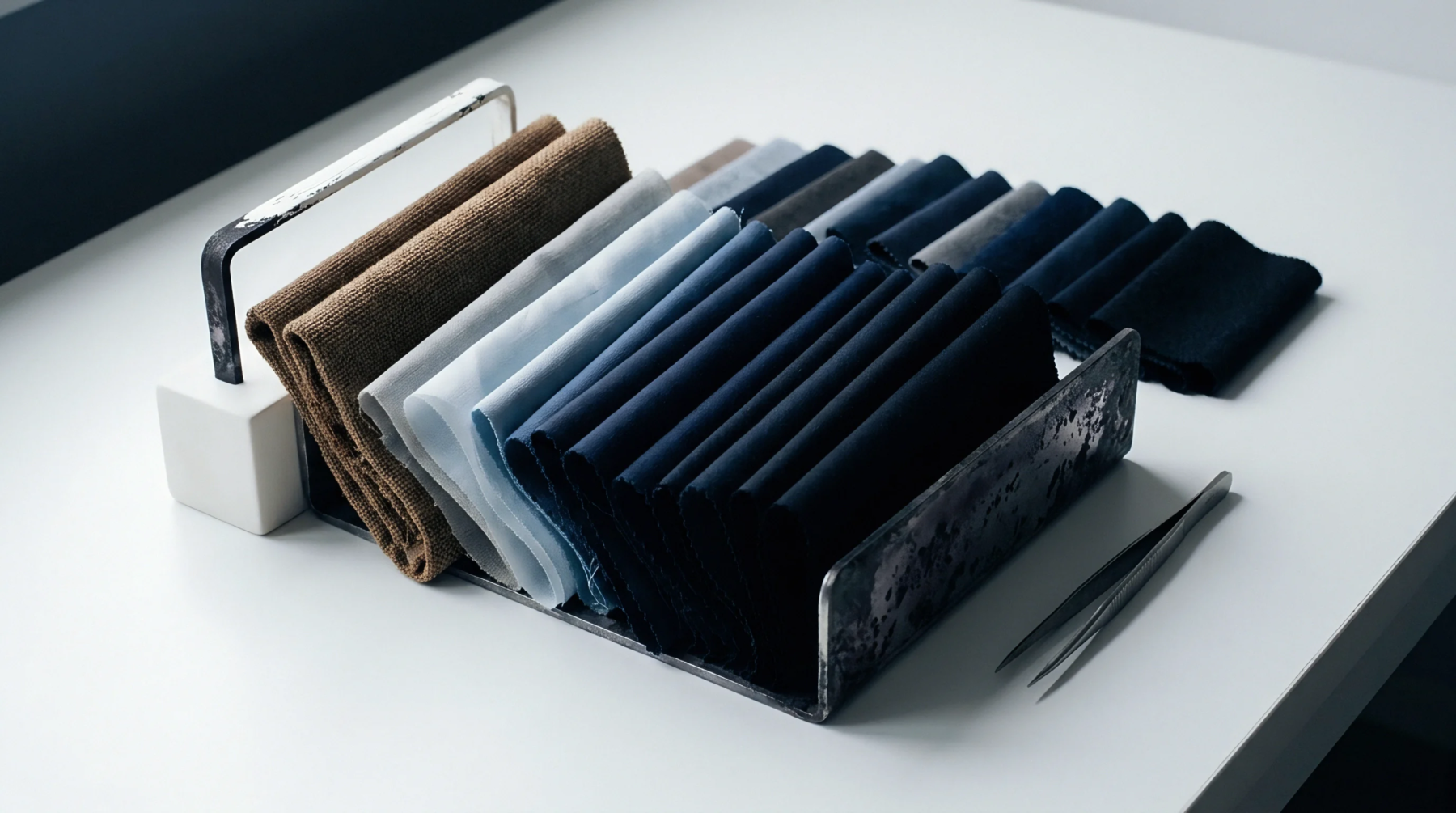
Diffuse Illumination
An industrial spectrophotometer configuration measures the color of textiles by employing a spherical chamber to distribute light evenly across the sample surface from all angles. This d/8 optical geometry uses a viewing angle of eight degrees from the normal to capture reflected light.
Specular Component
Specular inclusion or exclusion mode selection determines whether surface gloss is measured along with color. When evaluating shiny polyester or heavily calendered fabrics, d/8 optical geometry allows operators to toggle a port that releases the direct mirror-like reflection. The choice isolates surface texture from pigment absorption.
Textile Evaluation
Woven structures and piled fabrics present uneven surfaces that scatter light irregularly during color assessment. Using d/8 optical geometry minimizes these texture-induced variations by averaging the reflected light over the entire measurement port. This averaging ensures consistent readings between the lab and the dyehouse.
Instrument Calibration
Calibration protocols require a standard white tile and a light-trap cylinder to establish the zero and one hundred percent reflectance limits before any measurement sequence begins. Correct d/8 optical geometry maintenance prevents lint accumulation inside the integrating sphere. Fabric dust can alter the internal reflectance of the white coating and distort the color readings.
A drop of even one percent in sphere efficiency can shift the calculated delta-E color difference values beyond the acceptable commercial tolerance of zero point five units.