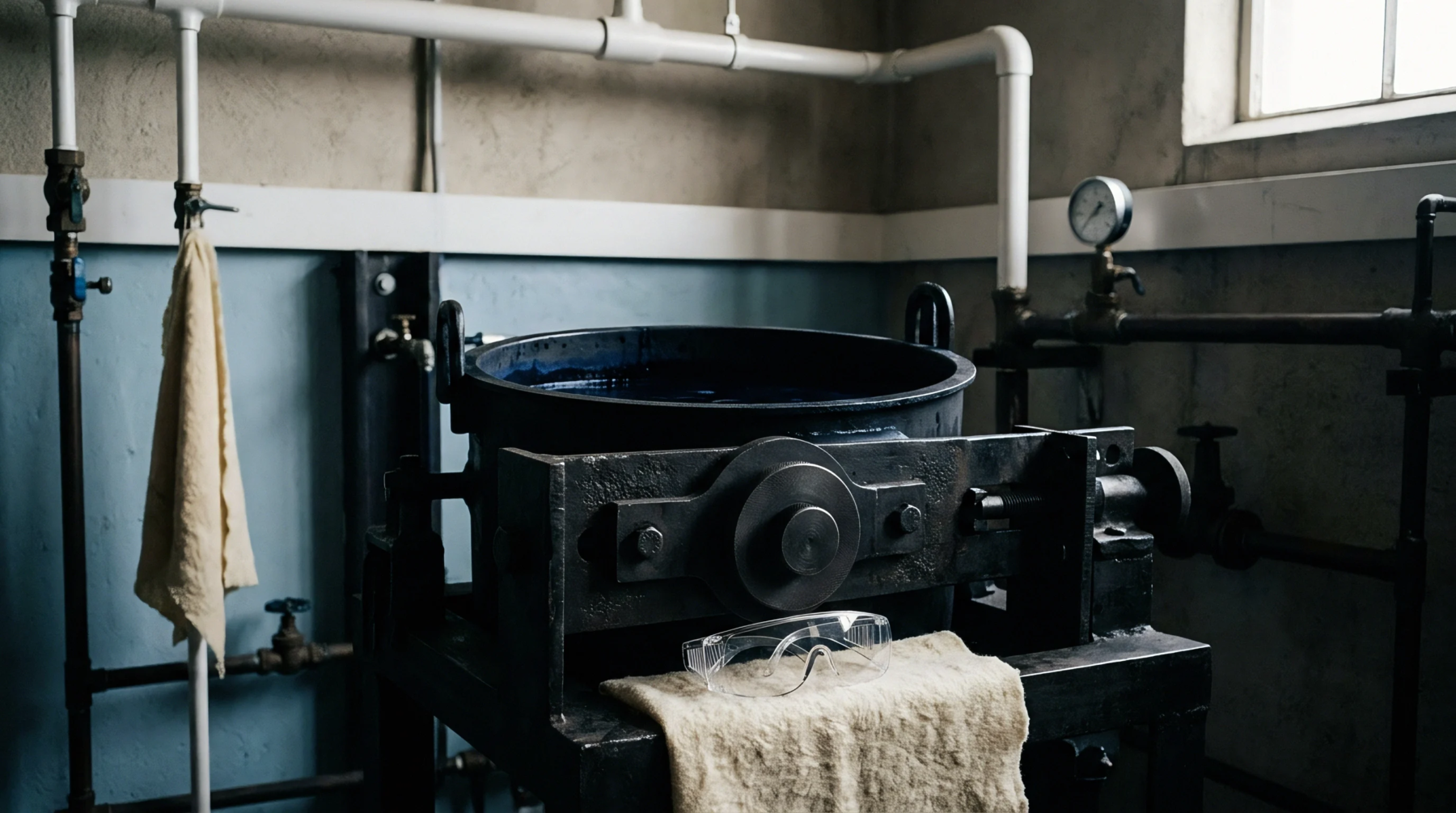
Fluid Restriction
Hydraulic pressure decay occurs when liquid flow encounters particulate accumulation across porous boundaries inside automatic dispensing heads. Diaphragm clogging halts pigment delivery during continuous textile printing runs by sealing the flexible rubber membrane against the metal housing. Fluid lines experience severe backpressure spikes that trigger automated pump shutdowns on rotary screen equipment.
Technicians dismantle the applicator manifold to clear dried thickters from the elastomeric surface before production resumes.
Membrane Integrity
Elastomeric fatigue develops under repeated mechanical flexing cycles required for paste metering. Diaphragm clogging accelerates this degradation by forcing hydraulic actuators to push against solid blockages instead of mobile print paste. Rubber compounds absorb chemical solvents from reactive dyes which swells the material and reduces dimensional clearance inside the valve chamber.
Quality control inspectors monitor stroke frequency metrics to detect early restriction before total component rupture occurs on the production floor.
Residue Accumulation
Particulate aggregation originates from inadequately strained thickener solutions entering the supply circuit. Diaphragm clogging forms when undissolved natural gums precipitate out of the print paste during extended machine idle periods. Factory laboratories measure paste viscosity parameters before filling delivery reservoirs to prevent solid agglomeration at the injection nozzle.
Filter mesh standards require periodic ultrasonic cleaning to remove abrasive mineral deposits that seed further buildup on the flexing surface.
Pressure Drop
Flow resistance increases proportionally with the thickness of the dried paste layer adhering to the elastomeric boundary. Diaphragm clogging distorts the calibration curve relating pump stroke volume to actual dye deposition mass on woven fabric substrates. Finished goods exhibit visible color streaks when uneven fluid delivery starves specific sections of the rotary screen pattern.
Maintenance logs track differential pressure readings across the applicator head to schedule preventive chemical flushing before severe print defects ruin commercial batches.