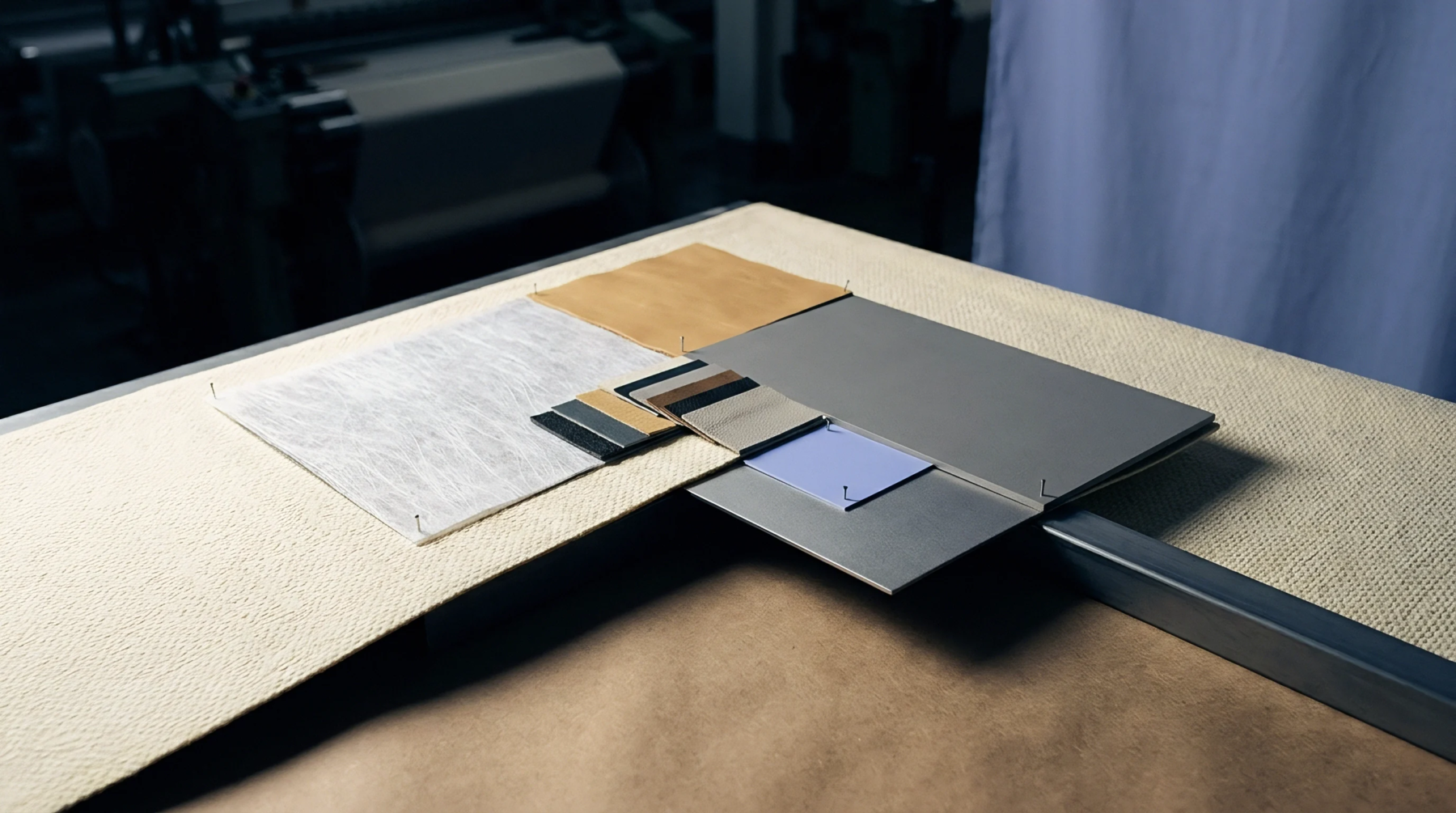
Polymer Dispersion
Softener concentration variance across coated textile membranes determines how flexible an outer garment feels after high temperature curing. Dirichlet plasticizer distribution dictates spatial allocation of chemical softening agents within polyurethane emulsions applied to technical fabrics. Industrial coaters measure this variable during the wet application stage to prevent localized stiffening on waterproof shells.
The metric stops applying once the crosslinking reaction cures the coating permanently onto the woven substrate.
Gradient Allocation
Multivariate probability functions calculate how additive concentrations shift from the center of a textile web toward the selvedge edges. Mathematical modeling maps the density of phthalate substitutes across wide width spreading machinery during continuous calendering operations. Uneven delivery creates brittle spots that crack under standard Martindale abrasion testing cycles.
Technicians adjust metering blade gaps when the calculated variance exceeds standard mill tolerances.
Thermal Response
Cured coating layers react differently to ambient temperature shifts depending on additive dispersal uniformity across the textile face. Microscopic plasticizer clusters soften rapidly under sustained body heat and cause the laminated fabric to delaminate prematurely. Laboratory technicians evaluate this durability risk by subjecting small membrane samples to cyclical heat chambers before approving bulk yarn purchases.
Accelerated aging protocols expose improper chemical migration long before finished garments reach retail distribution centers.
Application Control
Precision dosing pumps regulate emulsion delivery rates inside industrial coating heads to maintain target compositional uniformity. Production supervisors monitor real time viscosity readings to detect feed line blockages before raw material wastage accumulates on the shop floor. Finished roll inspection logs record final softness metrics across multiple random yardage samples to verify processing stability.
Consistent additive placement ensures every manufactured garment retains identical tactile qualities throughout its commercial lifespan.