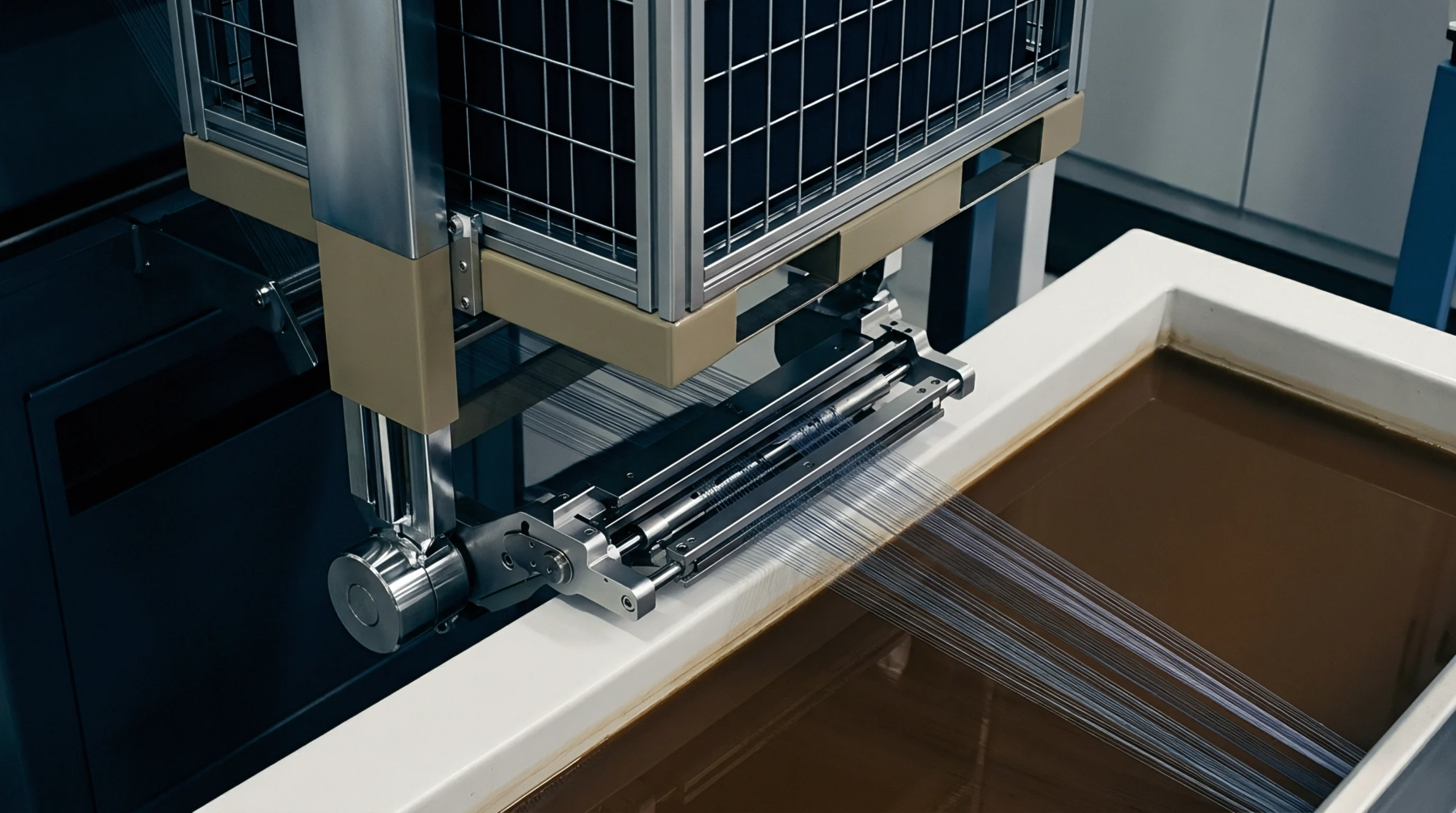
Deposition Defect
Chemical instability during the aqueous coloring process often leads to the unwanted accumulation of pigments on the surfaces of textile machinery or yarn packages. This phenomenon, known as dye bath plating, occurs when dye molecules or dispersing agents precipitate out of solution due to temperature or pH imbalances. The resulting deposits can rub off onto the fabric, causing localized stains, uneven coloring, or reduced rub fastness in the finished goods.
Causal Mechanism
High temperatures and high electrolyte concentrations can destabilize the dye emulsion in the dye bath. When the surfactants fail to keep the dye particles suspended, these particles coalesce and adhere to the metal walls of the dye vat or the stainless steel dye beams. This plating effect is particularly common with disperse dyes on polyester and reactive dyes on cotton when the heating rate is too rapid.
Industrial Impact
Subsequent batches of yarn or fabric are highly susceptible to contamination when these deposits remain on the internal parts of the machinery. If the dye house does not perform a thorough reduction clear or boil-out between runs, the plated dye will re-dissolve and ruin the next color run. The physical buildup also clogs the perforated dye beams, reducing the flow rate of the liquor and causing channel effects that leave the inner layers of a yarn package undyed.
To avoid these expensive errors, dye houses must use specialized anti-plating agents and strictly control the rate of temperature change during the dye cycle.
Technical Prevention
Proper selection of dispersing agents and leveling auxiliaries prevents the dye from falling out of suspension. Although chemical additives increase the cost of the dye bath plating prevention, they ensure a clean machinery setup and consistent batch-to-batch reproducibility. This prevention is only effective when water quality is maintained at a soft level, as hard water ions like calcium and magnesium accelerate the precipitation of dye aggregates.