Boundary Region
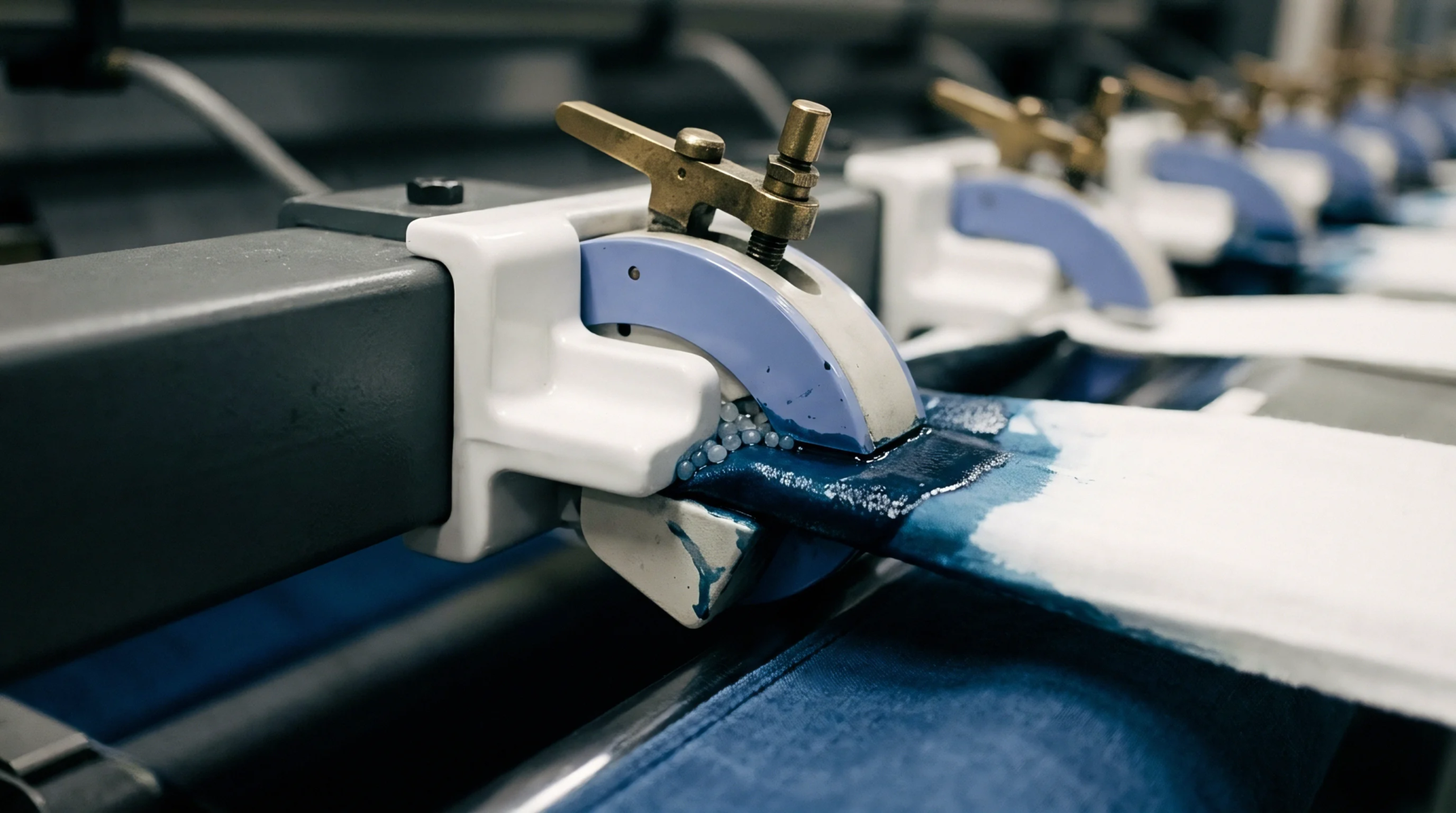
Microscopic regions of varying ion concentration develop at the interface between a textile fiber and the surrounding dyebath. This zone, known as the electrolyte boundary layer, acts as a physical barrier that dye molecules must cross to reach the fiber surface. The thickness and electrostatic potential of this region govern the rate of dye diffusion.
Diffusion Mechanism
Agitation of the dye liquor reduces the thickness of this stagnant zone, which accelerates the dyeing process. When the bath is agitated, the electrolyte boundary layer becomes thinner, allowing for faster transport of dye anions to the fiber. This convective transport is vital for achieving level dyeing in package and jet dyeing machines.
Dyeing Influence
High salt concentrations shrink the electrostatic double layer, which reduces the repulsion of anionic dyes. This compression of the electrolyte boundary layer allows the dye molecules to approach the fiber close enough for short-range forces to take over. Without this action, the dye would remain suspended in the bath, leading to poor exhaustion.
The balance of heat and electrolyte addition ensures that this transition occurs smoothly without causing spotty dye absorption.
Control Strategy
Optimizing the flow rate of the dyeing liquor represents the primary method to control this interface behavior. By maintaining a high circulation speed, the boundary layer is kept thin and uniform across the yarn package.