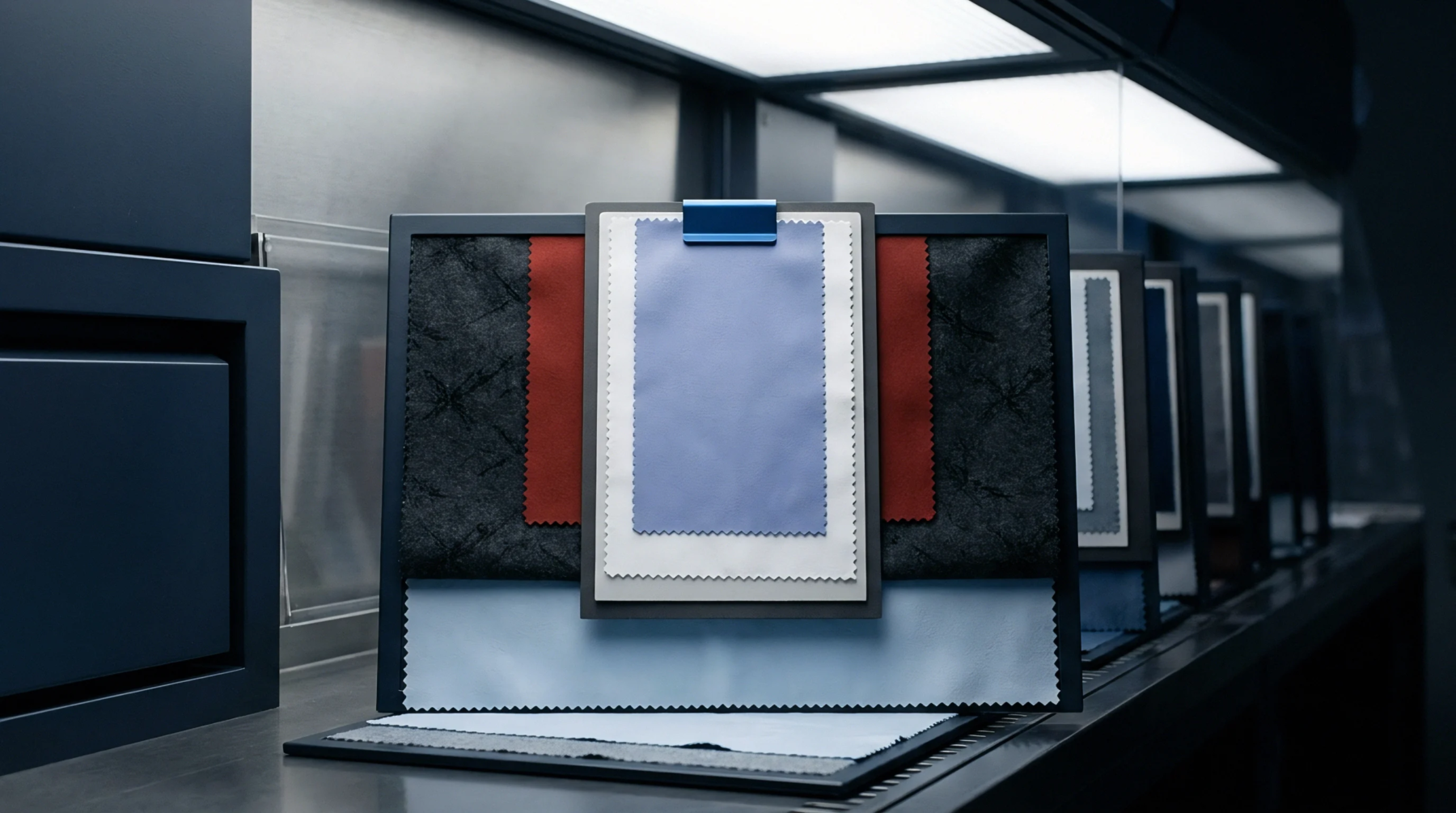
Sample Preparation
The arrangement of multiple layers of textile material ensures that the optical measuring instrument does not capture light transmitted through the sample from behind. When measuring translucent or thin fabrics, the number of fabric presentation plies must be sufficient to achieve opacity. This prevents the backing material of the sample holder from altering the measured color.
Optical Transmission
To determine the required layers, a technician measures a single layer against a white tile and then against a black tile. If the color readings differ, the fabric is not opaque, and more fabric presentation plies must be added. This procedure is repeated until the measurement remains unchanged regardless of whether the background is black or white.
For lightweight cotton knits, four layers are often sufficient, whereas thin silk chiffon may require eight or sixteen layers to achieve complete opacity.
Production Consistency
In a busy garment factory, failing to use a uniform number of layers leads to false rejections or false passes during quality control. The standard operating procedure must specify the exact layer count for each fabric weight.
Substrate Thickness
Very thick textiles like heavy denim or wool coating require only two layers or even a single layer. Adding unnecessary layers to thick fabric is a waste of time and can prevent the instrument holder from closing properly.