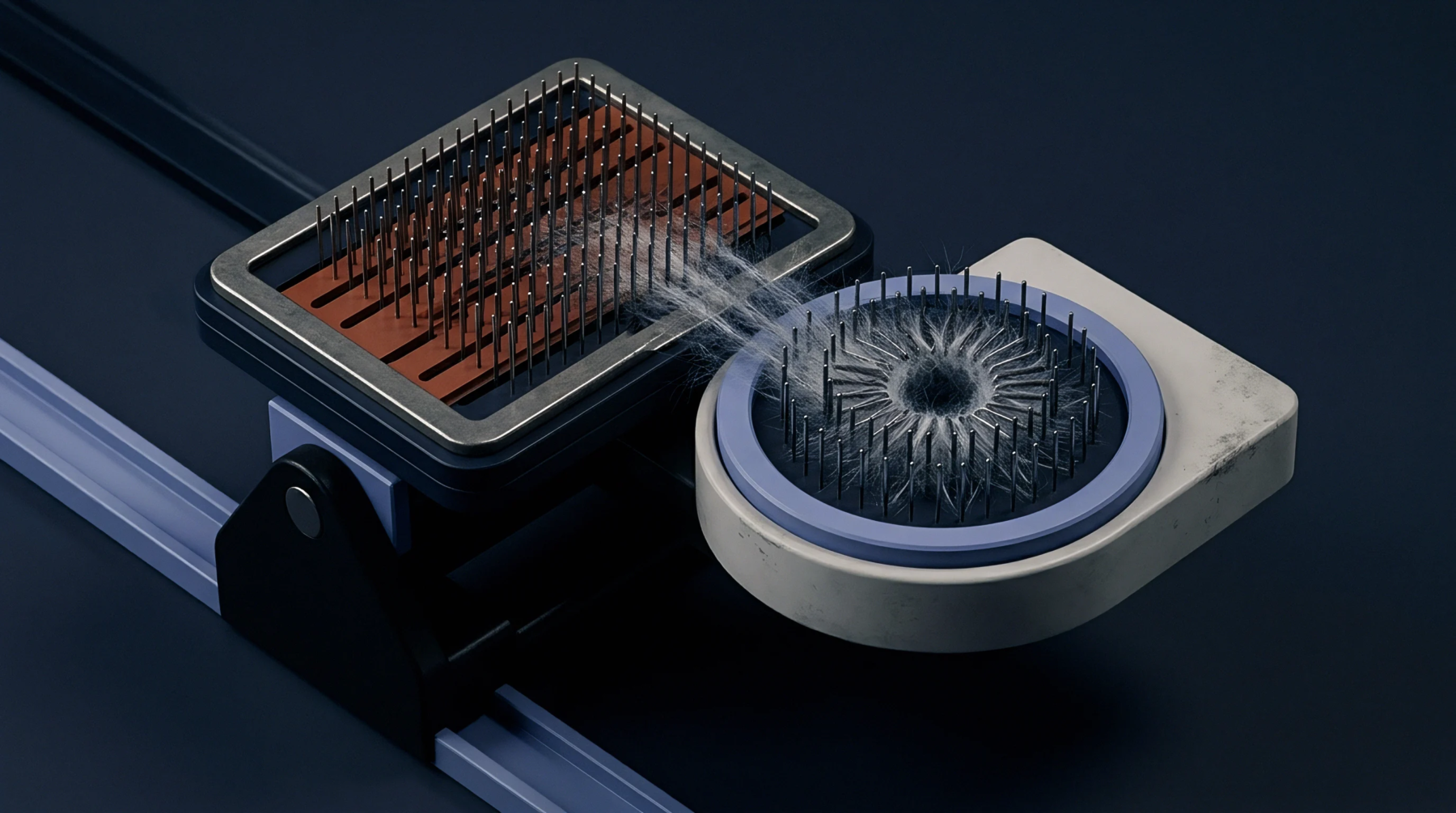
Material Failure
Physical degradation occurs when the structural integrity of a textile filament or staple is compromised during processing. Fiber breakage describes the snapping or fragmenting of individual hairs or filaments into shorter lengths due to mechanical stress. This reduction in mean length negatively impacts the spinning performance and the final strength of the yarn.
It is particularly prevalent during the harsh mechanical actions of ginning, carding, combing and spinning where high friction or tension is applied.
Mechanical Origin
Aggressive beaters in the opening room or tight settings in the carding machine often trigger this damage. If the moisture content of the raw material is too low, the fibres become brittle and more susceptible to shattering. Synthetic fibres can also suffer from this during extrusion if the cooling rate is uneven or the drawing tension is too high.
Monitoring the short fibre content before and after each process stage allows a mill to identify the exact point of failure.
Product Defect
Increased hairiness in the yarn and lower weaving efficiency are the primary consequences of excessive snapping. Shortened fibres do not migrate well to the core of the yarn, leading to a weaker structure.
Analytical Testing
Laboratory analysis using high volume instruments or individual fibre testing determines the extent of the damage. These results guide the adjustment of machine speeds and humidity levels in the factory.