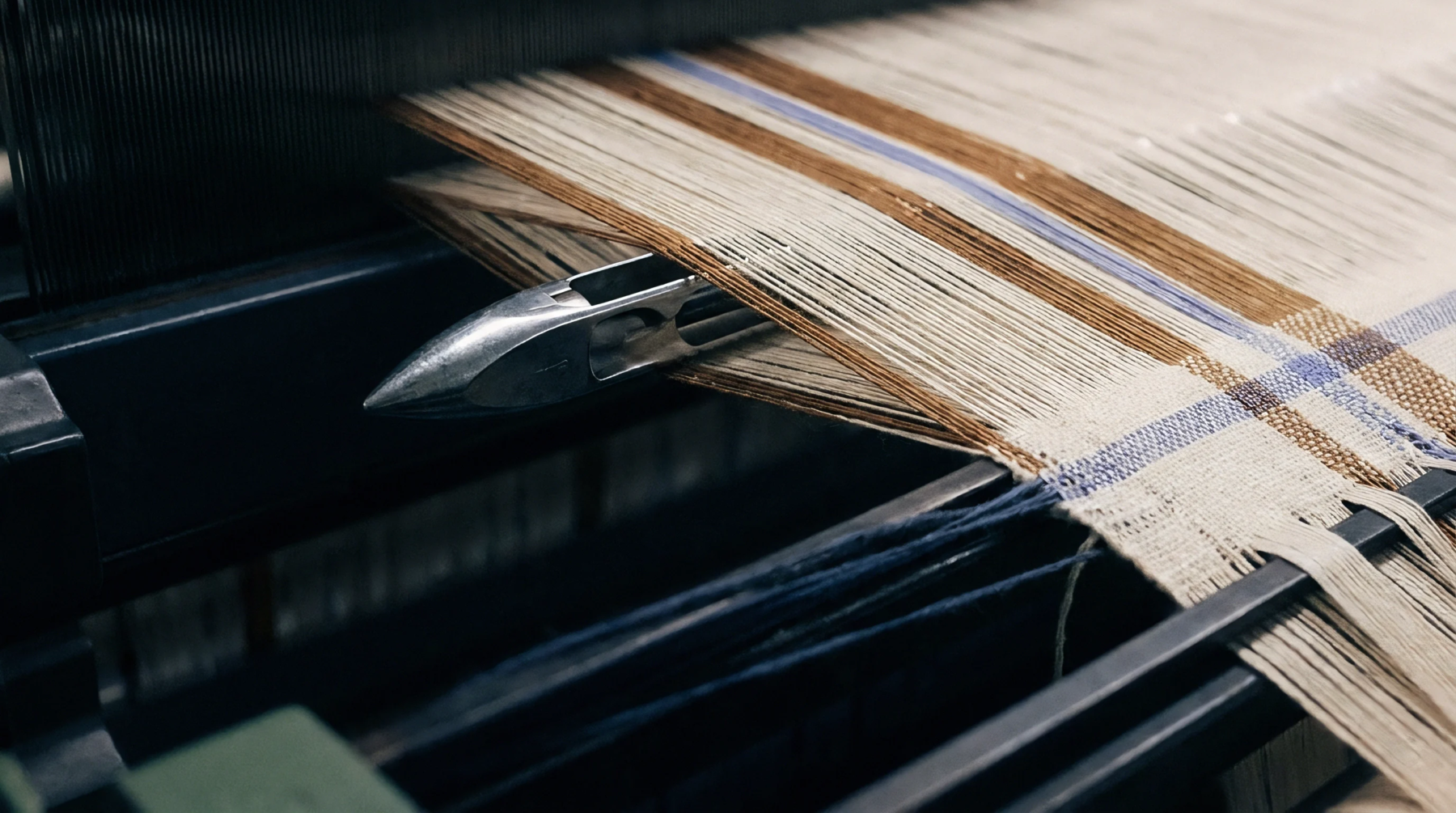
Basic Minimum Warp Set Calculation Principles for Greige Weaving
Greige warp set calculations must integrate reed width contraction, warp crimp, sizing stretch, and setup waste to establish accurate yarn purchase masses.
Geometric constraint defines the interior void available for tensioning hardware within a textile winding assembly to ensure structural stability during high speed processing. Proper flange volume capacity allows the machine operator to maintain constant linear velocity without causing friction spikes or mechanical interference at the edge of the spool. This parameter dictates how much thread or yarn fits onto a carrier while preventing overflow that would damage the filaments during unwinding at the dyeing or knitting stage.
Manufacturers calculate the available space based on the distance between the lateral walls and the radius of the inner core. Accurate measurements prevent premature stopping of the production line due to equipment collisions.
Production equipment utilizes this metric to determine the maximum length of textile material loaded onto a single beam before structural failure occurs. If the spool exceeds its designated limit, the outer layers of the fibre pack compress the lower sections, creating internal pressure gradients that ruin uniform tension. Mills monitor the fill level during the winding cycle because overloaded carriers frequently fracture under the radial force exerted by high modulus synthetic fibres.
Technicians rely on calibrated sensors to monitor the accumulation progress, ensuring the material remains within the designated limits throughout the duration of the run. Stable dimensions ensure that the drive motors maintain consistent torque without experiencing the load spikes common in improperly filled assemblies. When the pack reaches the physical boundary of the walls, the winding unit triggers an automatic stop to protect the integrity of the textile substrate.
Mechanical boundaries exist to protect the product during storage and transport between different facilities. Flange volume capacity acts as a protective buffer that prevents external surfaces from rubbing against the wound filaments when carriers sit on pallets or racking systems. Textile integrity suffers when the material touches the surrounding environment, as snagging causes filament breakage or surface contamination.
The design of the spool ensures that the depth of the wrap remains slightly below the top of the wall to minimize contact risk. Correct geometry ensures that the spool withstands the weight of the material without deformation, keeping the axis of rotation true even when the total mass becomes substantial.
Precise sizing of these components reduces the risk of irregular dye uptake caused by uneven compaction of the yarn layers at the edge of the assembly. Dense regions along the spool wall resist fluid flow during the pressurized liquor cycle, leading to mottled colours in the finished bolt of fabric. Uniform loading across the entire width of the carrier promotes consistent batch results when the mill processes synthetic or natural fibres through industrial immersion tanks.
This calculation minimizes waste by allowing the maximum amount of product to fit safely on the carrier while avoiding the quality defects associated with overflow or extreme compression. Correct volume management constitutes the primary factor in maintaining consistent quality standards across large industrial lots.
Greige warp set calculations must integrate reed width contraction, warp crimp, sizing stretch, and setup waste to establish accurate yarn purchase masses.
Expertise is a utility, not a secret. sentiention™ publishes its working knowledge as open reference: intelligence layer covering the materials it sources, the markets it enters, and the reference that serves both.