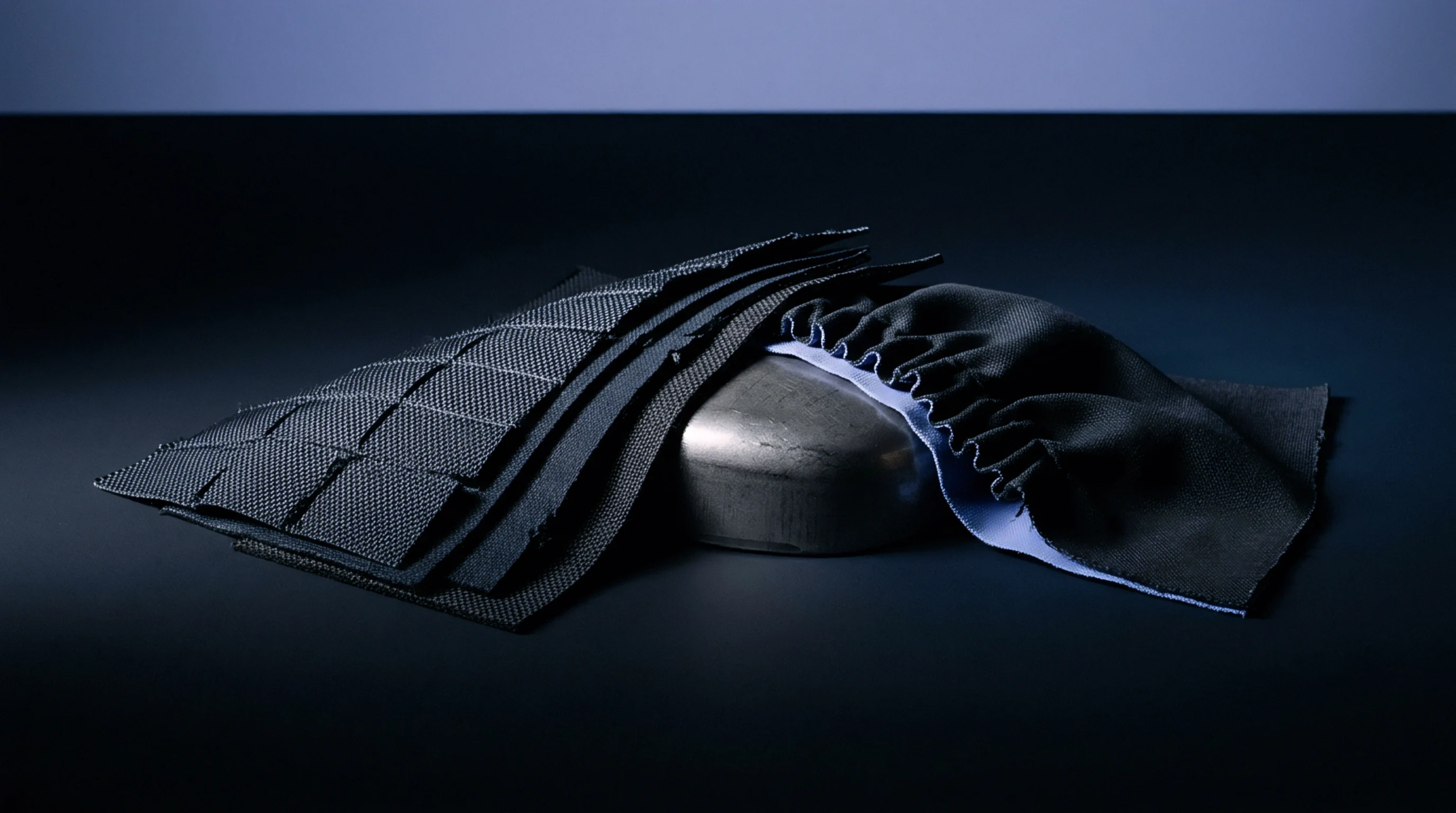
Chemical Displacement
Stress-induced chemical displacement occurs when repetitive bending forces mobile compounds to redistribute within a polymer-coated textile. In multi-layered coated fabrics, flexural fatigue migration drives plasticizers away from high-flex zones, causing localized cracking. This weakens the structure.
Degradation Pathway
Repetitive mechanical loading creates pressure gradients in the coating that force the low-molecular-weight additives to migrate toward less-stressed areas. Through flexural fatigue migration, the polymer matrix loses its elasticity in the crease zone, making the textile susceptible to water penetration and delamination. It shortens product lifespan.
Laboratory Measurement
Standard flex-testing machines bend the fabric samples thousands of times under controlled humidity to stimulate compound movement. When analyzing these stressed materials, technicians measure flexural fatigue migration by extracting plasticizers from both the creased and uncreased zones to compare their relative concentrations. By quantifying this distribution imbalance, the laboratory can pinpoint the exact number of flex cycles the synthetic leather withstands before its protective barrier fails.
This test establishes the physical limits of coated protective clothing.
Prevention Strategy
Coating formulations must include polymeric plasticizers with higher molecular weight to resist movement under mechanical stress. When manufacturers minimize flexural fatigue migration, the coated fabric retains its soft hand and flex-resistance during long winter usage. It ensures long-term performance.