Finishing Technique
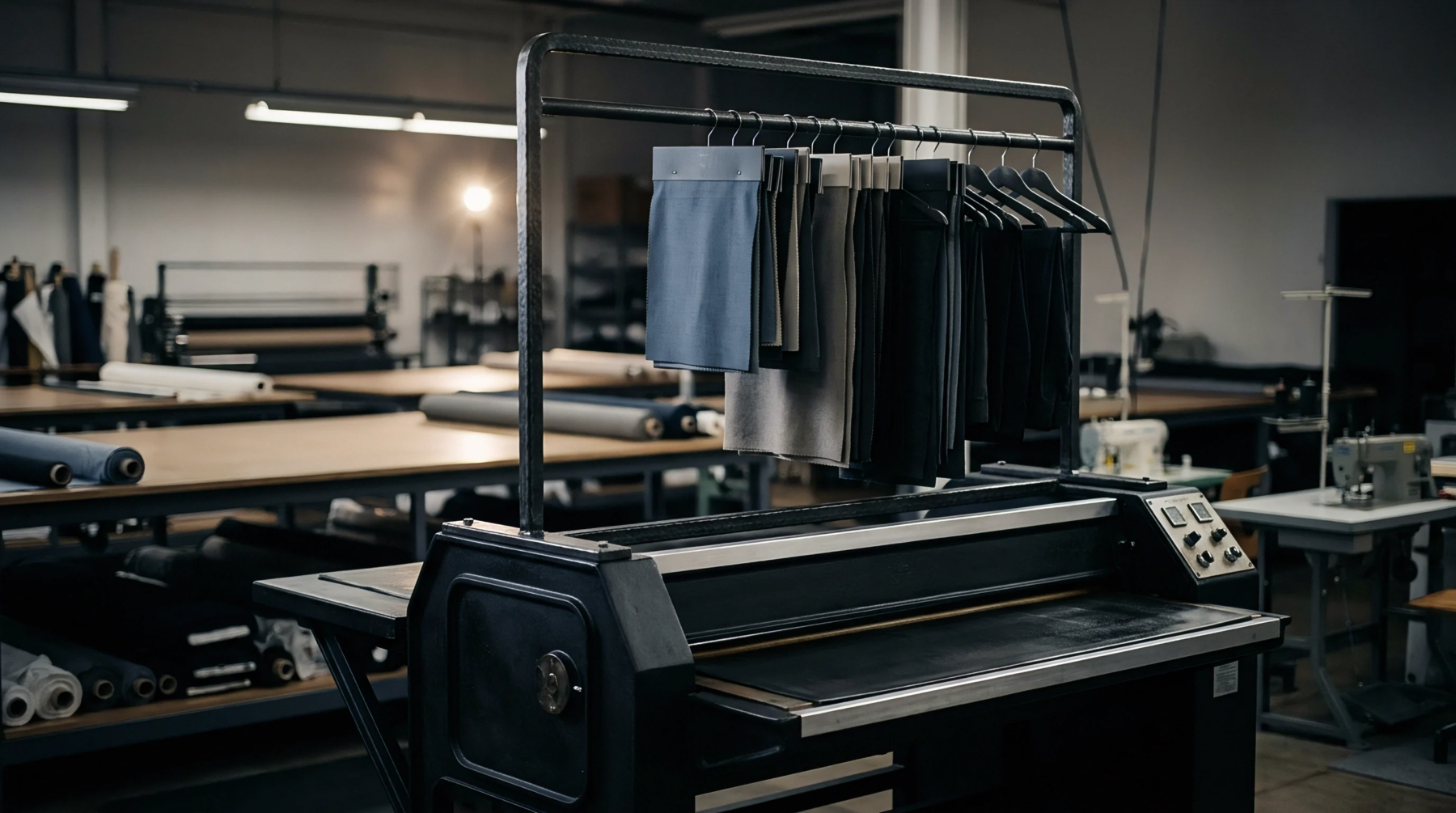
A wet-treatment method applies liquid chemicals, dyes, or finishes to a continuous open-width textile web by passing it through a bath and then squeezing it between heavy rollers. This industrial procedure is called foulard application, and it is used to apply softeners, resins, or water repellents to woven and knitted fabrics. It stops being effective if the fabric tension is uneven or the roll pressure is asymmetrical.
Mechanical Process
The fabric is drawn through a trough containing the chemical solution, allowing the fibres to absorb the liquid. Squeeze rollers, or bowls, then compress the saturated fabric to remove excess liquid and force the remaining finish deep into the yarn structure. This controlled pressure determines the pick-up percentage, which is the ratio of chemical weight to dry fabric weight.
Squeezed fabric next enters a stenter frame where it is dried and cured at high temperatures to set the finish.
Industrial Efficiency
Dye houses rely on foulard application to achieve highly uniform color and chemical distribution across thousands of meters of fabric. This continuous process reduces water consumption compared to exhaust dyeing methods in beck or jet machines. It provides a reliable means to apply functional finishes to synthetic and natural fibres.
Application Constraint
Knitted fabrics with high elasticity cannot be treated this way without risking distortion. The tension required to pull the fabric through the rollers can permanently stretch the knit, altering the finished garment dimensions.