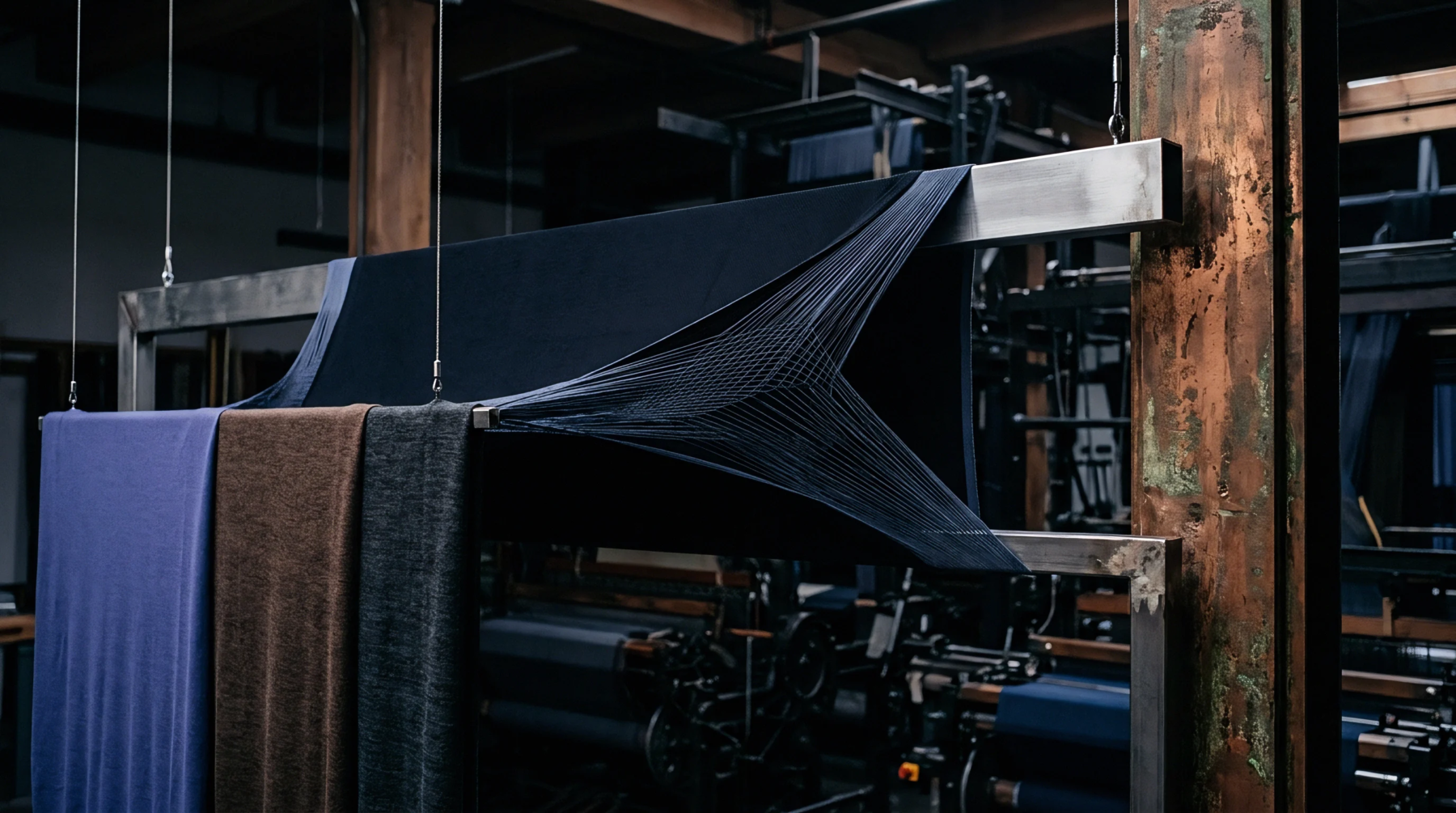
Fabric Stabilization
A dimensional recovery process acts on unfinished textiles to neutralize latent stresses introduced during spinning and loom operations. Grey relaxation describes the release of internal tensions within yarns and woven structures when the material rests in a neutral state before chemical finishing. Hydrophilic fibers absorb atmospheric moisture during this phase, which allows molecular chains to shift into equilibrium positions.
Manufacturers monitor this transition to predict how the final goods behave under subsequent heat setting or laundering conditions.
Tension Equilibrium
Internal energy stores itself in high-modulus fibers during high-speed mechanical processing. Grey relaxation permits the geometric reconfiguration of the fabric architecture without external constraint. Mechanical constraints such as stentering or heavy calendaring delay this movement until the material reaches the consumer.
Predicting total shrinkage requires accounting for the degree of this natural recovery.
Process Verification
Fabric samples sit in controlled humidity chambers to quantify dimensional changes over a defined duration. Technicians record surface area fluctuations across both the warp and weft directions. Consistent environmental parameters guarantee that observations reflect the material properties rather than transient ambient variance.
Discrepancies between the initial grey dimensions and the post-relaxation state indicate the intensity of latent processing strain.
Operational Consequence
Reducing tension prior to wet processing prevents uncontrolled shrinkage that distorts printed patterns or finished garment proportions. Mills implement this resting period to ensure that subsequent cutting and sewing occurs on a stable substrate. Failure to permit sufficient time for this change results in permanent dimensional instability in the final product.
Consistent wait times maintain standardized manufacturing workflows across diverse production runs.