Preparation Sequence for Heavy Cotton Duck Grey Goods
Heavy cotton duck demands high-penetration singeing, enzymatic desizing, deep caustic scouring, and tensioned mercerization to clear core impurities.
Singeing
Heavy cotton duck arrives off the shuttleless or projectile loom carrying a dense perimeter of protruding fibre ends, warp sizing residues, and natural non-cellulosic impurities. The base construction ranges from Number 1 duck at 610 grams per square metre down to Number 12 duck at 390 grams per square metre, constructed from plied yarns such as 10/2, 7/3, or 8/4 ring-spun cotton. The physical mass of these plied yarns creates deep interstitial valleys that shield protruding fibres from line-of-sight thermal treatment.
Processing this weight requires two-burner or four-burner high-velocity gas singeing units operating with a controlled air-fuel gas mixture of natural gas or liquefied petroleum gas. The burner flame must hit the cloth tangentially or at a direct 90-degree angle while the fabric runs over water-cooled steel guide rollers maintained between 35 and 40 degrees Celsius to prevent thermal accumulation in the core structure.
Linear speed governs thermal transfer across the thick cross-section. For a Number 4 duck measuring roughly 815 grams per square metre, speed ranges from 65 to 85 metres per minute with a burner chamber depression of 8 to 12 millibars. Inadequate flame penetration leaves wild surface fibres standing, generating uneven dye take-up and cloudy pigment deposits during later pad applications.
Excessive exposure or insufficient fabric speed scorches yarn knuckles, reducing warp tensile strength below standard tolerances governed by ASTM D5034 or ISO 13934-1.
| Duck Classification | Nominal Greige Weight (g/m²) | Standard Yarn Construction | Line Speed (m/min) | Burner Pressure (mbar) |
|---|---|---|---|---|
| Number 1 Duck | 610 | 7/3 Warp, 7/3 Weft | 60 to 75 | 12 to 14 |
| Number 4 Duck | 815 | 7/4 Warp, 7/4 Weft | 50 to 65 | 10 to 12 |
| Number 8 Duck | 475 | 10/3 Warp, 10/3 Weft | 80 to 95 | 8 to 10 |
| Number 10 Duck | 400 | 10/2 Warp, 10/2 Weft | 90 to 110 | 7 to 9 |
| Number 12 Duck | 350 | 12/2 Warp, 12/2 Weft | 100 to 120 | 6 to 8 |
Immediately behind the burner bank, glowing lint specks enter a water quench box. The bath contains an enzyme desizing solution or a surfactant bath at 60 degrees Celsius to extinguish embers and wet out the tightly packed plied bundles. Running heavy grey goods dry through the slitter or directly into a pile risks smouldering interior pockets that combust hours later inside the grey warehouse.
A wet desize quench immediately after the singe flame prevents internal ember pockets from incinerating wound cloth rolls.
A supplier will often claim that single-pass singeing at elevated temperatures matches the clarity of a dual-sided, double-burner pass. Microscopic evaluation reveals the consequence: singeing can leave the valley fibres untouched while charring the crowns of the plied yarn loops, producing warp-direction stripe streaks during continuous dyeing.
Desizing
Sizing recipes on heavy duck warps run heavily to native maize, tapioca, or potato starches, combined with tallow waxes or synthetic lubricants to withstand beat-up pressures during weaving. The heavy warp yarn absorbs between 8 and 14 percent size by dry weight. Removing this starch envelope demands an enzymatic approach using bacterial alpha-amylase operating at neutral to slightly acidic pH values between 6.0 and 7.0, or thermo-stable enzymes functioning up to 95 degrees Celsius.
Enzymatic Cleavage Conditions
Alpha-amylase cuts the interior alpha-1,4-glucosidic bonds of amylose and amylopectin, splitting macro-polymers into short-chain water-soluble dextrins. Pad-batch desizing on heavy duck requires saturation liquor pickups between 90 and 110 percent, controlled by heavy-duty pneumatic padding mangles with shore hardness around 75 to 80 durometer. The liquor holds 2 to 6 grams per litre of thermostable amylase, 3 to 5 grams per litre of an uncharged non-ionic wetting agent stable to high bath salinity, and 1 to 2 grams per litre of calcium chloride to stabilize the enzyme against heat inactivation.
The heavy construction impedes core saturation; the padding unit demands a double-dip, double-nip pan design.
Batch rotation retains moisture during enzymatic digestion. After padding at 70 degrees Celsius, rolls wrap tightly in non-breathable polyethylene sheeting. The wrapped rolls rotate continuously on an A-frame drive at 4 to 8 revolutions per minute for 8 to 16 hours at ambient temperatures between 20 and 28 degrees Celsius.
Stopping roll rotation causes the chemical liquor to migrate toward the lower core due to gravitational pull, generating massive side-to-centre and head-to-tail shade variance in finished piece lots.
- Enzyme Impregnation fills the plied warp yarns through a dual-dip pad box operating at 70 degrees Celsius with liquor wet pick-up exceeding 95 percent.
- Batch Rotation on powered A-frames prevents gravimetric settling of desize reagents during an eight-to-twelve-hour dwell window.
- High-Temperature Washing strips broken dextrins in multiple open-width wash boxes ramping sequentially from 95 down to 60 degrees Celsius.
- Iodine Stain Verification proves size degradation across the full web width by targeting zero purple coloration under photographic spot evaluation.
Residual starch evaluation follows the TEGEWA scale using an aqueous potassium iodide-iodine reagent. When dropped onto the desized fabric face, ratings range from 1, showing dark violet starch remnants, to 9, indicating complete starch removal. Commercial conversion specs for heavy cotton duck intended for vat or reactive piece dyeing accept a minimum TEGEWA rating of 6 to 7.
Lower numbers confirm remaining starch that resists dye molecule diffusion into the inner yarn core.
A minimum TEGEWA rating of 7 prevents ring dyeing on plied yarns during pigment and vat wet application sequences.
Leaving sizing residues inside heavy yarns creates an uneven hydrophobic resist layer. Later wet processes, including waterproofing or direct coating, delaminate under minimal flex cycles because the polymer anchors to residual starch instead of cellulosic fibrils.
Scouring
Greige cotton fibres carry non-cellulosic matter including waxes, pectins, proteins, mineral ashes, and seed-coat fragments. These constituents sit within the cuticle and primary cell wall, forming a hydrophobic layer that blocks water ingress. Heavy canvas demands open-width continuous scouring or pressurized jig processing using strong alkaline solutions.
Saponification turns water-insoluble fatty acids and wax esters into water-soluble soaps, while alkaline hydrolysis degrades pectins and hemicelluloses.
Chemical Saponification Mechanisms
Continuous scouring runs through roller steaming cabinets or tight-strand atmospheric steamers using 40 to 60 grams per litre of 100-percent sodium hydroxide, supplemented by 4 to 8 grams per litre of an alkali-stable detergent possessing high emulsifying power. The fabric experiences a dwell time of 30 to 45 minutes at 98 to 102 degrees Celsius under saturated steam conditions. For dense ducks weighing over 500 grams per square metre, jigger scouring remains widespread in non-continuous operations.
The jigger drives tension-controlled batches through a concentrated bath of 20 to 30 grams per litre sodium hydroxide with sequestering agents like polyphosphates or phosphonates to bind magnesium and calcium ions from hard water and raw fibre ash.
| Processing System | NaOH Concentration (g/L) | Bath Temperature (°C) | Dwell Time | Core Absorbency (AATCC 79) |
|---|---|---|---|---|
| Continuous Pad-Steam | 45 to 60 | 100 to 102 | 30 to 45 minutes | Under 3 seconds |
| Atmospheric Jigger | 20 to 30 | 95 to 98 | 4 to 6 ends | Under 5 seconds |
| Cold Pad-Batch | 60 to 80 | 20 to 25 | 16 to 24 hours | 4 to 8 seconds |
| Pressure Kier (Historic) | 15 to 20 | 115 to 125 | 4 to 6 hours | Under 2 seconds |
Pectins and natural waxes present within the dense cotton core soften above 70 degrees Celsius. Hot-water rinsing must follow immediately after scouring. If the wash liquor drops below the melting point of emulsified waxes, the fatty residues precipitate back onto the duck surface.
Once re-deposited on heavy duck, these wax spots become impossible to remove uniformly without restarting the entire alkali boil.
Residual fat extraction per Soxhlet ASTM D2257 must register below 0.4 percent dry weight to clear heavy duck for downstream coating lines.
The standard failure mode in heavy canvas preparation rests on the buyer trusting surface drop tests while the yarn core remains raw. Water drops settle instantly on loose surface fuzz, yet cutting open an 8/4 yarn reveals an untreated, dry interior that repels subsequent liquid dyes.
Bleaching
Natural cotton maintains a yellowish-grey cast caused by natural flavonoids and organic pigments. When the duck is bound for bright pastel shades, military specifications requiring distinct spectral reflectance, or pristine natural canvas goods, oxidative bleaching breaks these conjugated double-bond chromophores. Hydrogen peroxide under alkaline activation remains the baseline system across modern finishing plants.

Peroxide Catalysis and Stabilization
Hydrogen peroxide decomposes in alkaline water into perhydroxyl ions, the active bleaching species, alongside hydroxyl free radicals. Controlling this dissociation rate prevents catalytic pinhole damage, known as fibre depolymerization, caused by adventitious trace iron or copper ions originating from processing water or yarn spinning hardware. The scouring and bleaching liquors incorporate organic stabilizers such as sodium silicate, organophosphonates, or polyhydroxycarboxylates at 3 to 6 grams per litre.
The bath pH stays buffered between 10.5 and 11.0 using sodium hydroxide.
The concentration of 35-percent hydrogen peroxide ranges from 30 to 50 millilitres per litre for continuous pad-steam routines, with dwell exposures of 20 to 40 minutes at 98 degrees Celsius. Jigger bleaching employs 15 to 25 millilitres per litre for 3 to 5 ends at 90 to 95 degrees Celsius. In heavy duck destined for dark workwear shades, deep olive drabs, or industrial tarpaulins, full bleaching is routinely skipped.
A half-bleach scouring process cleans seed-coat remnants while preserving the native cellulose molecular structure, conserving yarn tensile strength.
- Sodium Silicate Additions control peroxide decomposition rates but generate hard glassy precipitates on metal guide rollers when rinse temperatures fluctuate wildly.
- Magnesium Salt Buffers deactivate trace heavy metals present in the well-water systems typical of regional dye facilities.
- Non-Silicate Sequestering Formulations keep equipment surfaces clean in heavy washing compartments while preventing silicate scale build-up inside steam chambers.
- Post-Bleach Catalase Enzymatic Rinses destroy residual perhydroxyl ions without requiring multiple hot water exchanges, neutralizing the bath for reactive dyestuffs.
Cellulose damage is quantified by measuring the fluid fluidity of cotton dispersions in cupriethylenediamine hydroxide according to ASTM D1204 or AATCC Test Method 82. Pure greige cotton records fluidity values of 1.5 to 3.0 r放射 (rhese). Correctly bleached industrial canvas maintains fluidity under 6.0 rhese.
Values running over 9.0 rhese indicate aggressive hydrolytic or oxidative damage, causing substantial tear strength degradation on tearing methods like ASTM D1424 Elmendorf.
A cupriethylenediamine fluidity reading above 7.0 rhese signals structural embrittlement that invalidates fabric warranty thresholds for load-bearing canvas.
When the bleaching sequence is rushed through inadequate rinsing, active peroxide carryover into reactive dye liquors strips colour yield, creating blotchy, pale panels across the final production roll.
Mercerization
Subjecting tensioned heavy cotton duck to cold, concentrated sodium hydroxide changes the crystalline morphology of native cellulose from the monoclinic cellulose I lattice into the cellulose II allomorph. Native cotton fibres possess a flattened, kidney-shaped cross-section with an internal lumen. Concentrated caustic soda causes the cell walls to swell inwards, untwisting the longitudinal fibre ribbon into a rounded cylinder.
This structural shift increases light reflectance, increases chemical dye reactivity by exposing buried hydroxyl groups, and elevates mechanical tensile strength.
Caustic Swelling Dynamics
Processing uses 26 to 30 degrees Baumé sodium hydroxide, matching 200 to 240 grams per litre pure NaOH, at 18 to 22 degrees Celsius. Mercerizing thick canvas demands high caustic penetration into the plied core within a 30 to 60-second contact window. Achieving this penetration requires specialized, low-foaming wetting agents such as cresylic acids or branched sulfated alcohols capable of surviving concentrated alkali without salting out.
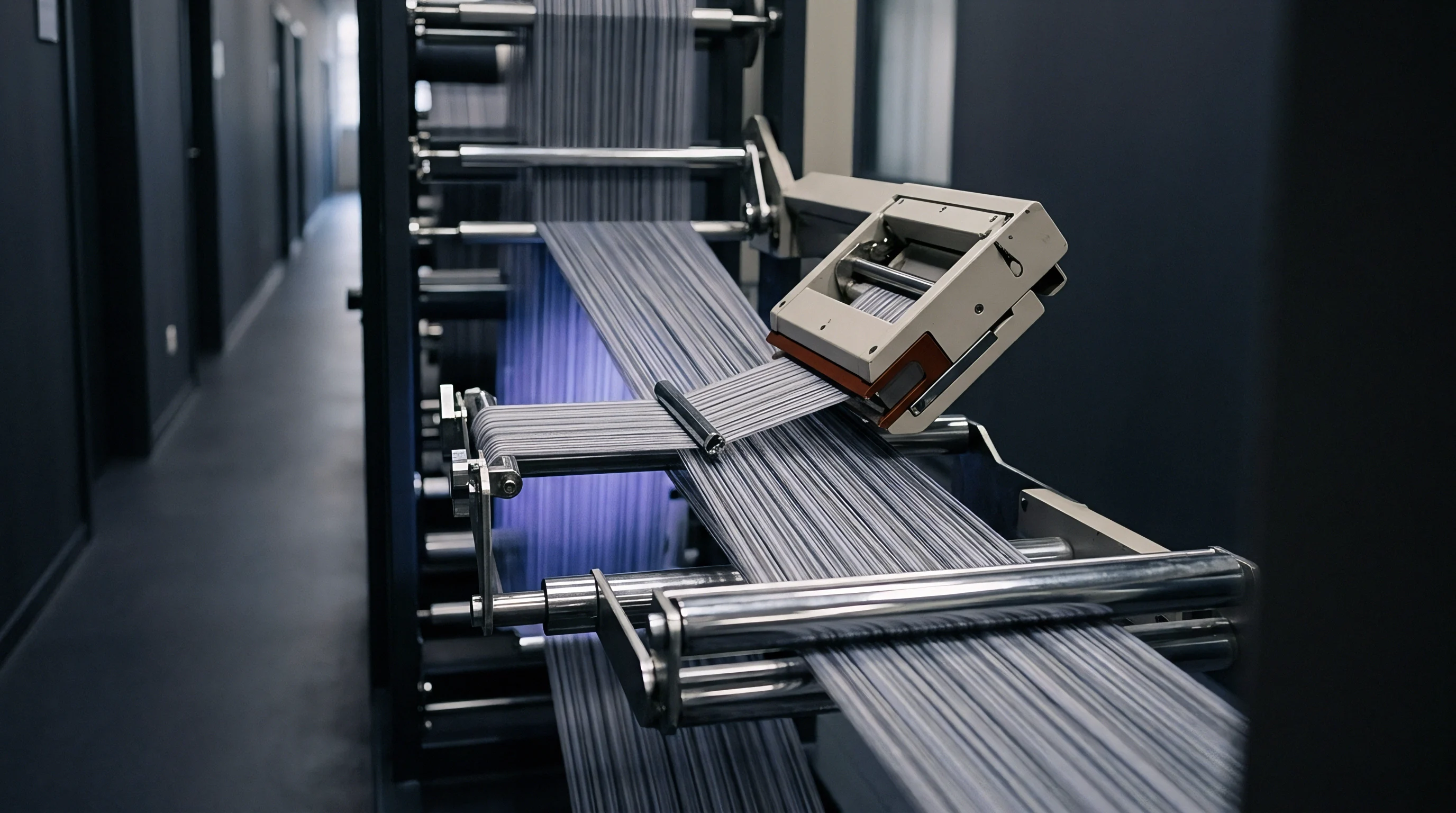
Mechanical tension distinguishes true mercerization from tensionless caustic shrinking or caustic caustification. For duck canvas, the process relies on chain mercerizers or roller mercerizers. Fabric enters pad mangles under lengthwise brake tension, wraps tightly driven timing rollers, and feeds onto pin or clip stenter chains that grip the heavy woven selvedges.
The chain pulls the wet web to target width or slightly over greige dimensions to prevent warp and weft contraction during structural swelling.
| Caustic Density (°Baumé) | Concentration (g/L NaOH) | Barium Activity Number | Tensile Strength Gain (%) | Dye Affinity Index |
|---|---|---|---|---|
| 0 (Scoured Baseline) | 0 | 100 | 0 | 1.00 |
| 15 (Caustified) | 110 | 115 to 120 | 3 to 5 | 1.18 |
| 22 (Sub-Mercerized) | 170 | 128 to 135 | 6 to 9 | 1.30 |
| 28 (Full Mercerization) | 225 | 145 to 155 | 12 to 18 | 1.45 |
| 32 (High Saturated) | 265 | 150 to 160 | 14 to 20 | 1.48 |
Measuring the chemical change employs the Barium Activity Number based on ASTM D640 or AATCC Test Method 89. Unmercerized scoured cotton assumes a baseline barium absorption value of 100. Adequately mercerized heavy duck delivers a Barium Activity Number of 140 to 155.
Values below 130 confirm improper caustic penetration into the interior yarns of plied constructions, meaning inner fibrils remain untransformed.
A Barium Activity Number below 135 reveals core unmercerized fibrils that cause visible frost streaks when the duck abrades in abrasive field applications.
Should the washer water run out of specification after mercerizing? If the washing sequence drops warp tension before the caustic concentration inside the cloth falls below 6 to 8 degrees Baumé, the duck contracts violently in the filling direction. This uncontrolled shrink creates deep longitudinal puckers that no subsequent stenter can pull flat without tearing the selvedge edges.
Washing
Preparation of dense textiles uses significant water volume across open-width continuous wash ranges. Heavy duck constructions trap large amounts of process liquor within their interstitial weave voids. Simple immersion washing fails because boundary layers of stagnant fluid cling to dense surfaces.
Effective washing demands high-velocity mechanical water action, counter-current liquor flow, and controlled mechanical fabric flexing.
Counter-current mechanics direct fresh clean incoming water into the final delivery wash box, flowing backward toward the dirtiest entry box where greige cloth arrives soaked with desize or scour reagents. Modern ranges use spray-vacuum extractors, driven beaters, or perforated drums with internal suction. Water jets strike the fabric face at 2 to 4 bar pressure, driving fluid directly through the yarn plies rather than allowing it to wash passively over the surface.
- High-Temperature Counter-Flow Dilution strips unreacted sodium hydroxide at 90 to 95 degrees Celsius to sustain wax emulsification.
- Mechanical Agitation Wash utilizes submerged grooved rollers and hydraulic wash chambers to flex the yarn bundles.
- Neutralization Treatment feeds 1 to 2 grams per litre of organic acid into intermediate boxes to balance the cloth pH between 6.5 and 7.0.
- Cold Polish Rinse removes residual salts and settles the cellulosic fibres prior to heavy extraction drying.
Neutralizing heavy duck calls for weak organic acids, such as acetic or citric acid, instead of harsh mineral alternatives. Dilute sulfuric or hydrochloric acid carries extreme risk: during downstream hot air stenter drying, any localized mineral acid residue concentrates through water evaporation, producing mineral tenderizing that disintegrates cotton cellulose into hydrocellulose. Checking residual acidity requires measuring core extraction pH per AATCC Test Method 81, holding the target range tightly to 6.5 through 7.5 across the entire roll pack.
Under standard industrial supply contracts, any roll lot delivering an extraction pH higher than 8.0 faces outright rejection prior to drying.
Process equipment with insufficient wash boxes forces operators to cut line speed or lower water volume to protect utility budgets. Under-washed cotton duck leaves residual caustic or broken size salts dried into the yarn cores, producing white salt bloom and brittle fibre characteristics during prolonged shelf storage.
Handling
Heavy duck behaves differently than standard apparel weaves under machine tension. The substantial crimp inherent in heavy cotton duck makes the greige material sensitive to tensile stretch along the warp axis. When continuous preparation lines pull wet duck under excessive machine drive tensions, the warp straightens completely, forcing the weft yarns into exaggerated sine-wave crimp paths.
This tension imbalance produces severe width necking, where 160-centimetre loom-state cloth narrows down to 142 centimetres at the exit mangles.
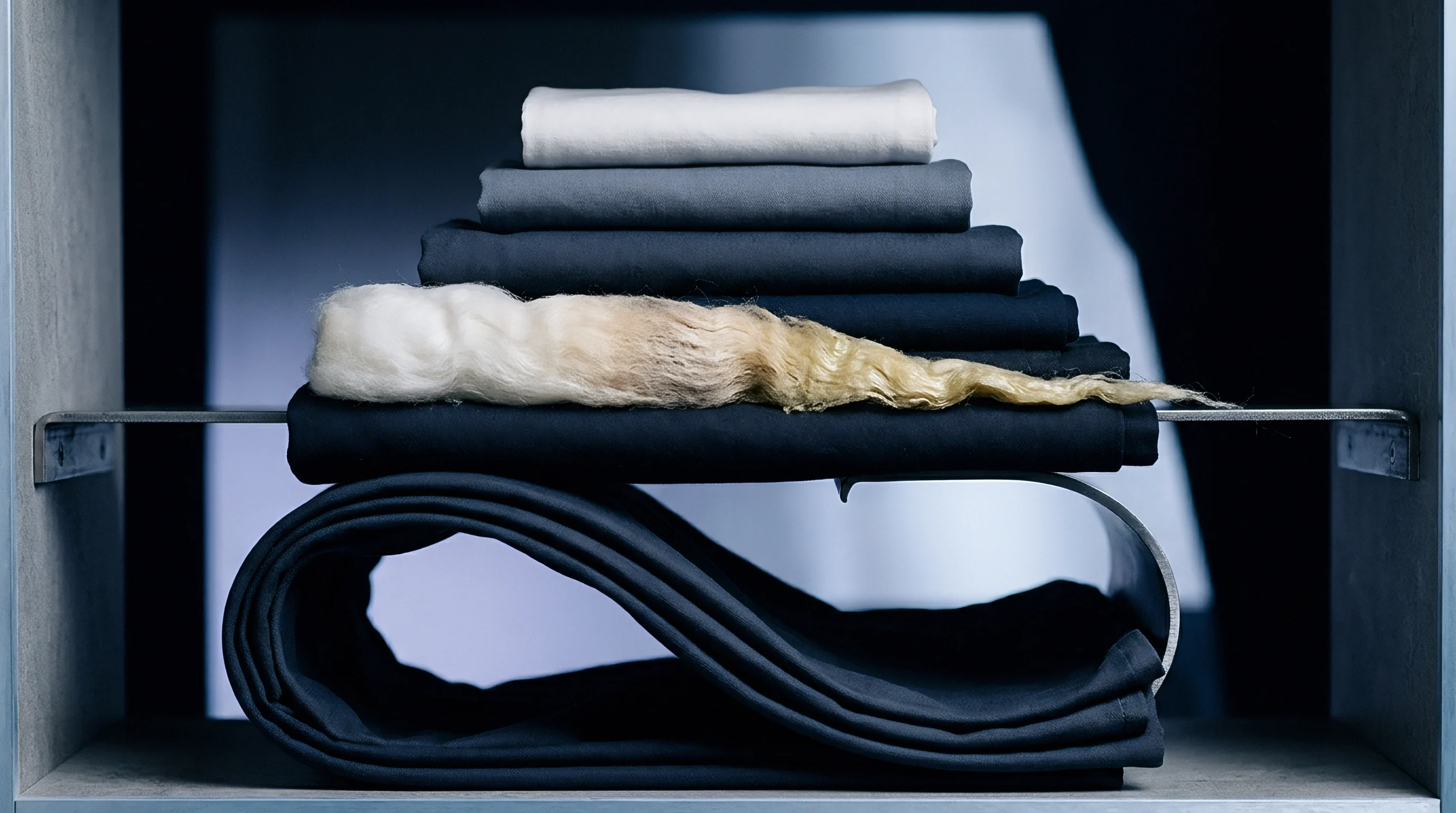
Mechanical Width Control and Bowing
Preventing skewed or bowed filling yarns across the web requires automated optoelectronic weft straighteners fitted with heavy-duty bias and bow correction rolls. Standard apparel straighteners cannot shift the dense plied yarns of a Number 4 or Number 6 duck. The equipment requires heavy steel hydraulic skew rollers capable of exerting differential loads up to 15 kilonewtons.
ASTM D3882 defines limits for bow and skew in commercial canvas: military canvas specifications routinely restrict skew to a maximum of 2.5 percent of fabric width, while standard commercial gear permits up to 3.5 or 4.0 percent.
Drying damp duck relies on continuous steam-heated cylinder stacks followed by a pin stenter frame. Running wet canvas directly onto an unsupported conveyor oven causes uneven shrinkage and wild cockling. Drying proceeds across double-stack cans carrying 5 to 7 bar steam pressure, followed by stenter entry equipped with overfeed capabilities of negative 2 to positive 5 percent to restore the dimensional balance established during the mercerization phase.
The operational dispute in preparation centers on balancing mechanical speed against chemical penetration time. Running a multi-box range at 120 metres per minute delivers profitable conversion volumes, but dense multi-ply bundles exit the chemical compartments with completely untouched, raw cores. Slowing the machinery to 45 metres per minute secures chemical penetration through the yarn centres, but doubles thermal energy usage and operational machinery cost per running metre.
The finished greige preparation sequence yields an absorbent, chemically receptive textile platform, yet it leaves open the long-term question of how differing cotton staple origins and natural wax hardness indices disrupt continuous automated chemical dosing regimes across changing harvest years.