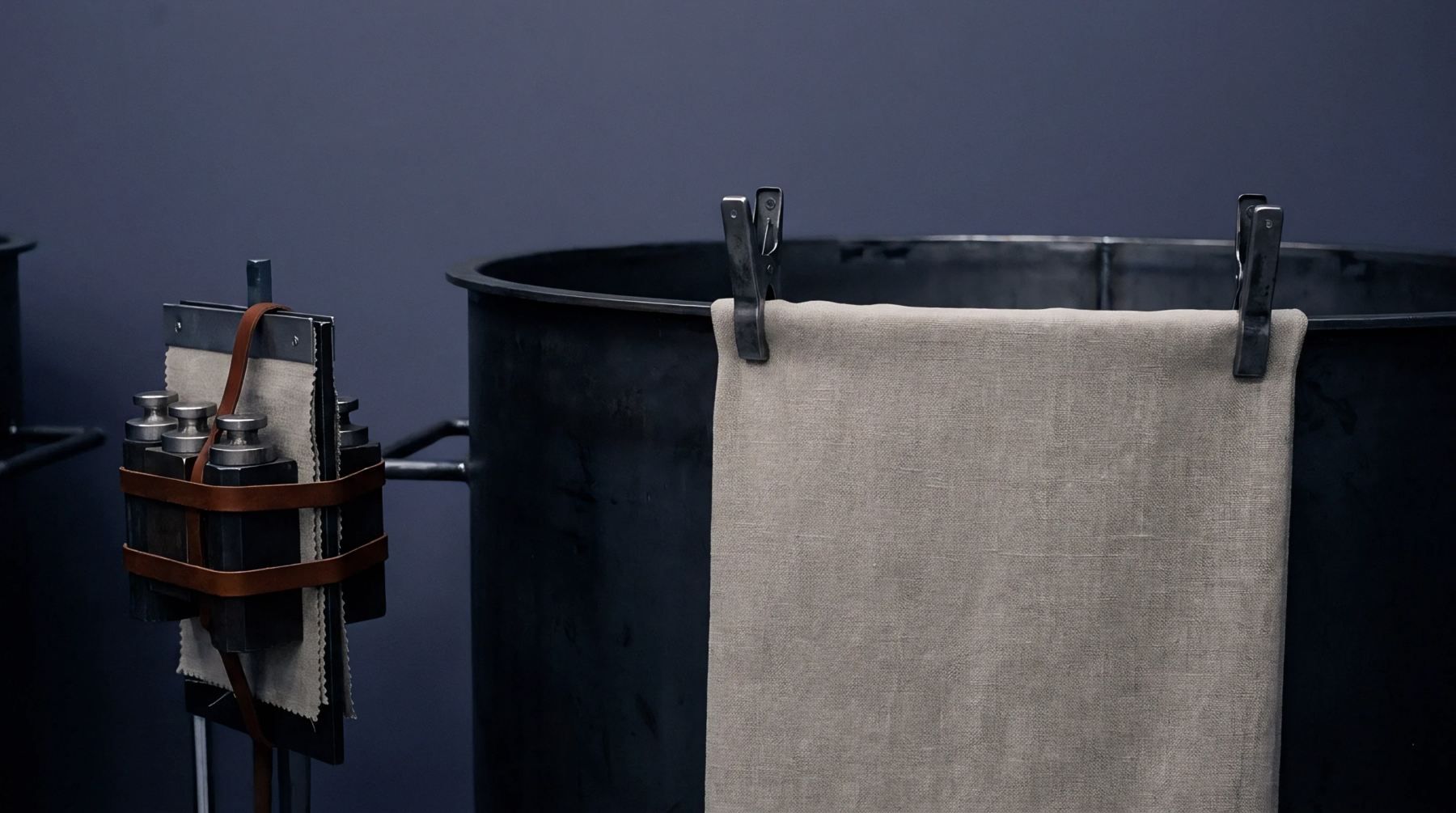
Precision Instrument
Laboratory sampling tools extract circular fabric specimens of exact surface area for rapid weight determination. A GSM cutter utilizes heavy internal blades to punch a one hundred square centimetre circular specimen from woven, knitted, or nonwoven textiles. Multiplying the mass of the resulting specimen in grams by one hundred yields the direct fabric weight in grams per square metre.
Quality control technicians rely on this standardized sample area to eliminate manual calculation steps during receiving inspections.
Mechanical Operation
Hand-operated pressure mechanisms turn internal razor blades against a heavy rubber cutting mat to slice cleanly through textile layers. Operators place flat fabric swatches onto the cutting pad, apply downward vertical force on the top handle, and rotate the mechanism clockwise. Clean specimen edges ensure accurate mass measurements by preventing loose yarn fraying during electronic balance weighing.
High-density rubber pads support blade pressure while protecting fine blade edges from premature dulling.
Maintenance Protocol
Routine replacement of dull blades and worn cutting pads maintains specimen dimensional accuracy across high-volume testing schedules.
Operational Limit
High-pile knits and heavy industrial canvas require specialized blade settings or mechanical leverage to prevent specimen edge distortion during cutting. Dense fabric constructions occasionally resist manual blade rotation, leading to incomplete circular cuts or distorted specimen perimeters. Damaged edge boundaries skew final balance readings, rendering calculated fabric mass values inaccurate for quality verification.