Standard Procedures for Measuring Textile Extract Ph Values
Textile extract pH testing requires precise solvent media selection, 3-point calibration, and spatial roll sampling to satisfy global market standards.

Flask
Textile wet-processing leaves chemical salts and residual acids trapped inside the fibre matrix. Measuring the pH of an aqueous extract reveals the ionic state of finished goods, showing whether acidic or alkaline residues remain after final washing. The test measures free hydrogen ions that migrate from cloth into a solvent phase under controlled temperature and agitation.
Solvent Mechanics and Extraction Media
Shaking the sample in liquid extracts free hydronium ions from processed cloth. Standard test methods specify two main extraction media: grade 3 deionized water or a 0.1 mol/L potassium chloride solution. Water alone mirrors how chemical residues transfer to human sweat under light moisture.
Adding potassium chloride increases the solvent’s ionic strength, driving cation exchange with weakly bound hydrogen ions on functional groups along the fibre.
Water quality shifts extraction equilibrium right away. Deionized water with a conductivity above 0.2 mS/m or dissolved carbon dioxide pulls baseline pH readings down. Pure unbuffered water absorbs carbon dioxide from the air fast, forming carbonic acid that can drop liquid pH from 7.0 toward 5.5 within minutes.
Preparing the media requires boiling grade 3 water to purge dissolved gases or sparging it with nitrogen before adding the sample. The solvent-to-fabric ratio determines residue concentration: ISO 3071 and GB/T 7573 mandate 100 mL solvent per 2.0 g fabric sample, whereas AATCC TM81 uses 250 mL of boiling water per 10.0 g fabric sample.
Cellulosic fibres like cotton, linen, and viscose carry carboxylic and phenolic groups that behave as weak ion exchangers. In pure water, low ionic strength leaves hydrogen ions clustered near the negatively charged fibre wall, building a localized double-layer potential. Swapping in 0.1 mol/L potassium chloride introduces potassium ions that knock bound hydrogen ions off the fibre and into the bulk solution.
That shift lowers measured extract pH by 0.2 to 0.5 units compared to pure water on the same fabric. Potassium chloride also stabilizes junction potential at the reference electrode, preventing drift when testing dense or heavily finished goods.
A temperature variance of 5 degrees Celsius during extraction shifts measured aqueous pH by up to 0.15 units on unbuffered cotton fabric.
Take a 100 mL extraction container filled with deionized water at pH 6.8 with virtually no dissolved salts. If an incomplete neutralization wash leaves 0.05 mmol of residual acetic acid per gram of fabric, a 2.0 g sample introduces 0.10 mmol of hydrogen ions into the 100 mL liquor. That yields a hydronium concentration of 0.001 mol/L, plunging extract pH to 3.00.
Conversely, if extra neutralizing rinses leave sodium carbonate residues at 0.02 mmol per gram, the leftover alkali neutralizes the free acid and pushes final extract pH above 8.5. Neutralization in the mill demands accurate dosing: in low-volume extractions, unbuffered residues cause massive pH swings.
Whether mills will eventually standardize on salt-added extractions across all synthetic elastomeric blends remains uncertain while regional enforcement protocols continue to diverge on water purity grades.
Bench
Turning raw extract into reliable test data requires tight laboratory control. Labs run these extractions with calibrated glass electrodes, temperature-compensated pH meters, and mechanical shakers set to precise speeds to ensure reproducible results.
Comparative Analysis of Extraction Test Standards
Laboratories test wet-processed textiles under competing national and international standards, each calling for different bench conditions. The three main protocols are ISO 3071:2020, AATCC TM81-2016, and GB/T 7573-2011. Sample mass, liquor volume, shaking time, and extraction media vary across them, directly affecting the recorded pH value.
| Standard Designation | Extraction Medium Options | Sample Mass | Liquor Volume | Shaking Duration | Target Temperature |
|---|---|---|---|---|---|
| ISO 3071:2020 | 0.1 mol/L KCl solution or Grade 3 water | 2.0 g ± 0.05 g | 100 mL | 2 hours mechanical shaking | 20 °C ± 2 °C |
| AATCC TM81-2016 | Boiled deionized water | 10.0 g ± 0.1 g | 250 mL | 10 minutes boil, cool 15 min | Ambient laboratory temp |
| GB/T 7573-2011 | 0.1 mol/L KCl solution or Grade 3 water | 2.0 g ± 0.05 g | 100 mL | 2 hours mechanical shaking | 20 °C ± 2 °C |
Stepwise Extraction and Measurement Protocol
Technicians isolate fabric swatches in sealed glass containers with prepared extraction media, following a strict workflow to prevent contamination and evaporation.
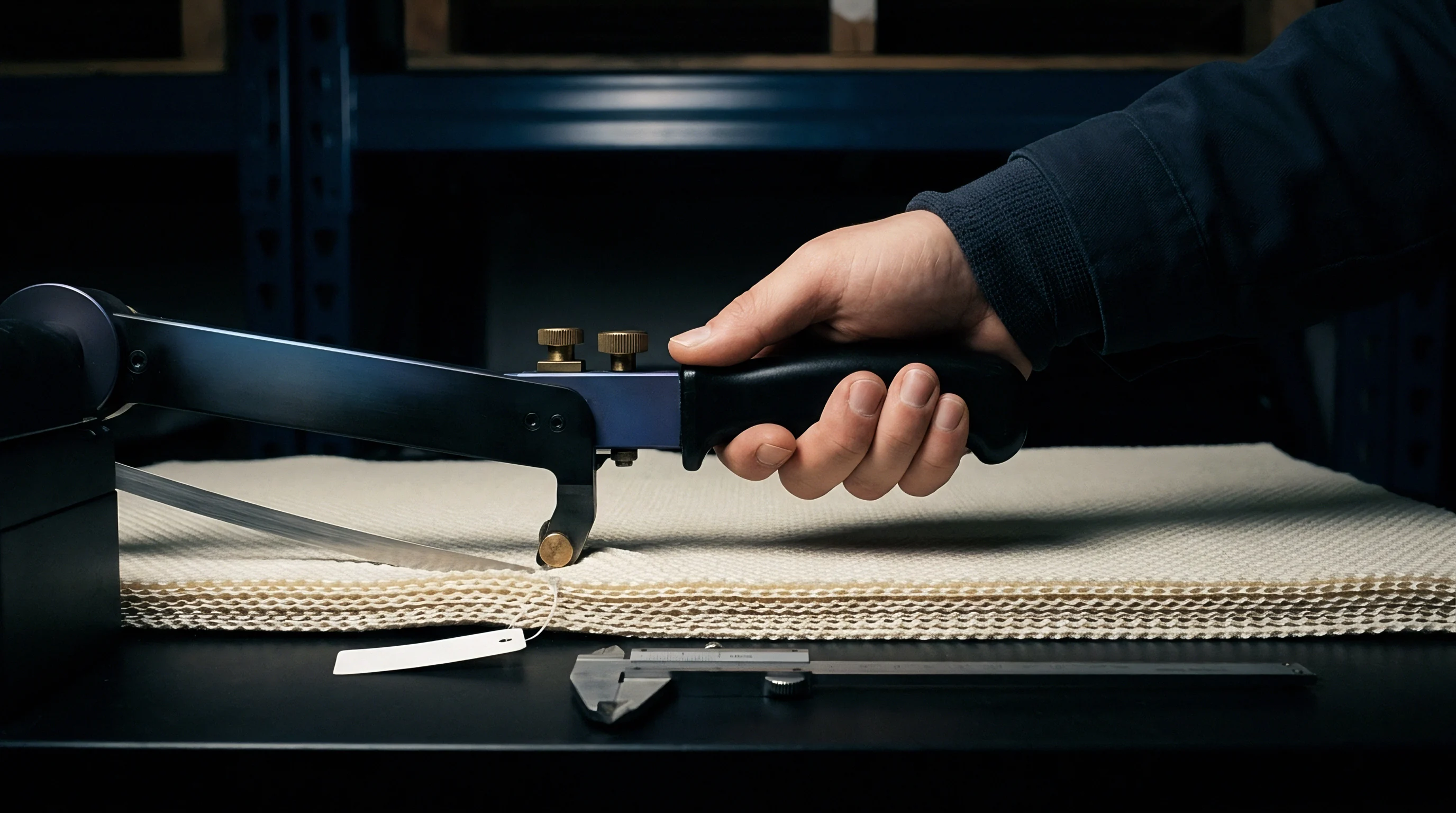
- Cut representative fabric swatches into pieces roughly 5 mm by 5 mm using clean stainless steel shears while wearing powder-free nitrile gloves.
- Weigh 2.00 g of the cut fabric on an analytical balance precise to 0.01 g and transfer the sample into a chemically clean 150 mL borosilicate glass flask.
- Dispense 100 mL of 0.1 mol/L potassium chloride extraction solution or grade 3 deionized water into the flask with the fabric specimen.
- Stopper the flask with a glass or inert plastic stopper to block atmospheric carbon dioxide while shaking.
- Mount the sealed flask on an orbital or reciprocal mechanical shaker set to 30 Hz for two continuous hours at 20 °C.
- Decant the aqueous extract into a clean glass beaker immediately after shaking, leaving the fabric pieces behind in the flask.
- Calibrate the pH meter with standard buffer solutions at pH 4.01, pH 7.00, and pH 9.21 or pH 10.01, keeping buffer temperature at 20 °C.
- Rinse the combination electrode with deionized water, submerge the tip in the decanted extract, and record the stabilized pH reading after 60 seconds.
Failure to complete glass-calibrated three-point electrode calibration invalidates test reports under ISO 17025 accreditation audits.
Electrode condition dictates reading reliability. Over time, organic dyes and chemical finishes coat the glass membrane and slow the response. Cleaning between runs takes a rinse in ethanol or dilute hydrochloric acid, followed by a thorough wash with deionized water.
Temperature changes shift the electrode slope response according to the Nernst equation. Automatic compensation handles the calculated slope, but cannot adjust for equilibrium shifts inside the extract solution itself. Keeping ambient room temperature at a strict 20 °C during calibration and measurement eliminates thermal equilibrium errors.
Electrodes stored dry react sluggishly and give false acidic readings when first submerged.
Distortion
Wetting agents and functional finishes alter the equilibrium between the fibre surface and the liquid extract. Hydrophobic coatings, durable water repellents, and heavy silicone softeners prevent the solvent from penetrating yarn interiors, yielding artificially neutral readings that mask active chemical residues underneath.
Is KCl Solution Superior to Distilled Water for Extracting Dense Blends?
Dense wovens finished with fluorocarbon or silicone repellents resist wetting during mechanical shaking. Under ISO 3071 using grade 3 water, the extraction liquid stays clear while chemical residues remain locked inside tight yarn bundles. Adding an inert non-ionic wetting agent at 0.05 percent concentration helps wet out hydrophobic structures, though the wrong surfactant alters reference electrode junction behavior.
Switching to a 0.1 mol/L potassium chloride solution provides enough ionic strength to drive liquid into dense micro-channels without adding surfactants.
Hydrophobic surface treatments frequently hide unwashed acidic sizing agents. Polyacrylic acids and starch-phosphate derivatives used in warp sizing resist cold water during short extractions. When desizing or washing runs below optimal temperatures, sizing residues settle inside filament cores where standard two-hour extractions at 20 °C fail to pull them out.
Subsequent heat processing during garment care or steam pressing frees these trapped acids, weakening the fabric structure and irritating skin during wear.
Finishing Residues and Interferences
Auxiliary chemicals deposited during finishing distort extract chemistry beyond simple acid-alkali balances. Several common finishing conditions introduce systematic errors during pH testing:
- Volatile organic acid evaporation occurs during high-temperature stenter curing, driving off surface acetic acid while leaving less volatile citric or formic acid residues concentrated inside core yarns.
- Formaldehyde cross-linking resins used in anti-wrinkle finishing release acidic catalysts like magnesium chloride or zinc nitrate, which hydrolyze during extraction and pull liquor pH down.
- Cationic softening agents adsorb onto glass electrode membranes, forming an insulating film that causes persistent drift and false alkaline readings.
- Unwashed alkaline mercerizing residues trapped inside thick cotton fibers diffuse slowly, causing pH readings to climb continuously over four hours rather than stabilizing in two.
- Reactive dye bath hydrolysates containing residual sodium carbonate buffer the extraction liquor, resisting neutralizing acid and masking localized chemical failures.
Hydrophobic surface treatments require extended wetting times before liquid agitation yields accurate ionic extraction.
Consider a mill processing 100 percent cotton twill that applies citric acid as an eco-friendly acidulant during final finishing. To save energy, the plant skips the warm final rinse and relies on stenter heat to dry the web. Stenter temperatures reach 160 °C, evaporating moisture quickly while concentrating non-volatile citric acid on fabric surfaces.
Initial lab extraction in deionized water yields a pH of 3.8, failing GB 18401 Category B specifications. If the plant tries to cover up this failure by top-spraying a dilute sodium bicarbonate solution without re-washing, the fabric surface carries both sodium citrate and unreacted sodium carbonate. Water extraction testing then returns a false pass at pH 6.8, but home laundering washes out the soluble sodium salts, restoring the original acidic reaction.
Mistaking volatile organic acid residues for a permanent alkaline finish leads to unnecessary re-curing cycles that degrade fabric tensile strength without fixing compliance failures at the border.

Tolerance
Global safety regulations set distinct pH limits based on direct skin contact. Human skin maintains a natural acid mantle between pH 4.5 and pH 5.5. Extracts outside safe physiological boundaries can trigger contact dermatitis, redness, and irritation, turning extract pH into a mandatory safety check across customs jurisdictions.

Regulatory Limit Profiles and Safety Classes
Market access rules in China, the European Union, and North America enforce chemical neutrality through explicit categories. China mandates compliance under national standard GB 18401, whereas voluntary standards like OEKO-TEX STANDARD 100 and GOTS set commercial limits for certified product lines.
| Regulatory or Standard Body | Product Category / Class Description | Permissible Extract pH Range | Legal Status in Destination Market |
|---|---|---|---|
| GB 18401-2010 Category A | Infant apparel and products (ages 0 to 36 months) | 4.0 to 7.5 | Mandatory national law (China) |
| GB 18401-2010 Category B | Products with direct skin contact (shirts, trousers) | 4.0 to 8.5 | Mandatory national law (China) |
| GB 18401-2010 Category C | Products without direct skin contact (jackets, linings) | 4.0 to 9.0 | Mandatory national law (China) |
| OEKO-TEX STANDARD 100 Class I | Baby products and items for infants up to 3 years | 4.0 to 7.5 | Voluntary commercial certification |
| OEKO-TEX STANDARD 100 Class II-IV | Direct skin contact, non-skin contact, decoration | 4.0 to 9.0 | Voluntary commercial certification |
| GOTS Version 7.0 | All certified organic textile products | 4.0 to 7.5 | Voluntary organic standard |
| EU Ecolabel for Textiles | All clothing and interior textile categories | 4.0 to 7.5 | Voluntary environmental scheme |
Divergence in Product Class Thresholds
Infant apparel standards set narrow pH windows to prevent dermatitis on sensitive skin. GB 18401 Category A and OEKO-TEX Class I cap extract pH at 7.5 to ensure residual alkaline wash chemistry ~ like sodium silicate or caustic soda from scouring ~ does not touch delicate skin. Adult outerwear under GB 18401 Category C allows an upper limit of pH 9.0, reflecting lower risk for garments worn over base layers.
Method discrepancies regularly disrupt international compliance. China customs tests imports strictly under GB/T 7573 using water or potassium chloride depending on product classification. If a buyer certifies garments under AATCC TM81 in the United States, test reports run slightly higher because hot extraction dissolves trace alkaline salts.
A lot measuring pH 8.3 under AATCC TM81 can reach pH 8.7 under GB/T 7573 cold potassium chloride extraction, crossing the legal threshold for Category B skin-contact goods in China and triggering rejection at the port.
China customs authorities enforce mandatory product confiscation for imported garments falling outside GB 18401 pH boundaries.
Take a sourcing contract for 50,000 units of dyed cotton underwear destined for Shanghai. The buyer mandates GB 18401 Category B compliance (extract pH between 4.0 and 8.5). The mill washes with sodium carbonate to clear unfixed reactive dye, followed by a light acetic acid rinse.
In-house testing with a single-point calibrated meter reports a pH of 8.2. At entry, China Customs pulls five random garments for GB/T 7573 method B testing at an accredited lab. The official report returns pH 8.72 because core alkali dissolves fully in the test liquor.
Customs blocks clearance and mandates re-export or destruction.
Out-of-spec alkaline readings are often blamed on municipal water hardness variations during final rinsing, though verifying that cause requires matching bath conductivity logs.
Batch
Roll-to-roll consistency determines whether a test swatch represents the full cargo. A single compliant sample pulled from the outer wrap of a master roll proves little about chemical uniformity across a 20,000-meter dye lot processed across multiple stenter runs.
Sampling Strategy and Spatial Variability
Residue distribution along dyed yardage varies from selvage to center and head to tail. Acidic neutralizing sprays in stenter frames often apply uneven volumes across the web, leaving edges dry while the center absorbs excess liquid. Edge-to-center pH spreads on 180 cm wide knits routinely reach 0.8 pH units.
Standard sampling requires discarding the first three meters of a roll head and taking full-width swatches to check spatial uniformity.
Building statistical confidence across large production runs requires a systematic sampling plan. Quality engineers run through specific verification steps prior to lot release:
- Select candidate rolls across the early, middle, and late stages of the finishing run using ISO 2859-1 single sampling tables based on total lot meterage.
- Cut three full-width swatches 30 cm long from each selected roll, taking specimens from the left selvage, center, and right selvage positions.
- Condition swatches at 20 °C and 65 percent relative humidity for at least 24 hours to standardize moisture regain before weighing.
- Execute triple-flask extractions for each spatial zone, using grade 3 water or 0.1 mol/L potassium chloride according to destination market standards.
- Calculate the mean pH value and standard deviation for individual rolls, rejecting any roll with an internal spatial spread exceeding 0.5 pH units.
- Compare roll mean values against target specifications, initiating root-cause investigations if the lot standard deviation exceeds 0.35 pH units.
Retest Mechanics and Dispute Settlement
Disagreements between mill lab reports and third-party port inspections call for strict retesting protocols. Retesting should never mean running the test again on the original extract or re-sampling the same roll: storage conditions, humidity shifts, and volatile acid evaporation during transport change extract chemistry between factory dispatch and arrival.
When a port laboratory flags a non-compliant pH value, arbitration requires pulling fresh swatches from five unopened rolls across the held lot. Samples are split equally between the buyer’s ISO 17025 accredited lab, the mill’s facility, and an agreed independent referee lab. Testing takes place simultaneously under identical calibration rules, using fresh extraction media from a single master batch and identical shaking times.
The referee lab’s findings serve as binding evidence in settling the dispute.
Under standard ISO 2859-1 double sampling plans, a second non-conforming extract result from the secondary sample lot triggers automatic rejection of the entire shipment without further re-testing.
Contract
Purchase orders shift financial exposure by linking batch payment terms to clear lab test certificates. Specifications that lack explicit test method references leave buyers vulnerable to supplier disputes when border testing turns up a failure.

Commercial Liability and Detention Arithmetic
Importers face compounding losses when customs holds a shipment for pH non-compliance. Direct expenses include port demurrage, storage fees, accredited lab retesting, and potential fines. Indirect losses quickly follow: missed delivery windows, forced markdowns, and canceled customer orders.
| Cost Category | Calculation Basis | Typical Financial Exposure Range | Primary Liability Carrier |
|---|---|---|---|
| Port Demurrage and Storage | Daily container hold fee after free time | $150 to $450 per container per day | Importer of Record |
| Accredited Arbitration Retesting | Per-sample lab fee for expedited testing | $350 to $800 per sample set | Failing Party / Mill |
| Cargo Re-handling and Transport | Bonded drayage to inspection facility | $1,200 to $3,500 per shipment | Importer of Record |
| Garment Neutralization Rework | Offsite industrial washing and re-drying | $1.20 to $2.80 per garment unit | Garment Converter or Mill |
| Total Cargo Destruction | Landed value of non-compliant inventory | Full commercial order value plus duty | Mill under LC clawback |
Drafting Purchase Order Specifications
Effective buyer contracts spell out test standards, extraction media, and retest cost allocation. Generic clauses stating only that goods must be “chemically neutral” offer no protection in arbitration. Rigorous specifications name the governing test method, extraction solvent, acceptable pH range, accredited lab requirements, and financial recovery terms.
A comprehensive purchase order clause reads: Fabric supplied under this agreement guarantees compliance with GB 18401-2010 Category B extract pH limits of 4.0 to 8.5 when tested according to GB/T 7573 method B using 0.1 mol/L potassium chloride extraction solution. Certification requires an ISO 17025 accredited laboratory test report dated within 30 days of shipment, referencing specific production roll numbers. Any shipment held by port authorities for pH non-compliance entitles the buyer to immediate reimbursement of all port demurrage, re-inspection fees, and transportation costs from the supplier, deducted directly from outstanding letter of credit balances.
Securing compliance means tying lab certificates directly to individual roll numbers on all shipping documents before containers are loaded.