Thermal Treatment
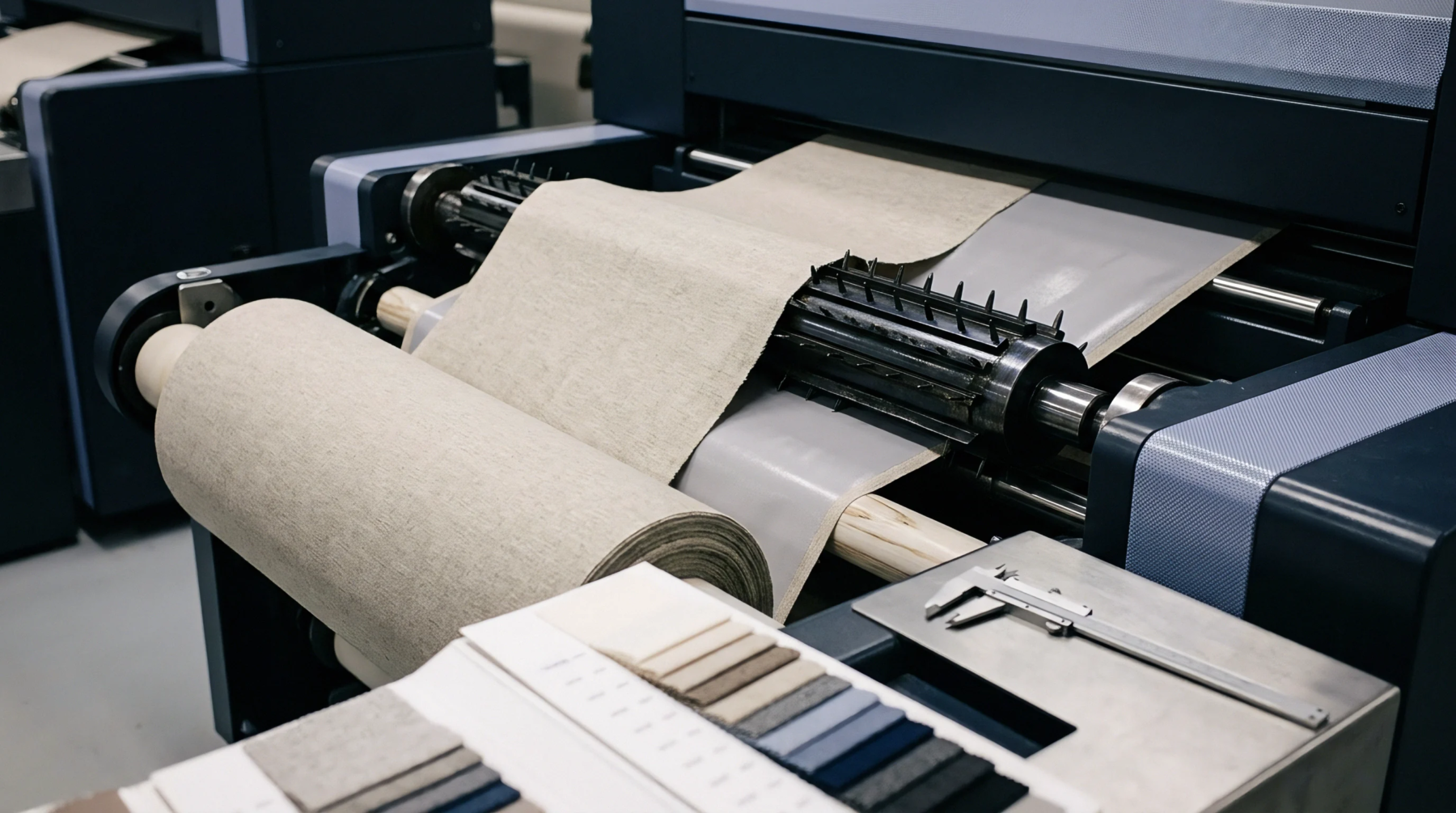
Heat processing activates binders or crosslinking agents in finished fabrics by passing them through a heated oven. This stenter curing is the final stage of pigment printing or durable press finishing, where the fabric is held under tension to maintain its width and structure. The temperature and dwell time must be controlled to ensure the reaction is complete.
This process sets the fabric dimensions.
Air Flow
High-velocity air nozzles distribute heat evenly across the entire width of the fabric as it passes through the drying chambers. If the heat distribution is uneven during stenter curing, the finish will be inconsistent, which can lead to shade variations or poor print durability in some areas. The nozzles must be checked and cleaned regularly.
Chemical Reaction
Polymerization of the finish chemicals requires a minimum temperature and exposure time to form covalent bonds with the fibers. If the stenter curing is too short, the finish will not be durable to home laundering and will wash away. If the curing is too long, the cotton fibers will lose their strength and turn yellow, which reduces the fabric quality.
The operator must balance these two limits to achieve optimal performance.
Width Tension
Fabric shrinkage is controlled during the curing process by adjusting the tension. The fabric is pinned to the chains to hold it at the target width. This ensures that the fabric does not shrink when the buyer washes the garment.