Vertical Displacement
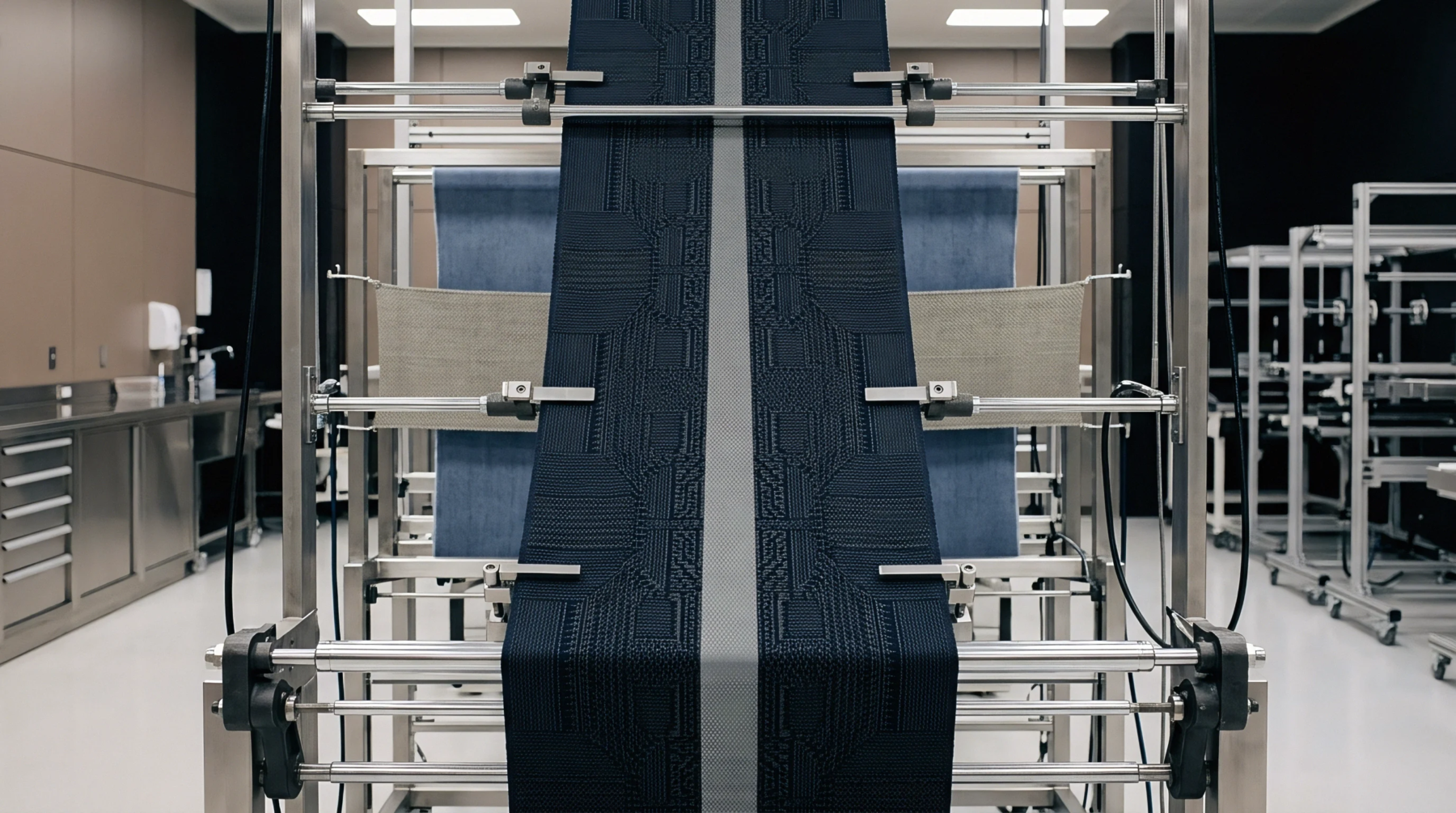
Vertical movement of the frames carrying the heddles determines the size of the shed opening during the weaving cycle. Precise adjustment of the harness shaft stroke ensures that the warp yarns are separated sufficiently for the filling insertion mechanism to pass through without interference. This displacement must be large enough to clear the shuttle or rapier while remaining small enough to prevent excessive yarn tension.
Mechanical Timing
Cam or dobby drives control the rise and fall of the shafts in coordination with the beat up. Because the harness shaft stroke is cyclical, its magnitude influences the velocity at which the yarns move. High speeds require a minimized stroke to reduce the acceleration forces acting on the heddle eyes.
Loom Calibration
Geometric requirements for the shed change based on the distance of each shaft from the fell of the cloth. Shafts located further back require a larger harness shaft stroke to maintain the same angle of the shed opening. If this adjustment is incorrect, the bottom warp sheet may drag against the race board and cause abrasion.
Mill technicians measure this distance at the front and back shafts to calibrate the dobby levers for uniform clearance across all harnesses. Proper calibration prevents skipped stitches and irregular fabric density.
Constraint Factor
Physical limits of the loom frame and the elasticity of the warp yarn define the maximum possible displacement. An excessive harness shaft stroke leads to frequent yarn breakage and premature wear of the heddles. Maintaining the minimum necessary travel extends the life of both the machine and the material.