Mechanical Force
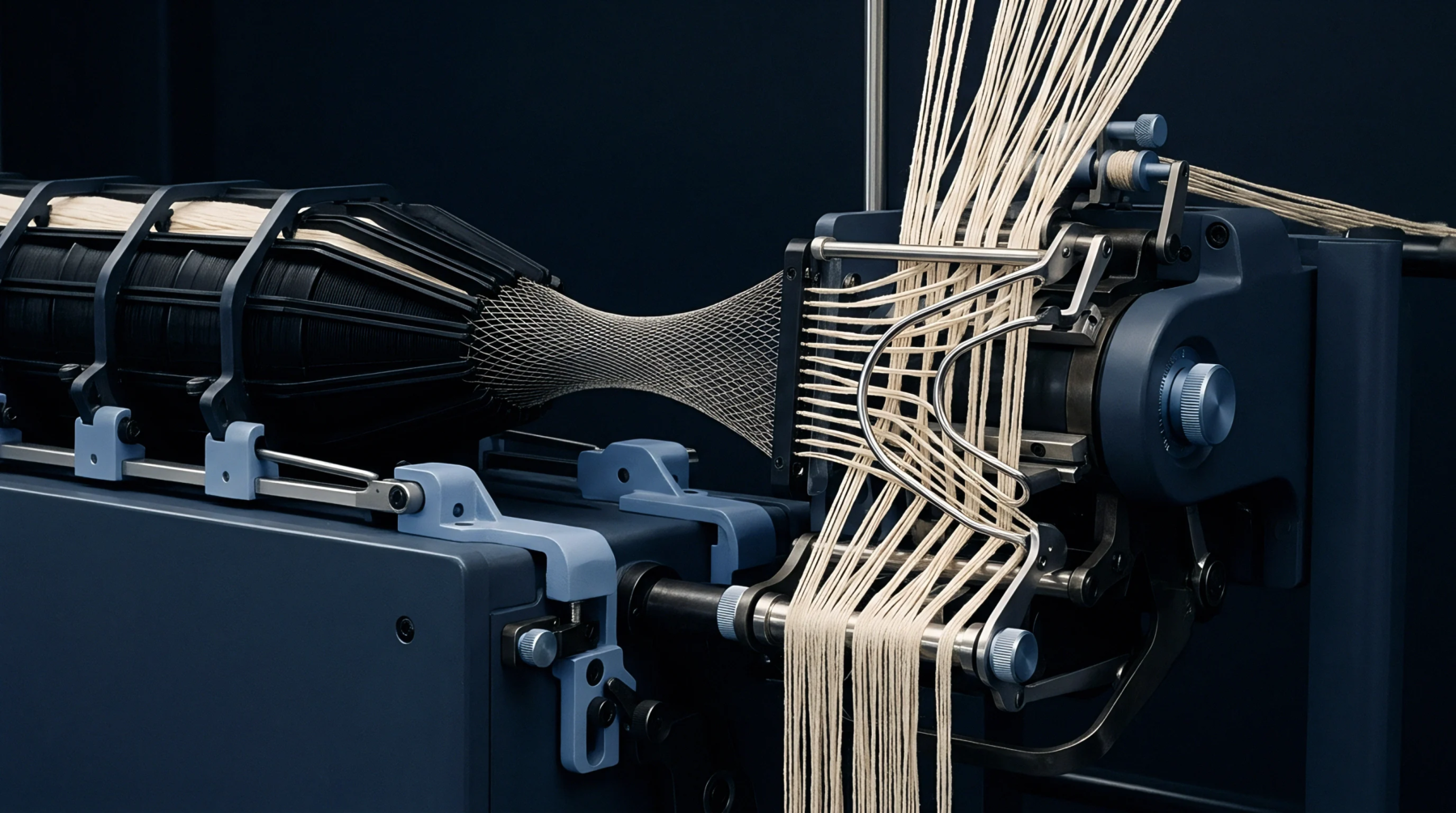
Mechanical force applied to yarns as they are transferred from the creel to the beam. Proper headstock winding tension ensures that the resulting package has a uniform density across its entire width. Variations in this force create soft spots or ridges.
Pressure Distribution
Controlled force prevents the inner layers from collapsing under the weight of subsequent rotations. Maintaining headstock winding tension involves adjusting the braking system on the supply bobbins or using automated nip rollers. An uneven build leads to tangles during the weaving stage.
Elastic Recovery
Overstretching the yarn during the beaming phase permanently damages the molecular structure of synthetic fibres. When headstock winding tension is set too high, the yarn loses its ability to recover after the weaving process is complete. This loss of elasticity results in fabric with poor dimensional stability.
Monitoring Method
Load cells located at the guide rollers provide real time data on the force levels. If the measured headstock winding tension deviates from the set point, the control system adjusts the motor torque to compensate. Consistent pressure across 5000 individual ends requires precise calibration of every tensioning device in the creel.
Without this uniformity, the warp will exhibit streaks after the dyeing process. Automation reduces the reliance on manual adjustments and ensures that every beam in a set is identical.