Motion Timing
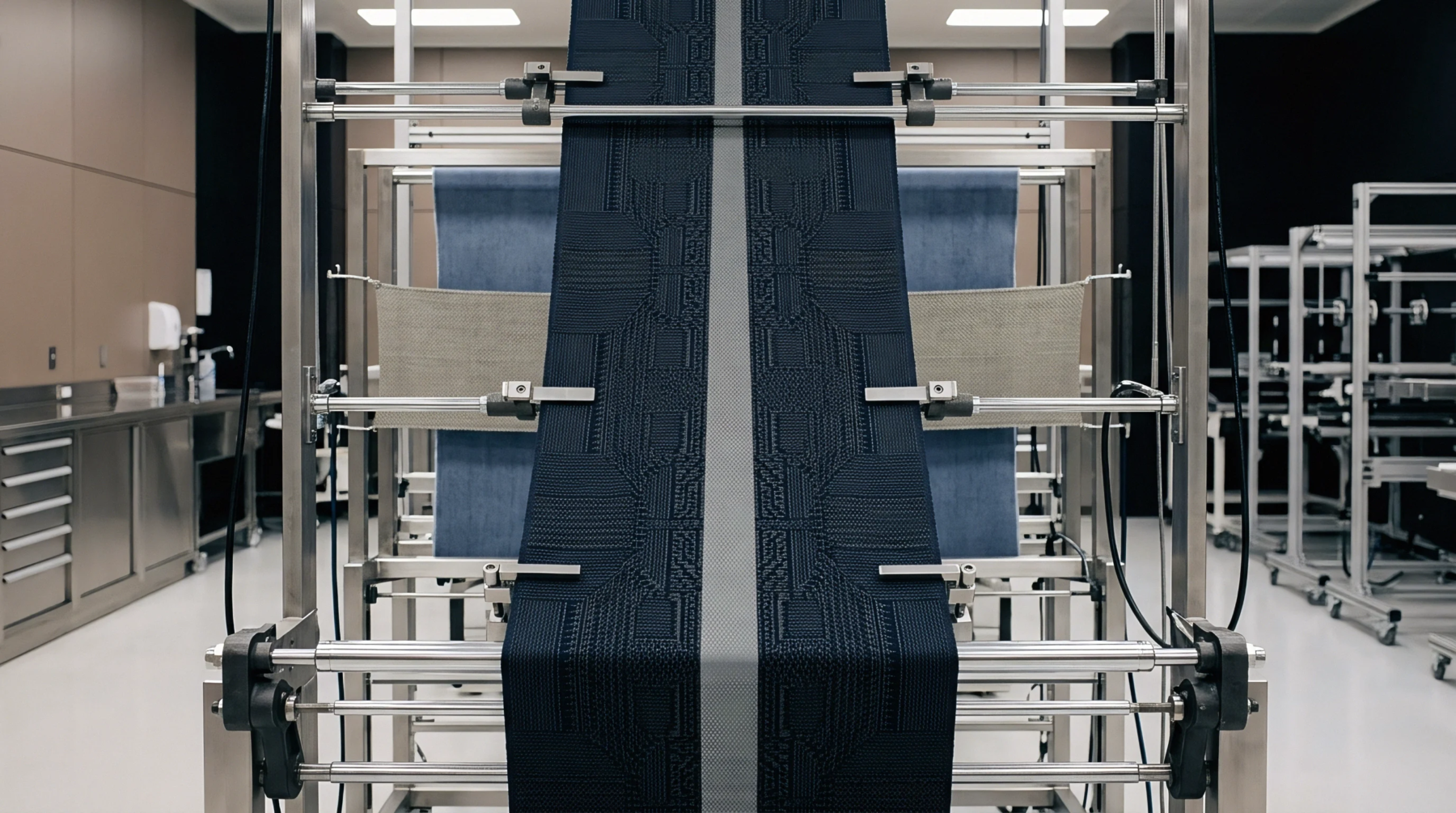
Harmonic synchronization of vertical harness movement dictates the precise separation of warp ends within a power loom. Heald frame kinematics describes the mathematical relationship between the rotation of the main crankshaft and the vertical displacement of individual frames. Precise timing ensures that the warp shed opens fully only at the instant of shuttle passage or projectile insertion, preventing contact between the shed boundary and the carrier.
Timing diagrams define the start and end points of these cycles in degrees of rotation.
Sequence Synchronization
Optimal shedding requires that the cams or electronic actuators align the upward and downward positions of the harness assemblies to match the velocity of the filling insertion. When the frames move too early, excessive tension pulls on the warp yarns and causes frequent end breaks. Adjusting the dwell duration of the movement allows for longer shuttle transit times at higher machine speeds.
Synchronous operation between the drive shaft and the lift mechanism preserves the structural integrity of the fabric by minimizing friction between adjacent warp threads during the cycle.
Force Distribution
High speed insertion demands significant torque to oscillate the metal frames against the tension of the warp sheet. Forces act upon the drive linkages and the frame guides simultaneously, requiring a stiff mechanical configuration to prevent harmonic vibration. Wear patterns on the cams indicate improper loading, often resulting from asymmetric weight distribution across the frame width.
Rigid frame construction limits the deflection of the harness eyelets under these heavy inertial loads.
Operational Limits
Secondary vibrations within the linkage assembly cause erratic shed openings if the machine exceeds its rated operating speed. Mechanical energy converts into heat within the bearings and guide tracks, limiting the total cycles per minute for standard industrial looms. Electronic shedding systems allow for individual frame acceleration adjustments to reduce the impact of these inertial forces.
Improved stiffness and lower mass remain the primary methods for extending the performance window of shedding mechanisms.