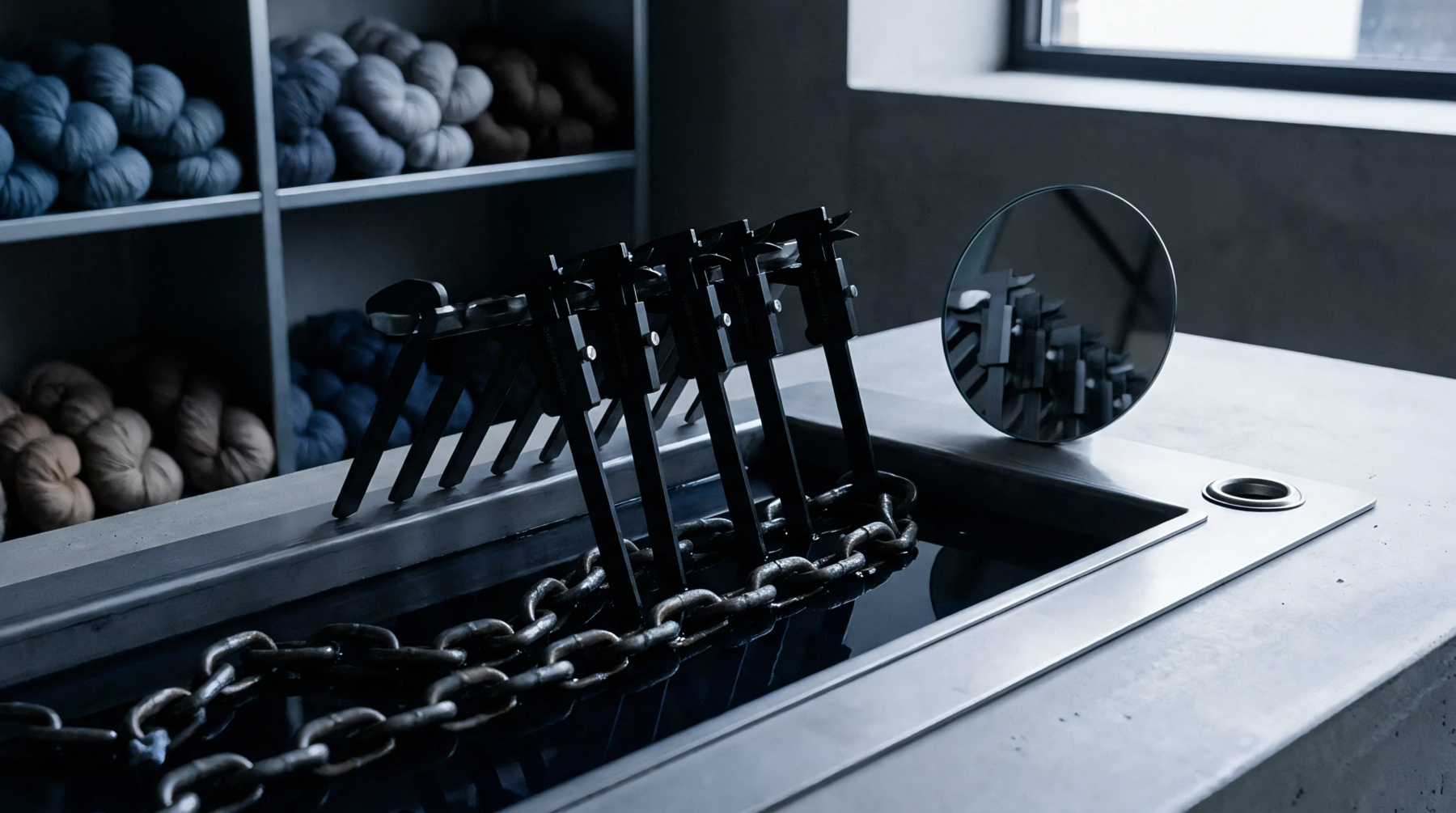
Reactive Dye Bath Concentration Controls for Heavy Cotton Wovens
Dynamic progressive salt and alkali dosing profiles prevent surface exhaustion and core shade variance in heavy cotton woven dyeing.
Fabric weight categories for materials composed of interlaced cotton yarns typically exceed three hundred grams per square meter and define the durability of workwear. Heavy cotton wovens are characterized by their high thread count and thick yarn diameters which provide a substantial barrier against abrasion and mechanical stress. These fabrics include materials such as denim, canvas and heavy twill used in industrial garments and rugged outdoor gear.
The mass per unit area is the primary metric for classification. It dictates the stiffness and the hand of the material.
Construction of the fabric involves a high number of picks and ends to create a tight and stable surface. In heavy cotton wovens, the interlacing pattern is often a plain weave or a steep twill to maximize the number of binding points between the yarns. This density prevents the yarns from shifting under load and ensures the fabric maintains its shape after repeated laundering.
The use of plied yarns is common to achieve the necessary weight without sacrificing the flexibility of the structure. If the weave is too loose, the heavy yarns will snag and the fabric will lose its protective qualities. Conversely, an overly tight weave can make the material difficult to sew and uncomfortable to wear.
Balancing the yarn count and the weave density is the core of the design process. These materials are often produced on high-tension looms capable of handling the force required to beat the heavy filling yarns into place.
Manufacturing these fabrics requires specialized equipment and modified chemical recipes to ensure full penetration of the thick structure. Heavy cotton wovens present a challenge in the dye house because the large yarn bundles are slow to absorb the liquor. Longer dwell times and higher pressures are often needed in the scouring and bleaching stages to remove all natural waxes and impurities.
If the preparation is incomplete, the center of the yarns will remain undyed, leading to a salt and pepper appearance. The finishing of these goods often involves mechanical softening or the application of lubricants to improve the handle. Drying and heat setting also take more energy due to the high volume of water held within the dense fiber mass.
Mills must slow down the production lines to ensure the core of the fabric reaches the required temperature.
Durable apparel and industrial products rely on the strength and longevity of these textile constructions. Heavy cotton wovens are the standard for protective clothing, upholstery and heavy-duty bags where light fabrics would fail. Their ability to withstand high temperatures and mechanical washing makes them ideal for rental uniform programs and hospital linens.
The market for these goods is driven by technical specifications rather than fast fashion trends. Quality is measured by the tensile strength, the tear resistance and the color fastness to heavy laundering. A well-made heavy cotton fabric can last for years of intensive use.
The commercial value is tied to the weight of the cotton used and the complexity of the finishing process. These fabrics remain a staple of the global textile industry due to their unmatched utility.
Dynamic progressive salt and alkali dosing profiles prevent surface exhaustion and core shade variance in heavy cotton woven dyeing.
Expertise is a utility, not a secret. sentiention™ publishes its working knowledge as open reference: intelligence layer covering the materials it sources, the markets it enters, and the reference that serves both.