Airflow Configuration
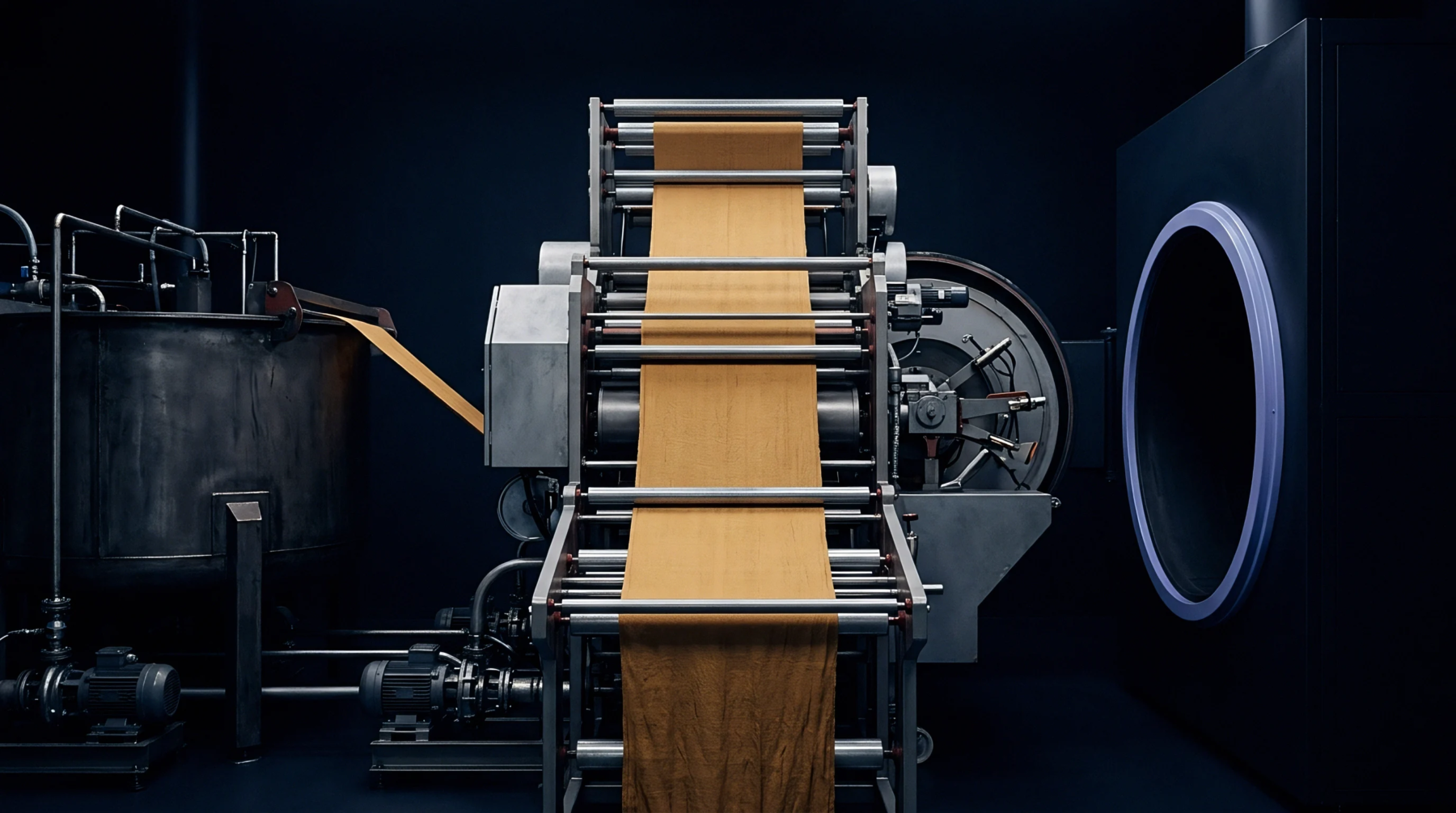
High velocity gas streams directed perpendicularly at a substrate surface break down boundary layer resistance to accelerate heat and mass transfer. Utilizing impinging jet airflow in textile stenter frames provides rapid drying by forcing hot air directly into the interstitial spaces of the fabric. This method is highly effective for heavy weight materials and dense weaves.
Kinetic Action
Nozzle geometry and jet-to-plate spacing determine the pressure distribution across the fabric surface. With impinging jet airflow, the stagnant air layer is swept away as the jet undergoes a transition from free flow to wall flow upon impact. This action increases both the local evaporation rate and the thermal energy transfer.
Finishing Efficiency
Uniformity in heat application prevents dry patches and minimizes the danger of thermal yellowing in white fabrics. In the finishing of cotton elastane blends, impinging jet airflow enables consistent heat setting without over-exposure of the synthetic core. This mechanical setup reduces the dwell time required in the heating chambers, raising plant productivity by permitting faster line speeds on dense and heavy materials.
Operational Limit
Excessive jet pressure can cause fabric flutter, which leads to physical distortion. Adjusting the fan speed represents the primary method for controlling impinging jet airflow and preventing mechanical damage. This operational ceiling defines the maximum safe operating speed.