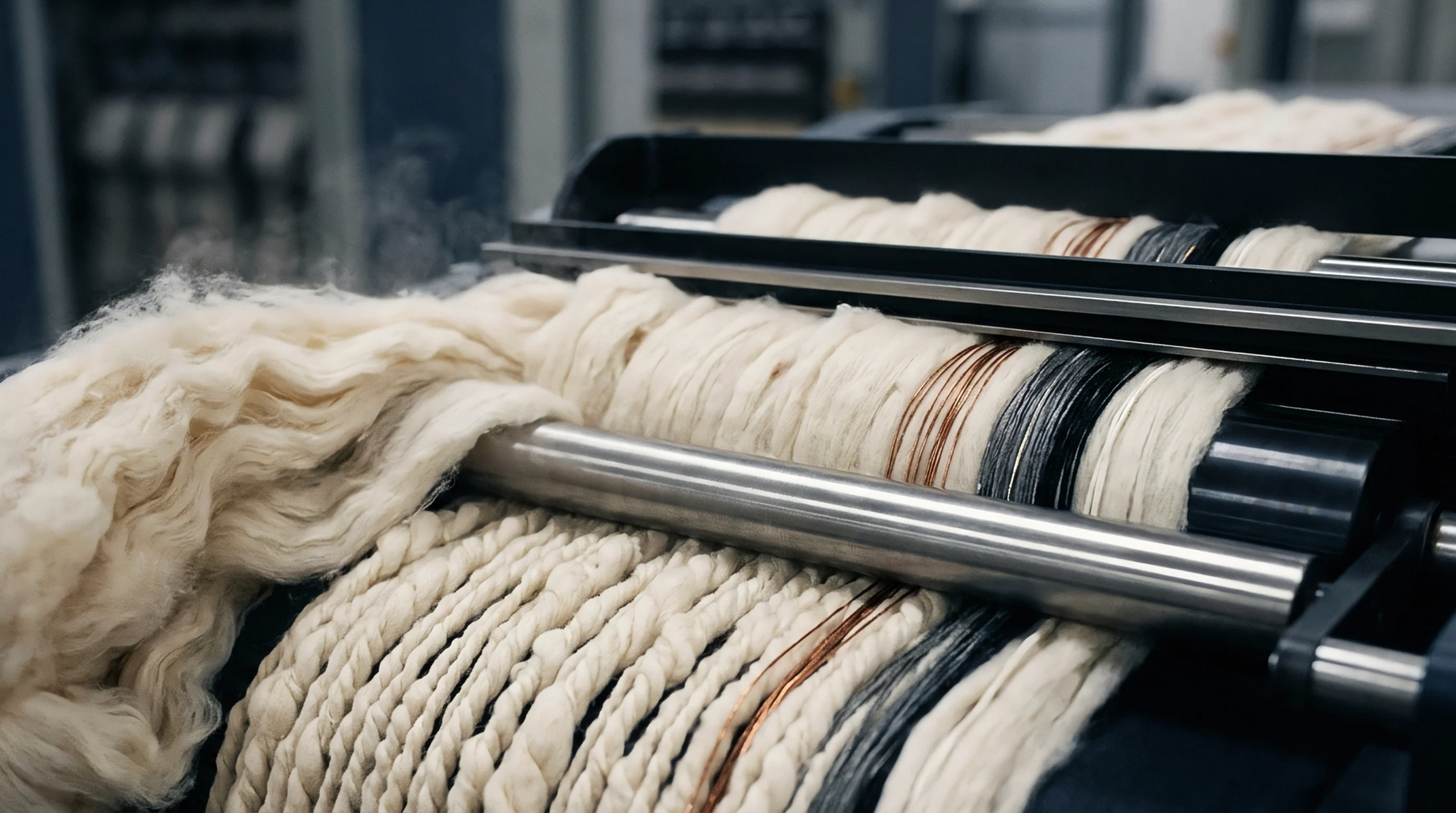
Blend Ratio Drift across a Season from One Blending Room
Blend ratio drift stems from uncompensated raw bale moisture changes and pneumatic sorting; control requires ISO 1833 dry-mass specs and real-time weigh-hopper NIR updates.
Measurement protocols quantify the magnitude of analytical spread observed when identical physical textile specimens undergo assessment across multiple independent testing facilities. This inter laboratory test variance establishes the boundary for accuracy within global supply chains by determining whether a divergence in tensile strength or colour fastness results from inherent material instability or from shifts in equipment calibration. The metric governs how dye house technicians and garment factory auditors validate compliance against rigid international quality standards.
It stops applying when data stems from a single location because local environmental fluctuations mask the systemic equipment bias that this calculation identifies. Analysts calculate this metric by comparing the standard deviation of results from various facilities against a certified reference value provided by a central laboratory.
Deviations arise when internal control measures between facilities fail to align through shared moisture conditioning or atmospheric controls. Textile mills often report discrepancies in cotton fibre fineness or synthetic yarn elongation despite using identical test machinery models. Disparate calibration schedules cause the baseline to drift until one factory reports a fibre modulus that differs from the grade assigned at the source mill.
Operators mitigate these shifts through frequent cross checking with calibrated mass standards or by running parallel samples at scheduled intervals. Disagreement over test conditions frequently involves humidity settings in laboratories located in arid regions versus those in temperate zones. Small changes in ambient moisture content affect the swelling of natural fibres and thus alter the measured weight or diameter of the fabric.
Operational friction occurs when a buying office rejects a shipment based on findings that fail to align with the production site results. Trade agreements rely on these comparative metrics to define acceptable limits for product certification. A laboratory producing values outside the expected distribution requires immediate intervention to verify if the machine sensors require adjustment or if the specimen preparation process contains human errors.
Supply chain partners verify these outcomes by conducting blind testing where different laboratories process coded samples without knowledge of the previous results. Production managers accept that some fluctuation exists in testing natural products but they demand rigorous control when synthetic filaments show signs of excessive batch instability. Clear documentation of these variations prevents disputes over fabric performance benchmarks during final garment construction.
Acceptance criteria for these comparative measurements rely on the repeatability of the test method itself. Technicians define the maximum allowable difference based on the history of the instrument performance under repeated stress. Limits protect the integrity of the procurement contract by ensuring that no single laboratory influence dictates the commercial outcome of a deal.
Statistical boundaries represent the point at which a measurement output loses confidence and requires a repeat trial to confirm the true material properties. Any assessment falling outside these established ranges indicates a fundamental failure in the testing environment that undermines the validity of the technical documentation.
Blend ratio drift stems from uncompensated raw bale moisture changes and pneumatic sorting; control requires ISO 1833 dry-mass specs and real-time weigh-hopper NIR updates.
Expertise is a utility, not a secret. sentiention™ publishes its working knowledge as open reference: intelligence layer covering the materials it sources, the markets it enters, and the reference that serves both.