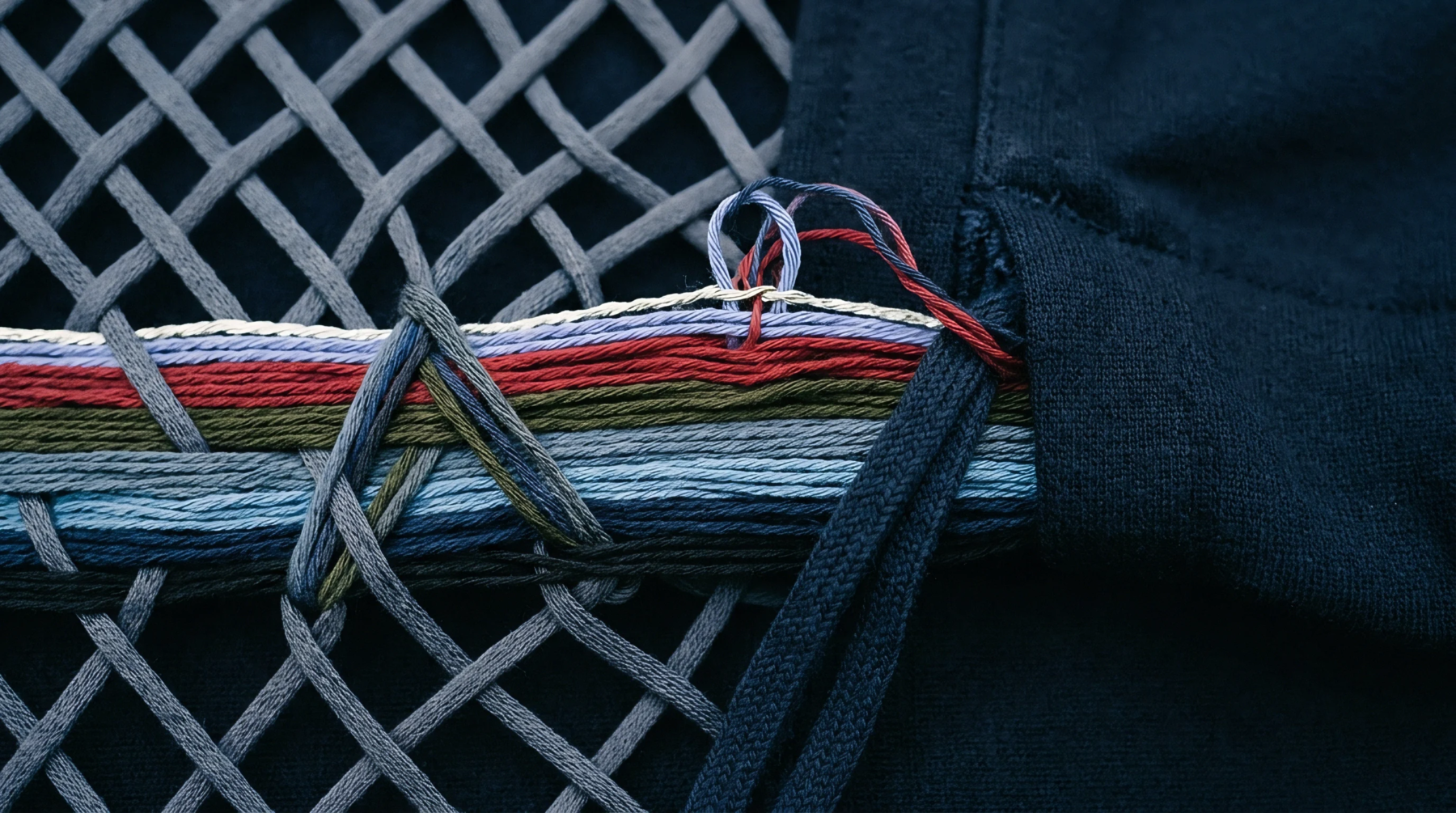
Contact Resistance
Resistance to sliding at yarn crossover points determines the stability and drape of woven structures. The value of the inter-yarn friction coefficient dictates how easily yarns can move relative to each other within the fabric matrix. This property influences both the shear stiffness and the tearing strength of the textile.
Friction Measurement
Testing instruments pull a single yarn from a fabric sample while recording the extraction force. This measurement is used to calculate the inter-yarn friction coefficient under specific contact pressures.
Structural Impact
Low frictional resistance allows yarns to bunch together under load, which distributes stress across a wider area and increases tear strength. Conversely, a high inter-yarn friction coefficient restricts yarn movement, leading to a stiff hand and rapid failure under concentrated stress. Manufacturers adjust this coefficient using specialty lubricants or softeners.
The treatment is applied during the yarn spinning or fabric finishing stages. Proper adjustment prevents yarn breakage and increases the efficiency of the weaving machines.
Mechanical Stability
Technical fabrics used in parachutes or pretensioned structures must maintain their weave geometry under high winds. Controlling the inter-yarn friction coefficient prevents seam slippage and yarn comb-out in these critical applications. Consistent testing is necessary to maintain production quality.
It helps verify that the fabric meets safety standards for demanding environments.