Frictional Ratio
Tribological measurements define the resistance to movement when a textile yarn slides over a solid surface at a steady speed. The kinetic friction coefficient is the ratio of the pull force required to maintain yarn movement to the normal force holding the yarn against a guide pin. Controlling this ratio prevents yarn overheating and thread breakages on high-speed industrial knitting machines.
Surface Interface
Solid boundaries between the moving yarn and the metal or ceramic guides create friction due to microscopic surface roughness. Lubricants or spin finishes are applied to the yarn to create a thin boundary layer that prevents direct contact. This protective layer reduces the friction coefficient to a stable, low level.
If the yarn runs dry, the friction rises, which causes excessive heat and damages the yarn structure. High temperatures can melt synthetic fibers or singe natural yarns, which destroys the quality of the raw material before it ever reaches the loom.
Yarn Guide
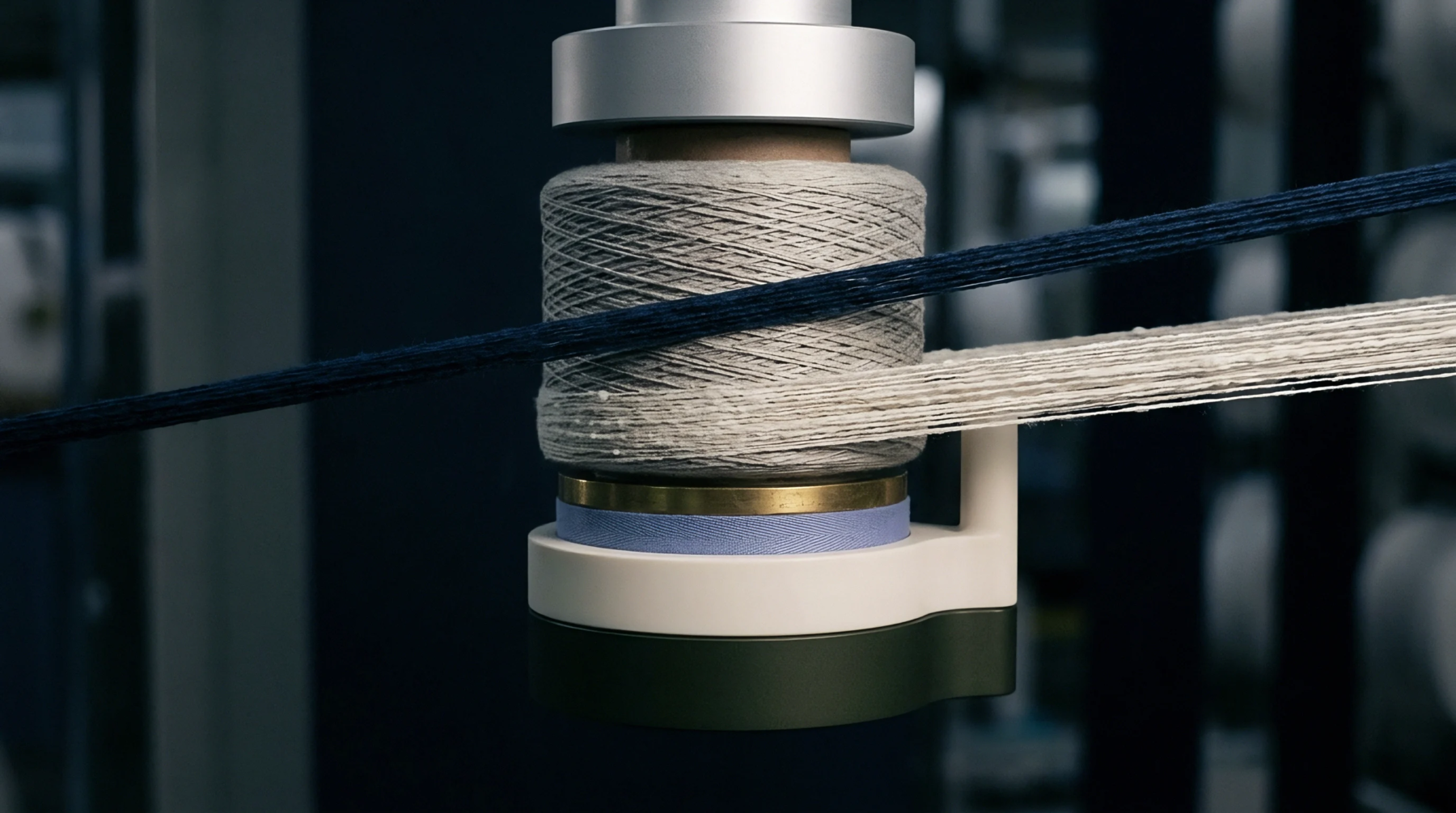
Spinning mills use friction testers to measure yarn tension before and after it passes over a polished metal rod. The capstan equation calculates the kinetic friction coefficient from the measured tension increase over the known wrap angle. This test is done at high yarn speeds to simulate actual knitting and warping processes.
Tension Variation
High tension during winding can stretch yarn beyond its elastic limit. When yarn tensions fluctuate, they alter the density of the yarn package, which leads to uneven dyeing in the finished fabric. Using a yarn with a low, consistent kinetic friction coefficient prevents these tension spikes.
This control keeps the yarn packages uniform and easy to unwind.