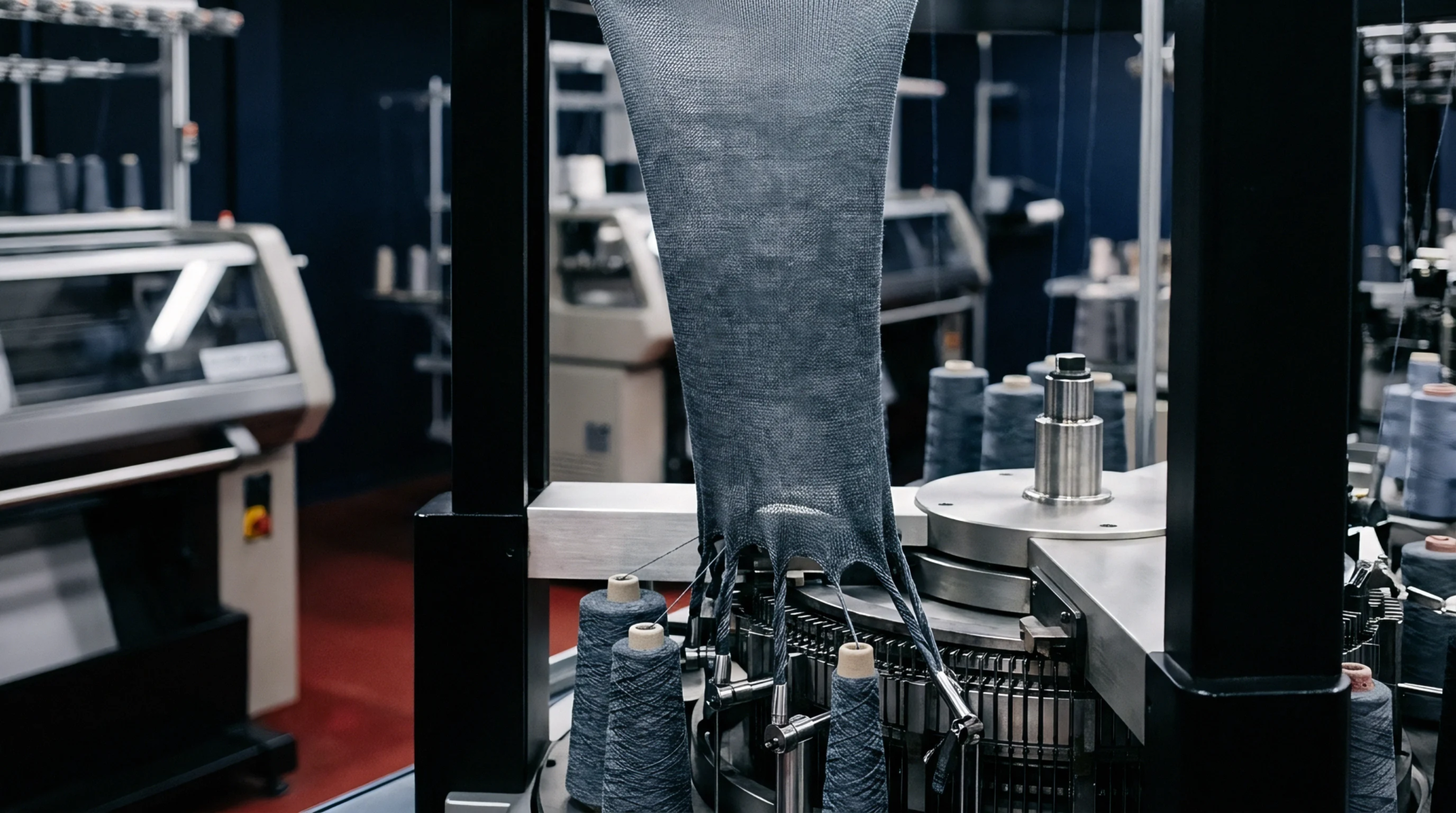
Needle Density
Number of needles per inch along the circumference or width of the needle bed determines the fineness of the knitted structure. A higher knitting machine gauge indicates a greater density of needles and produces a tighter, thinner fabric. The setting is permanent.
This value is a fixed characteristic of the machine frame and cannot be changed without a complete mechanical overhaul.
Fabric Relation
Selection of yarn size must correspond to the spacing between the needles to prevent breakage or poor loop quality. In a high knitting machine gauge environment, only fine yarns can pass through the small gaps between the metal components. Using a yarn that is too thick for the setup causes excessive friction and needle damage.
Operational Constraint
Speed and tension settings are adjusted based on the physical limits of the needle bed. Because a low knitting machine gauge involves larger needles, it allows for the processing of bulky wools and heavy synthetic yarns. The physical size of the stitch is fundamentally limited by the distance from one needle hook to the next.
Product Application
Determining whether a machine is suitable for underwear or heavy outerwear depends entirely on this spacing. A knitting machine gauge of twenty-eight is standard for fine jersey fabrics used in shirts. Coarser gauges like seven or ten are reserved for sweaters and industrial textiles where thickness is a requirement.
The garment designer must check the available equipment before finalizing the tech pack to ensure the desired look is achievable. Large factories maintain a variety of these machines to cover the full spectrum of apparel weights.