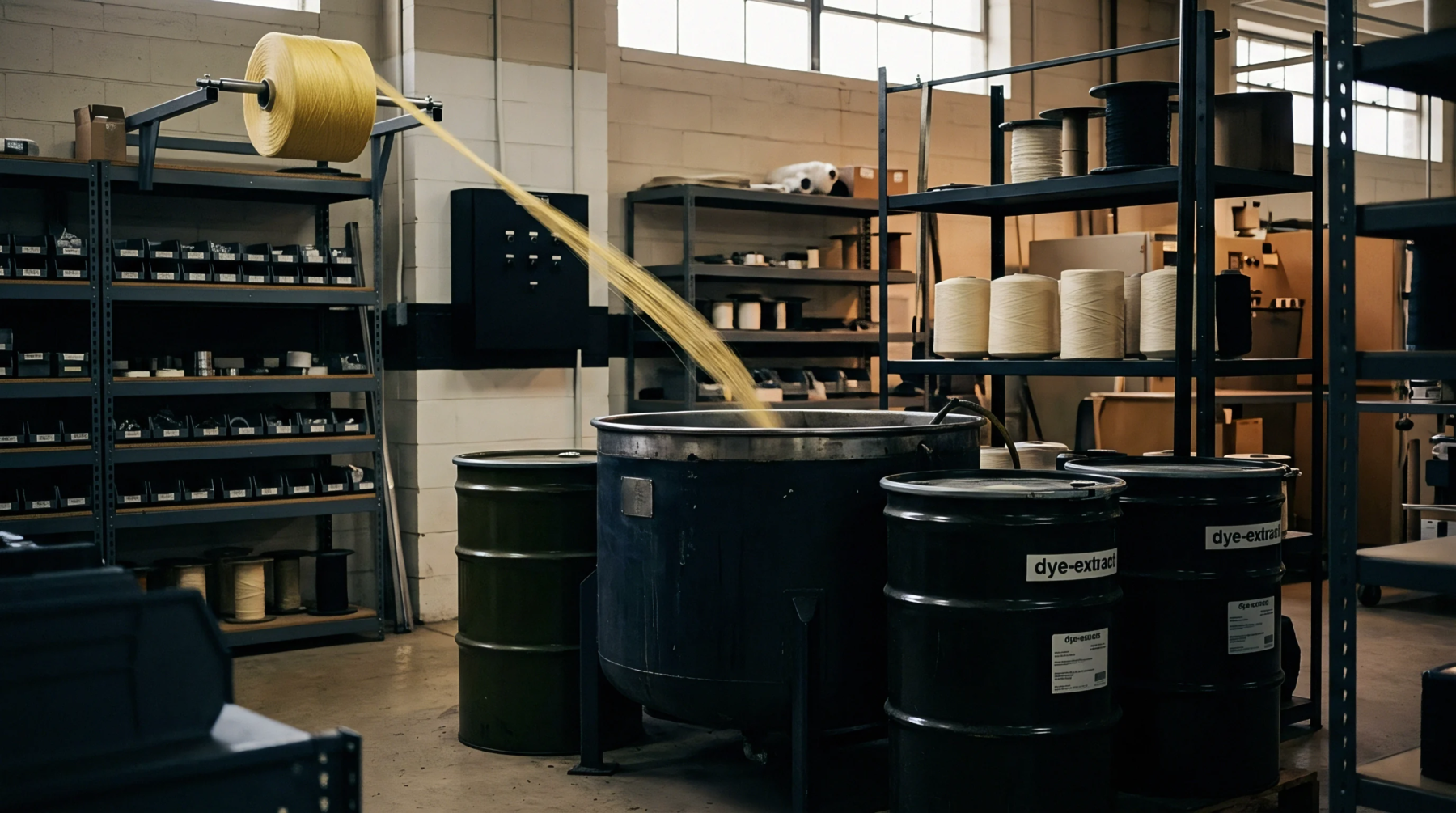
Oxidative Degradation
Degradation of natural fats and spin finishes on stored yarns and fabrics occurs through a radical chain reaction with atmospheric oxygen. This chemical breakdown, termed lipid peroxidation, leads to the formation of yellow, insoluble compounds that resist standard scouring. The reaction proceeds through initiation, propagation, and termination stages, producing highly reactive oxygen species.
It is accelerated by trace metals like copper and iron present in the fiber or processing water.
Storage Issues
As the fatty lubricants on the fabric undergo this reaction, they produce volatile byproducts that cause strong, rancid odors. The oxidized residue forms a tough film on the yarn surface that blocks dye molecules. This causes stripiness or light patches in dyed fabrics, particularly in the outer layers of stored rolls.
It also results in a significant reduction in fiber strength over long storage periods.
Chemical Protection
Formulators blend synthetic yarn lubricants with hindered phenol stabilizers to interrupt the oxidation chain. This stabilizer terminates the propagating radicals before they can attack the oil molecules.
Mill Check
The acid value and peroxide value of extracted oils are analyzed to assess the state of the lubricants. Higher values signal that the fabric has degraded during storage.