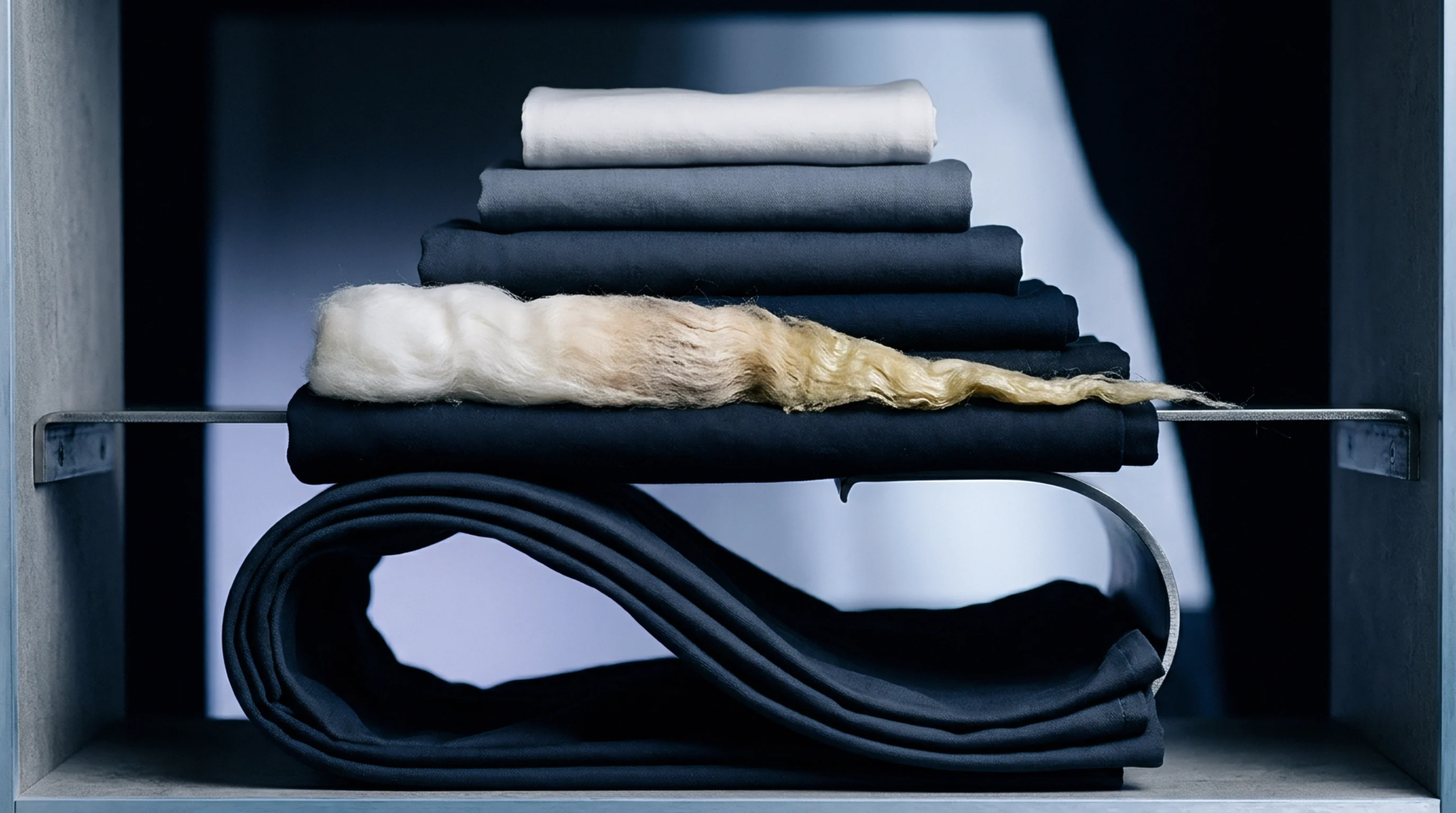
Composition Change
Percentage variations occur in multi-fibre textiles when scouring or bleaching remove selective weights from one component of a blend. Any mass fraction shift must be calculated if the mill needs to prove compliance with legal labels that dictate specific fibre percentages. A cotton and linen blend might show a higher linen content after rigorous washing if more cotton fuzz and wax are lost.
Calibration Metric
Laboratory analysts use dry-weight comparisons before and after pre-treatment to identify exactly how much weight has moved. Observing a mass fraction shift helps finishers adjust the input yarns at the spinning stage to compensate for predictable losses. For complex blends including specialty animal hairs, these shifts are more pronounced due to natural variations in fibre grease levels.
Commercial Margin
Tolerance levels allow for a slight mass fraction shift in many regional markets without requiring a change in labelling. If the displacement exceeds three percent, the legal identity of the garment is often questioned during customs audits. Using consistent raw materials reduces the unpredictability of these outcomes across different factories.
Boundary Condition
Factors stop applying once the fabric reaches a stable weight in the finished state. Long-term wear does not usually cause a significant mass fraction shift compared to the initial industrial processing events.