Physical Strain
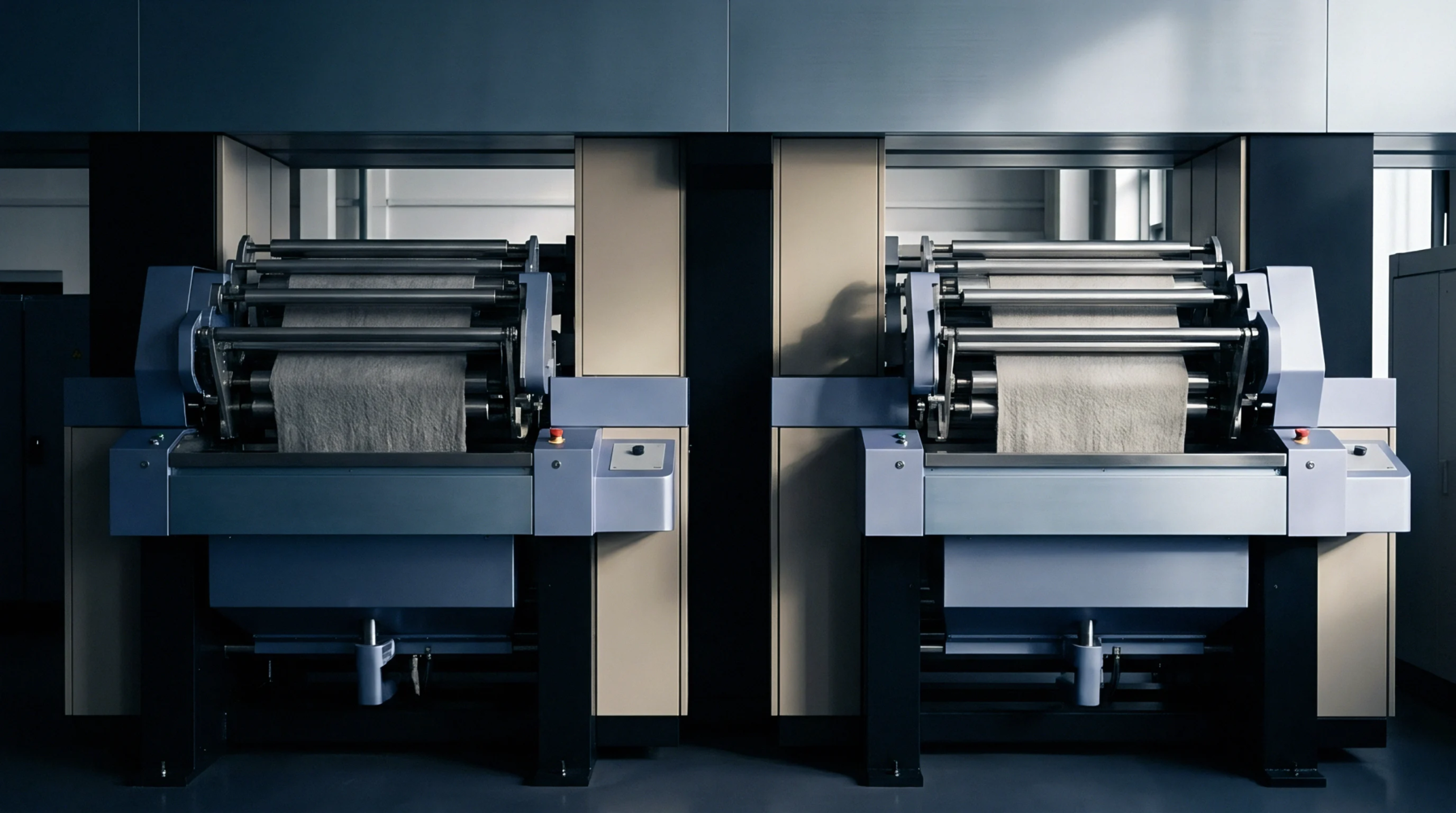
Tangential force distribution alters the structural alignment of polymer chains and individual fibres in a textile sheet. Industrial finishing machines subject technical fabrics to mechanical shear stress when moving them across high speed tension rollers and calendars. This force acts parallel to the fabric surface, sliding the warp and weft yarns across each other, and requires careful monitoring of the tension settings.
It can lead to permanent distortion of the fabric grid if the weave is loose or if the processing speed is too high.
Material Deformation
Yarn slippage occurs when the friction between crossing threads is insufficient to resist external forces. Under mechanical shear stress, individual yarns shift from their designated positions, causing uneven gaps in the weave. This displacement reduces the fabric’s resistance to tearing and decreases its overall strength.
It is a critical concern for protective garments and technical apparel.
Weaving Application
High warp tension and dense pick counts increase the fabric’s resistance to internal yarn shifting. Mills calculate the expected mechanical shear stress during the weaving design phase to select the appropriate yarn twist and weave pattern. This planning ensures that the textile maintains its shape under heavy use.
It prevents seam slippage in tight-fitting sportswear.
Durability Testing
Laboratory wear trials measure the fabric’s ability to withstand repeated diagonal loading. To evaluate the effect of mechanical shear stress, technicians run abrasion and flexing tests that simulate actual wear. This testing identifies materials that are prone to distorting or pill formation.
It helps apparel brands choose fabrics that maintain their appearance over many wash cycles.