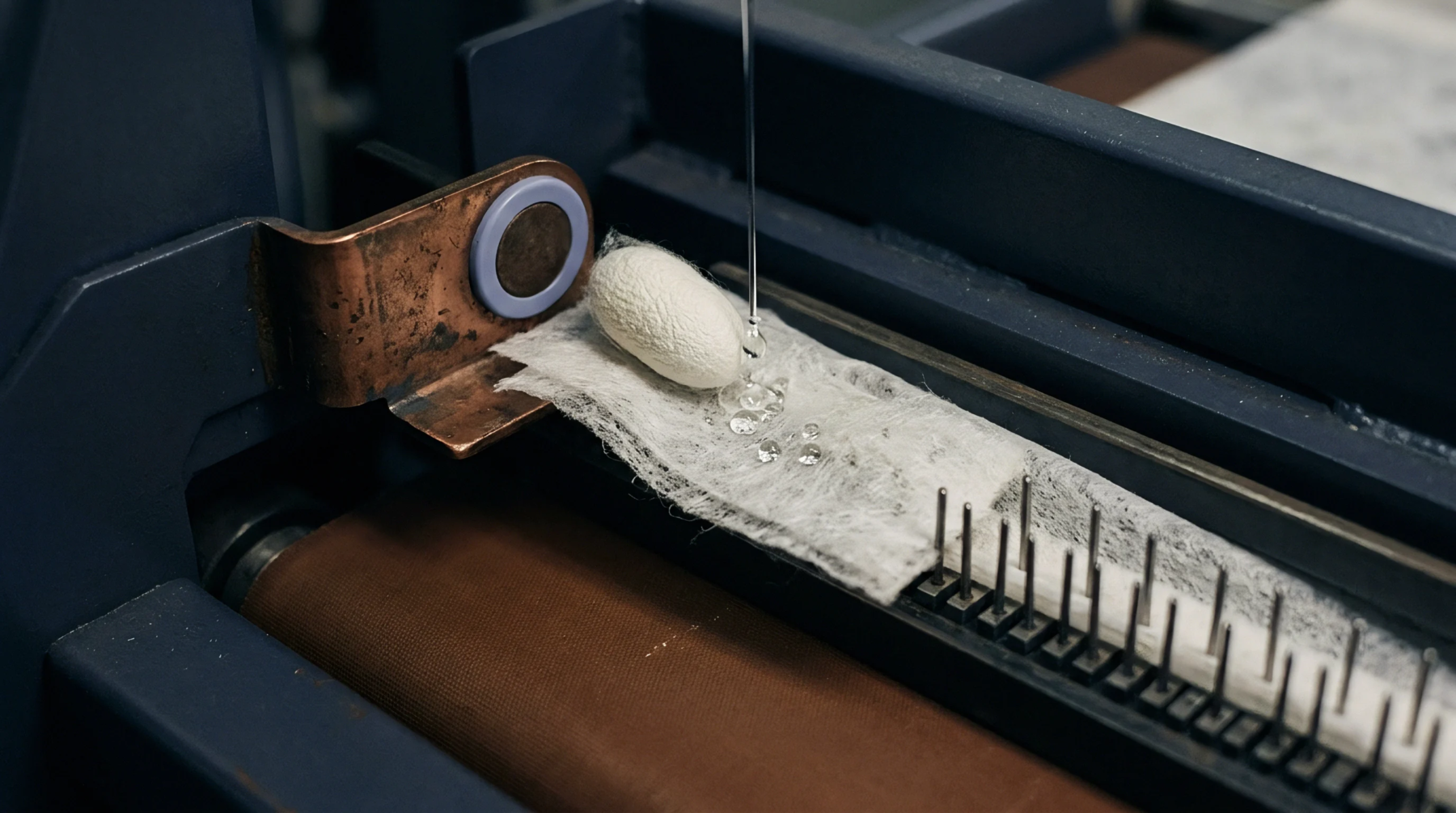
Regenerated Cellulose
Beechwood pulp undergoes a chemical transformation through the xanthation process to produce modal fiber. This extruded material functions as a high-tenacity cellulosic filament known for its soft hand and moisture management properties. It remains distinct from standard viscose because the spinning process occurs under modified conditions that increase dry tenacity and wet strength.
The material stops applying once it crosses the threshold into synthetic territory, as it stays chemically classified as a natural polymer derivative.
Molecular Orientation
Increased crystallinity within the polymer chains provides the structural basis for modal fiber performance. These chains align more effectively during the drawing stage of production than they do in standard regenerated products. Consequently, the material resists fibrillation during mechanical agitation in washing cycles.
Fabrics made from this stock retain a smooth surface and maintain dye uniformity over repeated cleaning events.
Tensile Metric
Tenacity measurements define the performance of modal fiber under stress. Analysts calculate the force required to break a single filament by applying a constant rate of extension in a humidity controlled laboratory environment. A typical reading for this type of cellulose exceeds two centinewtons per decitex when conditioned at sixty five percent relative humidity.
Higher values indicate that the spinning bath successfully prevented premature coagulation of the polymer stream.
Dye Affinity
Chemical reactive sites on the surface of modal fiber allow for the formation of strong covalent bonds with cellulose dyes. This attraction results in deep and uniform color saturation across large yardages during the industrial pad dyeing procedure. Intense levels of saturation persist because the internal structure of the fiber resists the migration of colorants that otherwise degrades the clarity of a print or solid shade.