Fabric Conductivity
Hydration variance across the cross-section of a textile structure defines the internal water distribution between outer and inner surfaces. A moisture gradient occurs when hygroscopic fibres carry unequal concentrations of liquid molecules from the face to the back of a garment or interior laminate. Equilibrium exists only when the chemical potential of the adsorbed liquid phase aligns throughout the depth of the material.
Differential tension in the yarn packing dictates the rate at which fluid migrates toward drier zones.
Production Equilibrium
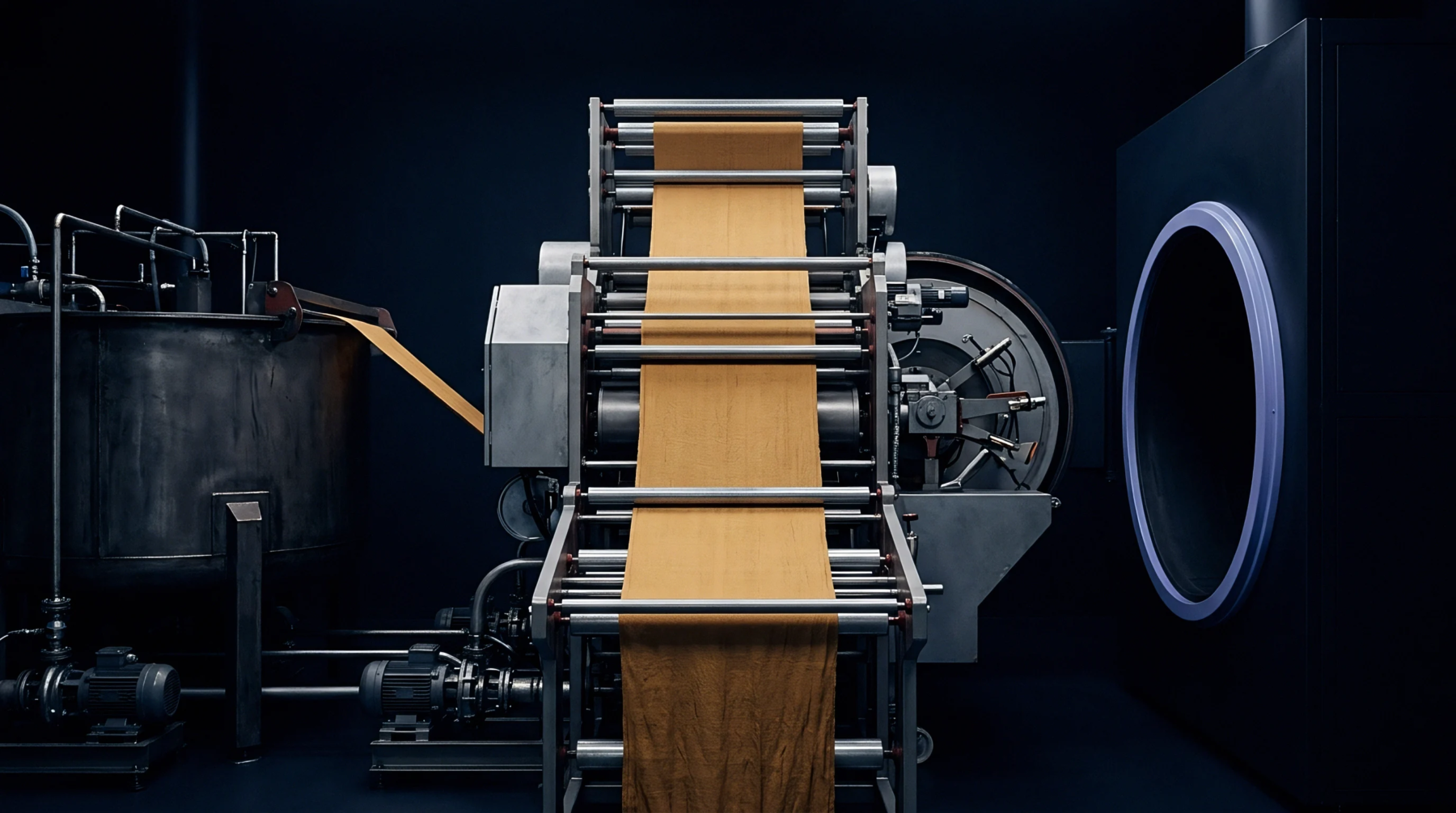
Finishing processes induce artificial variances during high-speed coating or lamination of technical fabrics. Application of bonding agents requires precise control over solvent evaporation to prevent the entrapment of water within the base structure. Rapid drying cycles often lock a high concentration of water in the central core while the surface reaches a bone-dry state.
Sensors track the surface conductance to estimate the depth of this discrepancy during continuous line manufacturing.
Performance Limitation
Vapour pressure differentials drive the movement of liquid molecules through synthetic membranes used in outerwear. A moisture gradient facilitates the outward transport of perspiration when the skin side maintains a higher saturation level than the external ambient environment. Stagnant zones inside the material cause pooling and reduce the comfort rating of waterproof breathable apparel.
Synthetic components require specific porosity to prevent the saturation of internal layers from blocking the transfer path.
Quality Specification
Commercial inspection protocols demand consistency in the total mass of retained water across the entirety of a roll. Labs calculate the deviation by extracting samples from the surface and core regions of the bulk material at multiple intervals. Acceptance relies on the tolerance of the final product to resist dimensional instability caused by uneven swelling of constituent fibres.
Disruption of the intended profile leads to erratic heat sealing and peeling defects during garment assembly.