Structural Barrier
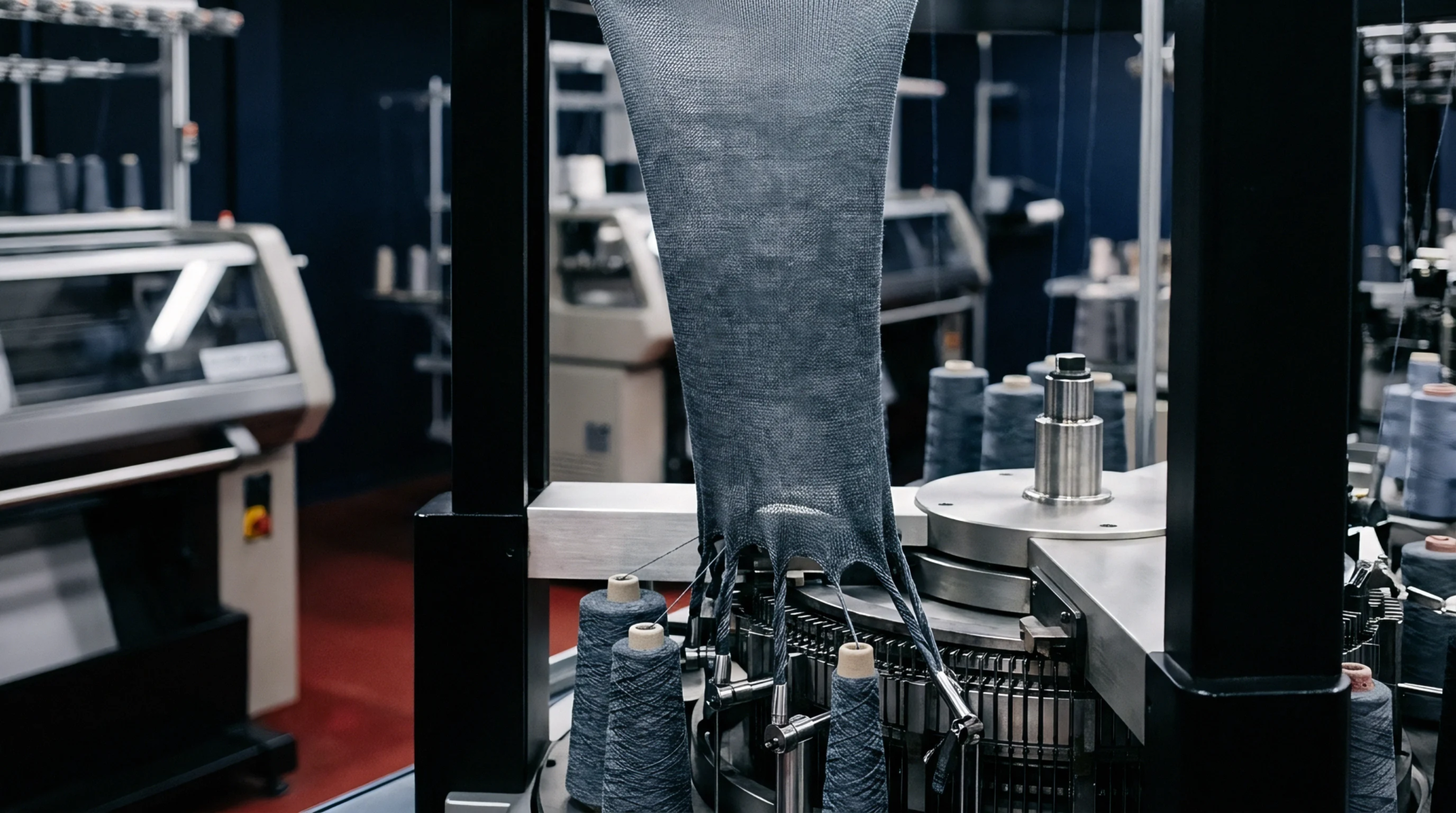
Narrow space between the sinker and the needle bed or between the two beds of a double-knit machine provides the corridor through which the needles travel. This needle gate must be wide enough to allow for the movement of the needles but narrow enough to maintain alignment. It acts as the physical boundary that keeps the knitting elements in their correct tracks.
Engineering tolerances for these parts are measured in microns because even a slight misalignment can cause the machine to seize. The stability of the needle bed depends on the integrity of these individual channels.
Friction Management
Accumulation of lint and hardened lubricant inside this channel can impede the smooth sliding of the needles. Maintaining a clean needle gate is essential for preventing needle breakage and reducing the energy consumption of the motor. Modern machines often include automated cleaning systems to blow air through these narrow gaps.
Gauge Connection
Physical dimensions of this opening are scaled to match the size of the needles used in the machine. A needle gate on a fine-gauge machine is extremely small and requires high-precision machining to ensure consistent performance. If the gate is too wide, the needle may wobble, leading to uneven stitches and fabric defects.
Heat Dissipation
Airflow through the slots helps to cool the metal components during high-speed operation. Because the needle gate is a point of constant metal-on-metal contact, temperature control is necessary to prevent thermal expansion that could jam the mechanism. Effective lubrication further reduces the heat generated at this interface.