Load Dynamics
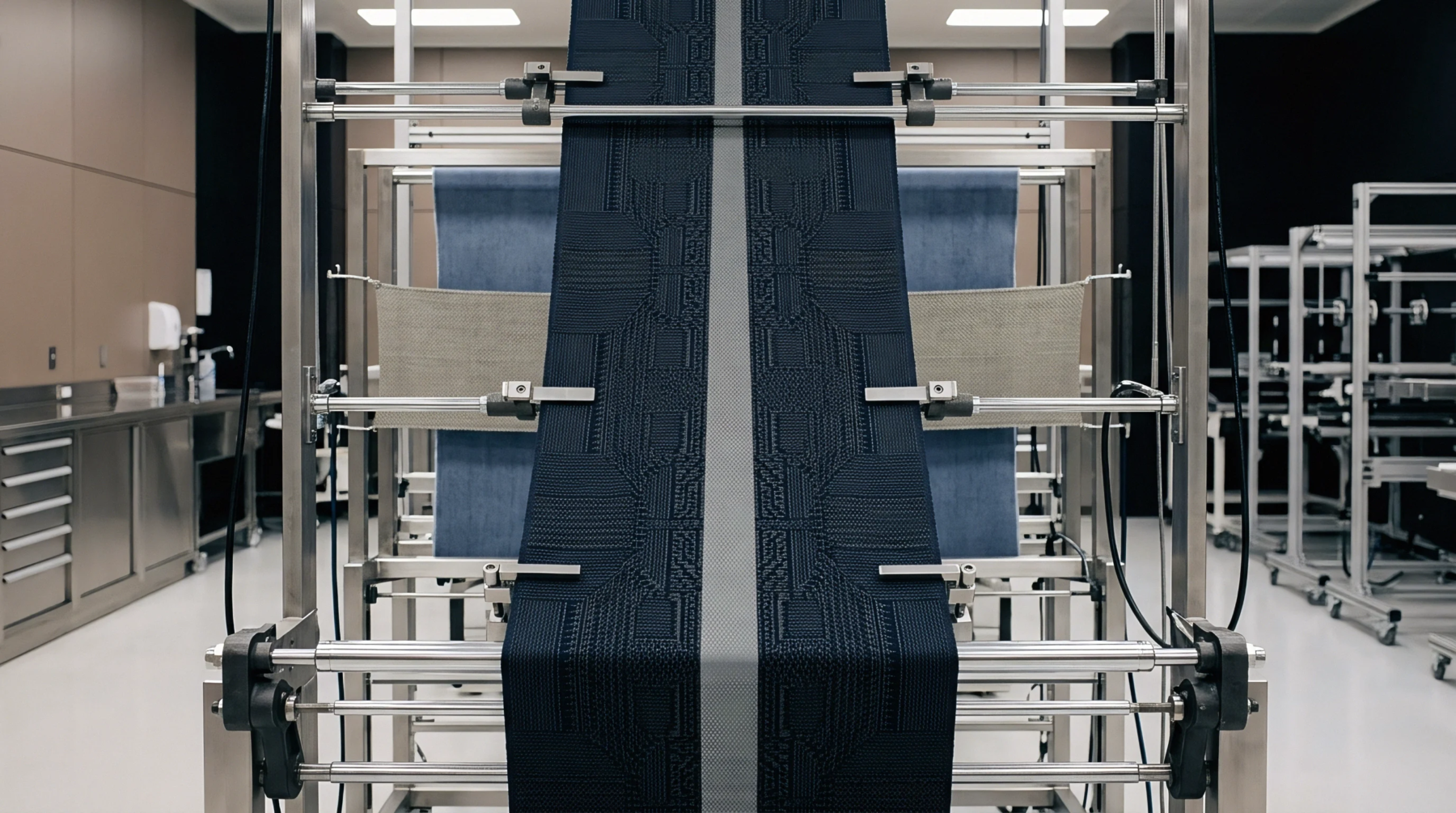
Tension variation across a warp beam width indicates the stability of delivery during high speed weaving. Engineers plot a peak tension profile to identify uneven distribution of force that causes warp breakage or fabric distortion. These measurements track the maximum load exerted on individual ends as the yarn moves from the creel to the fell line.
Consistent monitoring of these values maintains geometric uniformity in technical textiles where strict tolerance levels govern physical performance.
Strain Distribution
Force sensors record data points across the entry plane of the loom to determine how mechanical stress impacts specific sections of the warp sheet. A peak tension profile reveals how friction at the dropper bar or the lease rods alters the effective load on a single thread. Fluctuations in these local measurements correlate with potential variations in density or crimp across the fabric width.
Data capture begins at the start of a production run to ensure that the braking system and the let off motion function in concert.
Processing Baseline
Tension analysis establishes the reference point for loom adjustments intended to reduce mechanical fatigue on delicate filaments. The peak tension profile serves as the standard against which production managers judge the wear of ceramic guides and contact surfaces. If the plot deviates from the historical norm for a given yarn type, the maintenance team performs an alignment check on the guide rollers to restore symmetric loading.
Proper calibration of the let off mechanism prevents the accumulation of slack which creates irregular tension spikes during the beat up cycle.
Systemic Result
High loads at the edge of the warp sheet decrease when operators modify the settings on the tensioning springs or the beam flanges. A peak tension profile confirms that the adjusted settings distribute the force evenly across the entire width of the machine. The geometry of the warp path dictates the range of permissible tension variance before structural defects appear in the finished cloth.
Stable tension management results in predictable shrinkage rates and consistent hand feel across the entire lot.