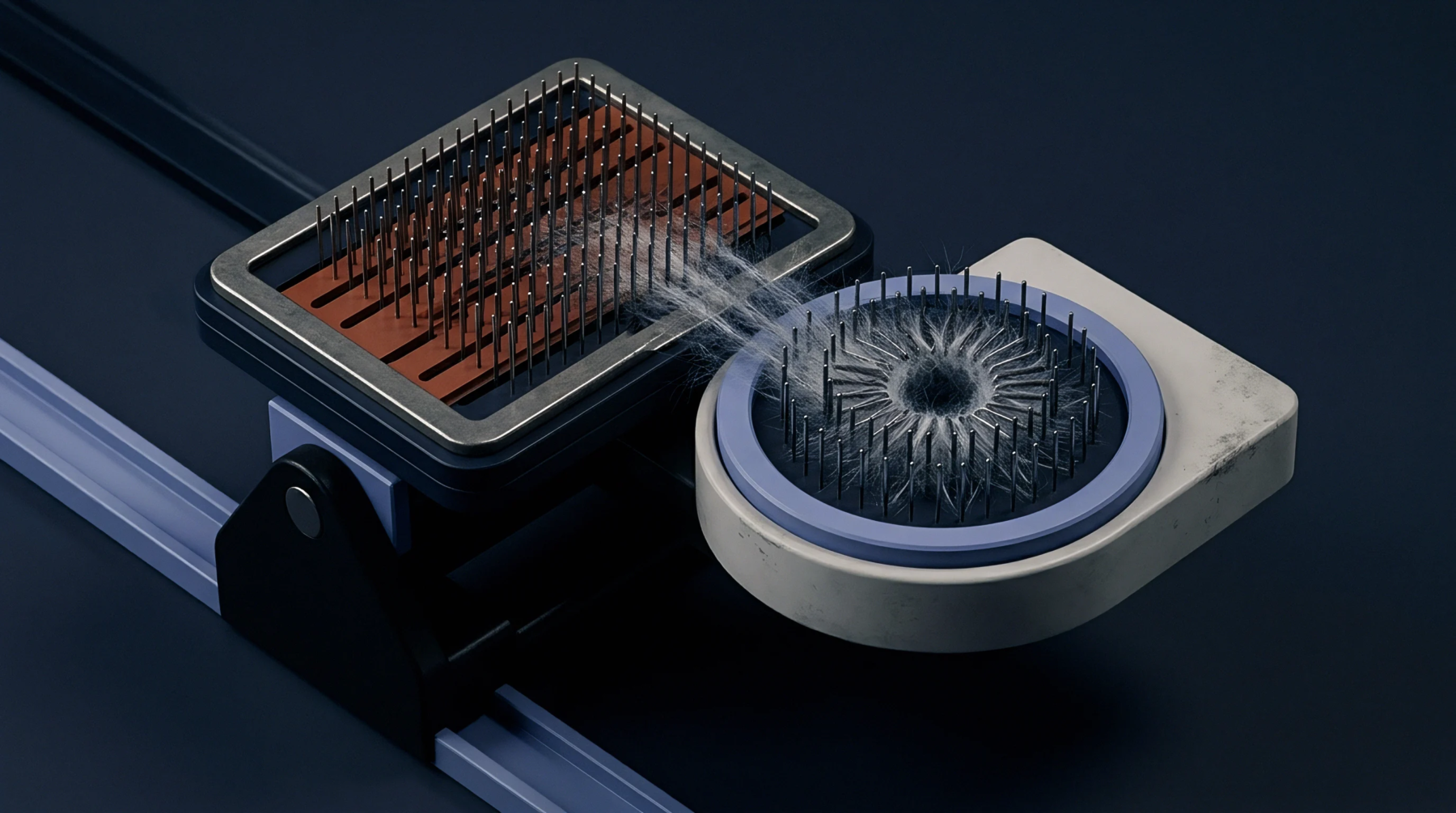
Extrusion Residue
Extrusion equipment requires internal cleaning during transitions between different resin grades or color batches to prevent contamination. Polymer purge scrap results from the ejection of this transition material into a collection bin rather than the downstream mold or die. This material contains a mixture of the preceding resin and the incoming material which creates structural inconsistencies if left in the line.
The removal process preserves the purity of subsequent production runs.
Contamination Prevention
Operators perform regular purging cycles to clear degraded thermal stability zones within the screw and barrel assembly. Polymer purge scrap acts as a sacrificial volume that captures carbonized particles and oxidized resins that accumulate during standard run times. Removing these substances early ensures that finished textile filaments do not contain brittle inclusions or off-color streaks.
Mechanical settings determine how much material is wasted during this phase based on the volume capacity of the extrusion hardware.
Recovery Economics
Recyclers classify this waste stream as high quality because the material experiences only short durations of heat exposure. Polymer purge scrap undergoes mechanical grinding or pelletizing to reintroduce the substance into non-critical manufacturing loops. Financial feasibility depends on the degree of color mixing within the purge mass because dark or multi-pigment mixtures limit the ability to reuse the material for light-colored yarn production.
Firms often sequester these streams to maintain batch traceability during secondary processing.
Processing Impact
Variable thermal conditions inside the melt zone affect the viscosity of the purge stream during the exit stage. Polymer purge scrap indicates the efficiency of the flushing sequence relative to the total mass of the extrusion equipment. Inadequate purge volumes leave behind residual resin that causes visible defects in thin gauge filaments during the cooling phase.
Consistent collection protocols minimize the downtime required to re-establish stable flow characteristics.