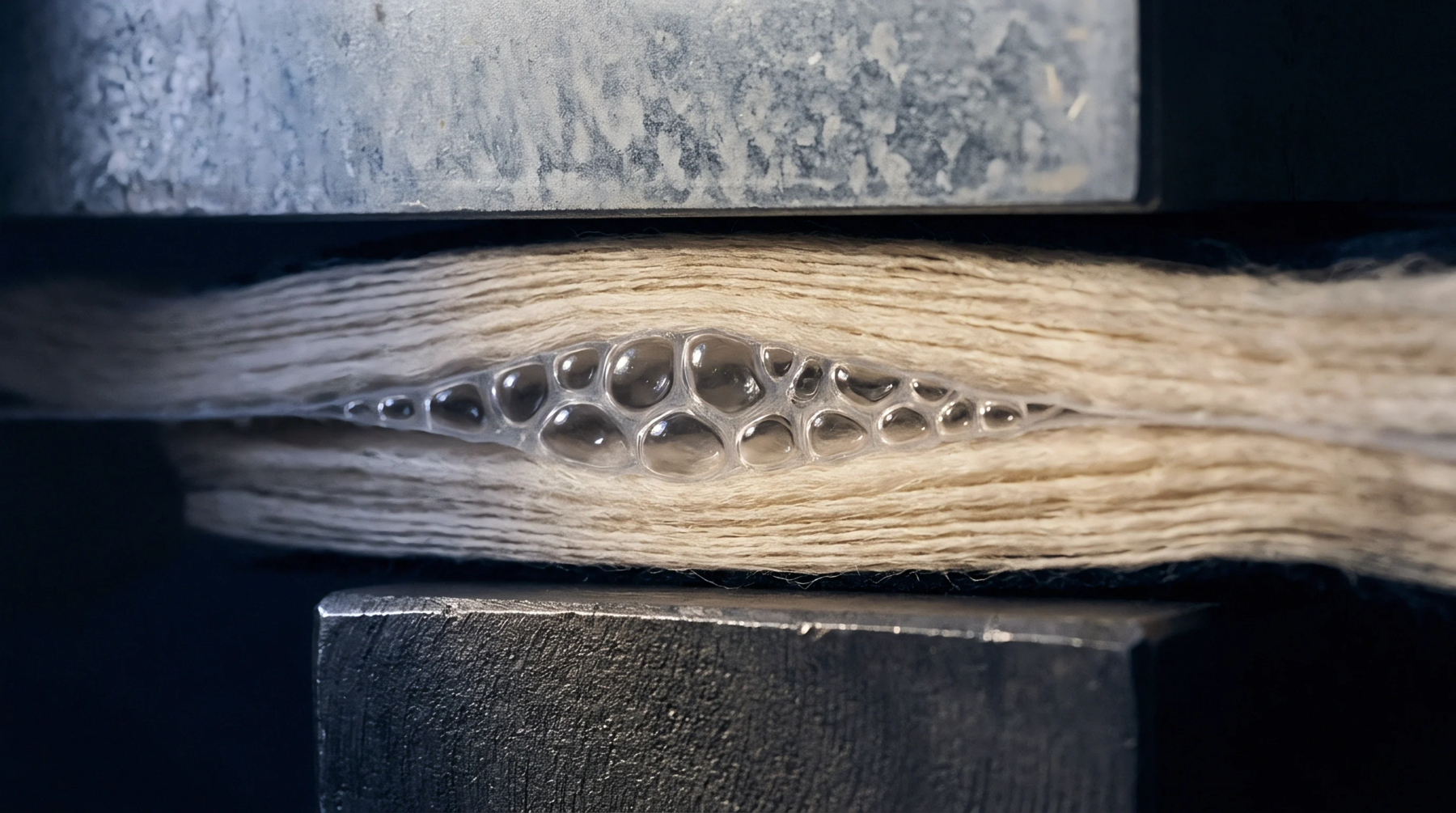
Micro Shed Dusting Accumulation Dynamics inside Air Jet Relay Nozzles under High Humidity
Humid air plasticizes sizing dust into sticky cakes inside relay nozzle bores, distorting airflow profiles and causing costly pick insertion stops.
Water-soluble synthetic resins produced through the partial or complete alcoholysis of polyvinyl acetate serve as high-performance protective adhesives applied to warp yarns during commercial sizing operations. Polyvinyl alcohol binder defines a high molecular weight sizing polymer known for its high tensile strength, elastic film recovery and abrasion resistance against mechanical processing stresses. Its primary role centers on reinforcing fine cotton, polyester, rayon and blended warp yarns to withstand the intense dynamic demands of modern high-speed air-jet and rapier weaving.
The polymer dissolves fully in hot aqueous wash baths, ensuring desizing removal prior to textile dyeing. The definition ceases to apply to modified bio-based starches, acrylic sizing emulsions, polyester resins or insoluble cross-linked structural adhesives.
Synthesized via controlled hydrolysis, the polymer chain features numerous hydroxyl groups that create strong intermolecular hydrogen bonds. When formulated into an aqueous sizing liquor and applied to yarn sheets, polyvinyl alcohol binder forms a tough, transparent and elastic protective film over the yarn surface. The polymer exhibits strong adhesion to synthetic fibers and natural cellulosics, encapsulating stray fibers and gluing them down firmly to the yarn stem.
Unlike brittle unmodified natural starches, this synthetic film flexes under rapid elongation cycles without cracking, flaking or generating dust. The film absorbs mechanical friction generated by heald eyes, drop wires and reed dents, preventing surface wear and maintaining the yarn’s original tensile elasticity throughout the entire fabric weaving process.
Application of synthetic binders resolves the abrasive limitations that cause warp breaks in high-density textile manufacturing. When warp yarns lack adequate binding, adjacent ends rub against each other within the weaving shed, causing fiber fuzz balls that catch on adjacent threads and trigger loom stops. Polyvinyl alcohol binder suppresses this shedding action, keeping the warp shed clean and preventing optical sensor false stops.
Reduced shedding protects reed tunnels and relay nozzles from becoming contaminated with sizing powder, preserving aerodynamic velocity profiles. However, using improper hydrolysis grades or excessive binder concentrations causes yarn stickiness and difficult sizing splits, which can generate clinging warp ends and broken filaments that create fabric striping and uneven pick distribution across the finished cloth.
Commercial handling of synthetic sizing agents requires strict attention to chemical concentration, environmental recovery and desizing washing conditions. Modern textile processing plants monitor size pickup on yarn using mass balance equations and gravimetric analysis of oven-dried samples. Desizing operations wash greige fabric in hot water baths above eighty-five degrees Celsius, fully dissolving the binder without requiring aggressive chemical oxidizers.
Effluent recovery systems route the concentrated desize wash water through ultrafiltration membranes, capturing the polymer molecules for re-concentration and direct reapplication in subsequent sizing batches. This closed-loop recovery lowers chemical consumption, cuts mill wastewater biological oxygen demand and guarantees that zero synthetic residue remains on fabrics to interfere with subsequent dyeing and printing operations.
Humid air plasticizes sizing dust into sticky cakes inside relay nozzle bores, distorting airflow profiles and causing costly pick insertion stops.
Expertise is a utility, not a secret. sentiention™ publishes its working knowledge as open reference: intelligence layer covering the materials it sources, the markets it enters, and the reference that serves both.