Alkaline Scouring Chemistry Interactions with Residual Polyvinyl Alcohol Warp Sizing
High-alkali scouring gelates residual polyvinyl alcohol size; maintaining rinse temperatures above 85°C with polymeric dispersants prevents dye resist defects.
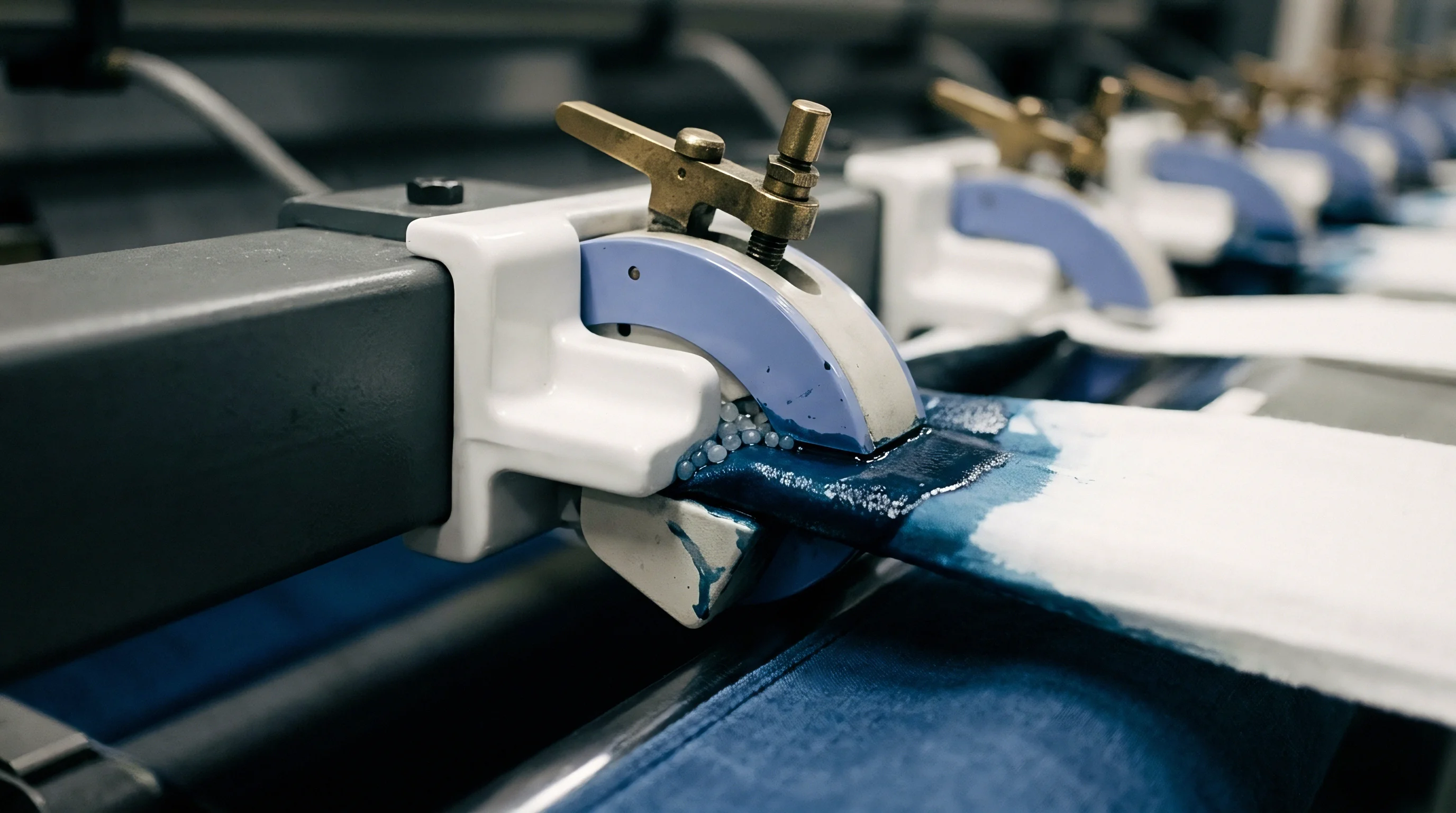

Film
Synthetic size formulations deposited during warp preparation form a cohesive protective sheath around spun yarns to withstand high-speed weaving tensions. Polyvinyl alcohol, synthesized through the partial or complete hydrolysis of polyvinyl acetate, acts as the primary film-forming polymer on ring-spun and open-end cotton warps. When sizing cooks achieve high uniform viscosities, the polymer penetrates the yarn core while establishing an exterior coating that locks down protruding surface fibres.
Incomplete desizing leaves discrete islands of this cross-linked coating adhering to the cotton primary cell wall prior to scouring.
Desizing operations aim to solubilize and wash out these polymeric binders using hot water extraction, persulfate oxidizers, or enzymatic amylase baths designed to break down co-applied starch. Starch degrades readily into short-chain water-soluble dextrins under enzymatic cleavage. Polyvinyl alcohol lacks glycosidic linkages, remaining chemically inert to amylase enzymes.
Water temperature in the desizing washer governs the physical dissolution rate of the synthetic size. If wash temperatures drop below the specific dissolution threshold of the applied size grade, the polymer absorbs water, expands into a swollen hydrogel, and resists mechanical detachment from the cotton lumen.
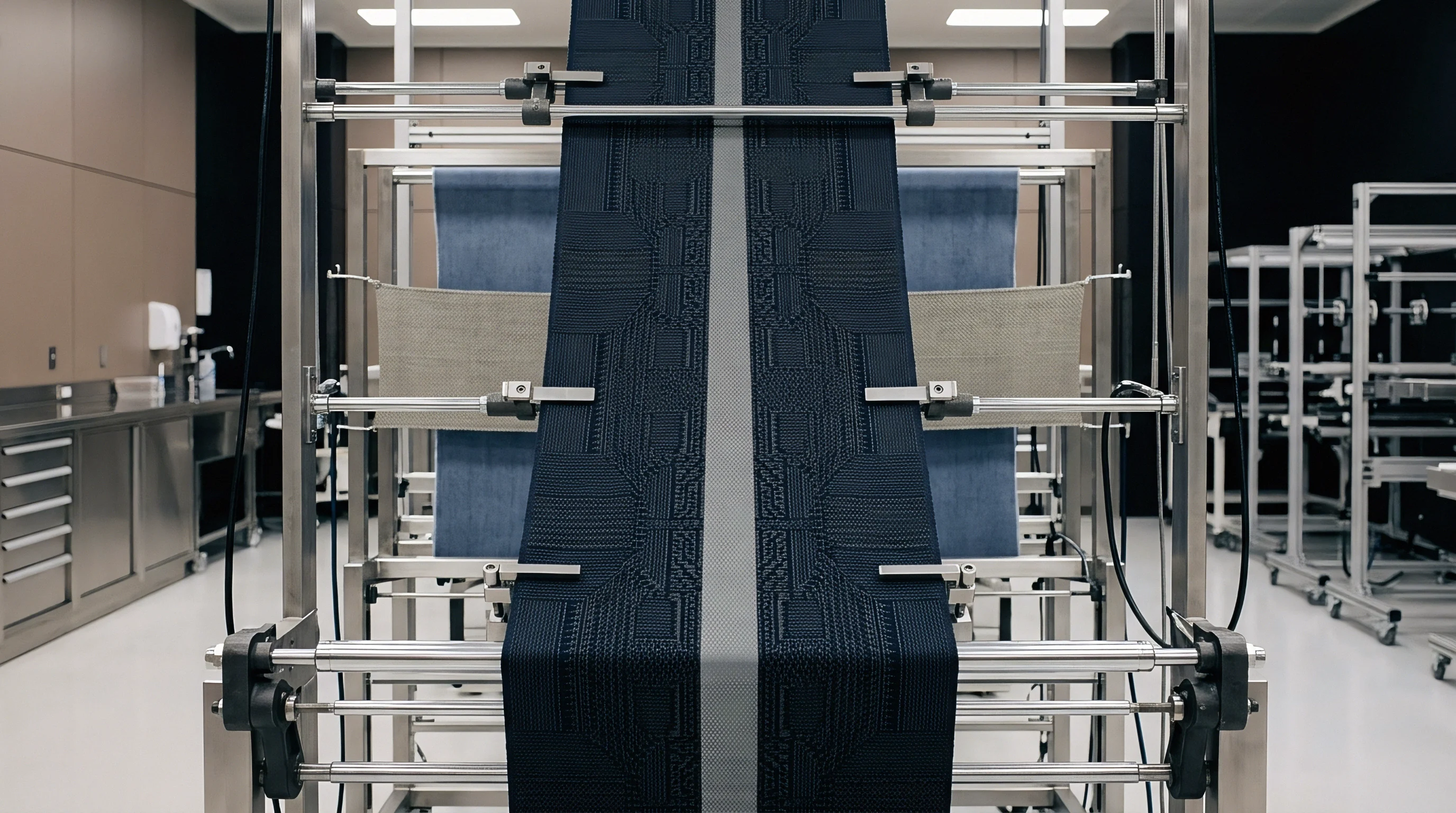
Residual Polymer Morphology after Enzyme and Persulfate Desizing
Residual size remaining on grey goods exists in a partially hydrated, highly viscous state. Cold water immersion turns dry size brittle, whereas warm water swelling transforms the binder into a tenacious, gelatinous film that coats individual cellulosic microfibrils. Persulfate oxidation cleaves the carbon-carbon backbone of polyvinyl alcohol, reducing its molecular weight and enhancing water solubility.
Inadequate dwell times or sub-optimal persulfate concentrations leave long-chain polymer segments anchored within the inter-yarn interstices of high-density constructions.
Cold wash water locks swollen polymer hydrogels into yarn voids before alkali saponification can begin.
High-density woven fabrics, such as 3/1 heavy twills or dense poplins, impede the hydraulic displacement of swollen sizing. The mechanical configuration of continuous desizing washers frequently relies on surface washing without sufficient liquor exchange through the fabric core. Consequently, unextracted polyvinyl alcohol resides beneath the outer surface of the yarn bundle.
This residual material enters the alkaline scouring stage not as a uniformly dispersed solution, but as localized structural blockages distributed unevenly across the warp sheet.
Physical Encapsulation of Cotton Wax and Pectins
Cotton fibres arrive at the grey stage surrounded by a hydrophobic cuticle composed of natural waxes, fats, pectins, and proteinaceous fragments. Polyvinyl alcohol films deposited over raw cotton trap these hydrophobic non-cellulosic impurities directly against the primary cell wall. The residual synthetic binder forms a physical barrier that prevents aqueous scouring liquors from contacting and saponifying the underlying natural waxes.
Scouring chemistry must penetrate or strip this synthetic envelope before caustic soda can reach the hydrophobic wax layer.
Improperly desized goods subjected to high-temperature alkaline treatments show irregular absorbency patterns across the fabric width. Where residual synthetic size persists, the caustic liquor cannot emulsify the trapped fats. The polymer film undergoes localized physical dehydration under hot alkaline conditions, hardening into an insoluble matrix that locks hydrophobic impurities into the cotton structure.
Mills often attribute subsequent dye resist defects to oil contamination during weaving, when the true cause stems from residual synthetic binder shielding natural cotton wax from saponification.

Kinetics
Chemical reactions between sodium hydroxide and residual synthetic sizing govern whether the polymer dissolves into the scouring liquor or precipitates as a sticky sludge onto processing equipment. Polyvinyl alcohol contains abundant hydroxyl groups along its aliphatic hydrocarbon chain. When exposed to alkaline scouring liquors containing 30 to 60 grams per litre of solid sodium hydroxide at elevated temperatures, the hydroxyl groups interact dynamically with hydrated sodium cations and hydroxide anions, altering the solution thermodynamics of the polymer.
The degree of hydrolysis inherent to the applied size dictates its precise chemical response inside the alkali bath. Partially hydrolyzed grades retain between 12 and 18 mole percent of unhydrolyzed acetate groups along the polymer backbone. Hot sodium hydroxide rapidly saponifies these residual acetate groups, converting them into vinyl alcohol units while generating sodium acetate as a byproduct.
This saponification increases the overall hydrophilicity of partially hydrolyzed material, temporarily facilitating water solubility inside low-alkali systems.
Alkaline Hydrolysis and Degree of Hydrolysis Shifts
Exposing partially hydrolyzed polyvinyl alcohol to concentrated caustic soda converts it chemically toward a fully hydrolyzed structure. Fully hydrolyzed grades, containing greater than 98 mole percent vinyl alcohol units, exhibit strong intermolecular hydrogen bonding between hydroxyl groups on adjacent polymer chains. These strong internal hydrogen bonds resist water penetration unless wash temperatures exceed 85 degrees Celsius.
The saponification of partially hydrolyzed size inside an alkaline scouring bath transforms a cold-water-soluble polymer into a highly crystalline structure that demands boiling temperatures for complete removal.
Concentrated sodium hydroxide acts as a salting-out agent for fully hydrolyzed polyvinyl alcohol. High concentrations of sodium cations compete for available water molecules, stripping the hydration shell that stabilizes the polymer chain in aqueous solution. When the local concentration of caustic soda exceeds specific chemical thresholds, the polymer undergoes phase separation, coacervating into dense, rubbery masses that adhere to machine rollers, liquor tanks, and fabric selvedges.

Caustic Hydration and PVA Gelation Thresholds
The transition from a dissolved polymer coil to an insoluble gel depends on liquor temperature, sodium hydroxide molarity, and the degree of polymerization of the size molecule. High-viscosity sizing exhibits a pronounced tendency toward caustic-induced gelation. As temperature rises within a continuous pad-steam saturator, the kinetic energy of the liquor increases, yet the salting-out effect of high sodium hydroxide concentrations counteracts thermal dissolution.
| Polymer Hydrolysis Grade | Degree of Polymerization | Caustic Soda Concentration Range | Gelation Threshold Temperature | Solubility Phase Behavior |
|---|---|---|---|---|
| Partially Hydrolyzed (87-89 mol%) | 500 – 1000 | 10 – 25 g/L NaOH | 65 – 70°C | Initial dissolution followed by alkaline saponification to fully hydrolyzed state |
| Partially Hydrolyzed (87-89 mol%) | 1700 – 2200 | 30 – 50 g/L NaOH | 50 – 55°C | Rapid coacervation into sticky gels; high risk of roller deposition |
| Fully Hydrolyzed (98-99 mol%) | 500 – 1000 | 20 – 40 g/L NaOH | 75 – 80°C | Salting-out precipitation; requires high-temperature rinsing above 85°C |
| Fully Hydrolyzed (98-99 mol%) | 1700 – 2400 | 40 – 60 g/L NaOH | 40 – 45°C | Immediate insolubilization and intra-yarn structural aggregation |
| Data based on standard liquor-to-fabric continuous impregnation at 100% wet pickup using technical grade sodium hydroxide and demineralized water. | ||||
High alkali concentration depresses the cloud point of polyvinyl alcohol solutions. When the processing temperature exceeds the cloud point, polymer-polymer hydrophobic interactions dominate over polymer-water hydrogen bonding. Hydrolysis grade alters gel stability.
The polymer chains aggregate into micro-gel droplets that aggregate into macroscopic deposits under mechanical shear inside wet processing machinery.
Failure Modes in Continuous Pad-Steam Scouring
Operating a continuous scouring line with residual size on grey goods creates distinct operational failure points across the wet processing sequence. Gelation stops mass transfer. Caustic soda swells raw cotton.
Unwashed size causes blotchy shade. Temperature controls size dissolution speed. Identifying the root chemical cause of these processing breakdowns prevents costly fabric rejections.
- Agglutination inside steamer rolls occurs when salted-out size deposits onto stainless steel guide rollers, creating sticky ridges that abrade soft cotton yarns and cause end-breaks.
- Intra-yarn matrix encapsulation arises when gelled size traps hydrophobic cotton waxes inside the core of high-twist ring-spun yarns, preventing uniform chemical penetration during scouring.
- Differential alkali consumption develops as residual acetate saponification consumes sodium hydroxide from the scouring liquor, dropping the effective bath pH below the threshold needed for pectin degradation.
- Redeposition streakiness happens when emulsified size aggregates redeposit onto the fabric surface during low-temperature washing steps, forming irregular resist bands that block dye uptake.
A caustic soda concentration exceeding 45 grams per litre inside a pad-steam saturator drops the solubility limit of high-molecular-weight size, causing phase separation at 60 degrees Celsius.
When sodium hydroxide converts residual size into an insoluble gel matrix inside the yarn structure, subsequent hot water rinses struggle to re-solubilize the polymer. The gelled material creates a physical diffusion barrier that slows down the migration of dissolved natural impurities out of the cellulosic cell wall. This chemical interaction raises the open operational question of whether fully saponified, high-viscosity size can ever be extracted from dense cotton structures without introducing specialized molecular dispersants or oxidative clearing chemistry directly into the alkaline saturator bath.

Substrate
Physical structure and density of woven fabrics dictate the hydraulic mechanics of fluid exchange during alkaline scouring operations. Heavy woven constructions, such as 280 grams per square metre cotton canvas, 3/1 warp-face twills, and high-density 40s poplins, restrict the flow of scouring liquor through the yarn intersections. When grey cloth enters the scouring range carrying residual size, mechanical squeezing rolls and hydraulic impact nozzles must work in tandem with chemical action to dislodge the trapped hydrogel.
Processing equipment choice influences size removal efficiency. Continuous pad-steam ranges rely on brief dwell times in high-concentration caustic baths, followed by high-temperature steaming and multi-stage counter-current washing. Jet dyeing machines, operating at lower liquor ratios with higher mechanical action and longer dwell times, extract residual size more thoroughly but risk surface pilling on delicate spun yarns.
Jigger processing provides long contact times but lacks the hydraulic velocity needed to force gelled sizing out of dense warp sheets.

Does Incomplete Desizing Transform Residual Sizing into an Insoluble Matrix?
Incomplete removal of size prior to scouring alters the physical outcome of the alkaline process. When greige fabric with high residual binder levels passes directly into a caustic saturator, concentrated alkali hydrates the cellulosic fibers while simultaneously competing with the polymer for free water molecules. The residual size dehydrates partially, forming a sticky, dense matrix within the inter-yarn spaces.
Rather than dissolving into the bath, the polymer transforms into a viscous gel that traps particulate dirt, motes, and unsaponified natural fats against the cotton fibers.
High liquor pickup during pad impregnation helps suppress this gel formation by maintaining adequate water availability around the polymer chains. Squeezing rolls set to tight nip pressures force caustic liquor deep into the warp yarns, diluting localized size pockets before the fabric enters the steaming chamber. If nip pressure is inadequate or liquor pickup drops below 70 percent, caustic soda concentration within the inner core of the yarn reaches extreme levels, accelerating size precipitation and locking impurities inside the substrate.
Hydraulic Mass Transfer in Continuous Wash Ranges
Extracting dissolved and gelled polymers from scoured fabric requires a structured washing cascade. High temperatures are mandatory in the initial washing boxes to maintain the size above its dissolution threshold and prevent retrogradation. Rinsing with cold water immediately after caustic steaming causes thermal shock, causing the gelled polymer to contract and harden inside the yarn capillaries.
- Impregnate greige fabric with scouring liquor containing 40 grams per litre sodium hydroxide and 4 grams per litre alkali-stable wetting agent at 60 degrees Celsius to achieve 75 percent wet pickup.
- Steam the impregnated fabric at 100 to 102 degrees Celsius for 45 seconds under saturated steam conditions to complete natural wax saponification and pectin degradation.
- Pass the steamed web directly into the first washing box maintained at 95 degrees Celsius with continuous overflow to strip saponified fats and emulsified size from the fabric surface.
- Cascade the fabric through two subsequent washing stages held at 85 degrees Celsius using high-impact wash boxes equipped with submerged spray bars to generate mechanical fluid movement through the weave.
- Perform a final neutralisation wash at 60 degrees Celsius using acetic acid to clear alkali traces before drying the scoured web on steam cans.
Consider a continuous scouring line processing a 100 percent cotton 3/1 twill weighing 240 grams per square metre at a line speed of 80 metres per minute. The fabric width is 1.6 metres, yielding a total throughput of 18,432 kilograms of dry fabric per eight-hour shift. Sizing records show the grey fabric carries a residual size load of 1.2 percent by weight following an inefficient enzyme desizing process.
This corresponds to 221.18 kilograms of dry residual polyvinyl alcohol entering the caustic saturator per shift.
The caustic saturator operates at a liquor pickup of 80 percent, feeding 14,745.6 litres of scouring solution per shift containing 45 grams per litre sodium hydroxide (663.55 kilograms pure NaOH). Inside the saturator, the residual size dissolves into the liquor until the concentration of size in the saturator bath reaches a steady-state equilibrium. Assuming a bath volume of 1,200 litres and a continuous bath turnover rate driven by fresh chemical dosing, the steady-state concentration of dissolved size in the saturator reaches 14.5 grams per litre.
At 14.5 grams per litre of polyvinyl alcohol in the presence of 45 grams per litre sodium hydroxide at 60 degrees Celsius, high-viscosity size grades reach their coacervation boundary. The polymer phase-separates from the scouring liquor, depositing 18.2 kilograms of wet polymer gel per hour onto the saturator rollers and steam chest entry rolls. Increasing the wash-off extraction rate in the pre-scour washer to lower the residual size content to 0.3 percent drops the steady-state saturator size concentration to 3.6 grams per litre, keeping the polymer completely within its soluble phase region and eliminating gelation deposits.
Rinsing scoured cotton goods below 80 degrees Celsius while residual synthetic size remains present precipitates the polymer directly into the yarn capillaries.
Washing efficiency improves dramatically when counter-current water flow moves opposite to fabric travel. High liquor velocity at the fabric surface strips boundary layers of concentrated size, creating a steep concentration gradient that accelerates diffusion out of the yarn core. Squeezing rolls extract dissolved polymer chemistry between consecutive wash boxes, preventing carryover of size-laden liquor into cleaner wash stages.
A basic rule of thumb dictates that washing temperature must remain higher than the original size dissolution temperature until the concentration of residual size on the fabric drops below 0.1 percent by weight.


Assay
Quantifying residual polyvinyl alcohol on scoured fabric provides the objective basis for qualifying goods prior to dyeing or printing. Grey fabric inspections cannot rely on visual appearance, as gelled size forms a colorless, transparent coating over cotton fibers. Chemical reagents that form colored complexes with polyvinyl alcohol allow wet processing managers to map residual size distribution across the width and length of a scoured fabric roll.
Spectrophotometric testing using iodine and boric acid serves as the primary standard laboratory method for size quantification. Iodine molecules intercalate within the helical structure formed by polyvinyl alcohol in the presence of boric acid, producing a vibrant blue to green chromophore. The intensity of color development, measured at a absorbance wavelength of 690 nanometres, correlates directly with polymer concentration on the substrate when referenced against a calibrated standard curve.

Iodine Boric Acid Spectrophotometry and TEGEWA Indexing
Qualitative visual mapping utilizes the TEGEWA iodine test solution, composed of potassium iodide, iodine, and boric acid dissolved in distilled water. Dropping the TEGEWA reagent directly onto scoured cloth produces immediate color shifts that map size contamination. The color response ranges from light yellow (indicating complete size removal) to deep blue-violet (indicating heavy residual size retention).
| Test Method Name | Primary Standard Reference | Measurement Mechanism | Detection Limit Range | Primary Failure Mode Identified |
|---|---|---|---|---|
| TEGEWA Drop Test Index | TEGEWA Violet Scale 1-9 | Visual color scale comparison of iodine-boric acid complexing | 0.05% – 2.0% size weight | Uneven size distribution and spotty size retention across fabric width |
| UV-Vis Spectrophotometry | ISO 105-E06 Modified / AATCC 115 | Absorbance at 690 nm of aqueous extract complexed with KI/I2/H3BO3 | 0.01% – 0.50% size weight | Quantitative size retention exceeding threshold limits for pale shade dyeing |
| Soxhlet Water Extraction | ISO 3071 / ASTM D2257 | Gravimetric weight loss after 4-hour boiling water extraction | 0.10% – 5.0% total solubles | Combined residual size, natural waxes, and water-soluble finishing additives |
| Near-Infrared Spectroscopy | AATCC TM201 / ISO 19734 | Absorbance bands at 1450 nm and 1940 nm corresponding to OH stretching | 0.05% – 3.0% surface coverage | Real-time continuous web monitoring for cross-fabric size variation |
| Spectrophotometric accuracy requires baseline calibration against the exact size lot applied during warp preparation. | ||||
Interpreting TEGEWA rating scores requires rigorous standardisation within the plant quality laboratory. A TEGEWA rating of 8 to 9 indicates complete size extraction, making the cloth suitable for critical dyeing applications such as continuous reactive pale shades or pad-batch direct dyes. A rating of 1 to 4 alerts the dyehouse manager that heavy size residues persist, guaranteeing dye resist, blotchiness, and severe shade variations if the lot proceeds to the dyehouse without re-scouring.
Analytical Protocols for Quality Gate Inspection
Quality assurance protocols establish clear pass-fail criteria at the grey inspection and post-scour inspection gates. Sampling procedures demand taking fabric swatches from selvedge-to-selvedge positions across the front, middle, and tail ends of every scoured bulk roll. Unremoved size stiffens the finished fabric.
Spotting size distribution variations across the weave prevents full-scale dyeing disasters.
- Sampling grid selection requires cutting 10×10 centimetre swatches from left selvedge, center, and right selvedge to detect side-to-center scouring variations.
- Chemical spot testing mandates applying three drops of TEGEWA reagent across each swatch and recording the color rating after precisely 30 seconds of reaction time.
- Quantitative extraction verification dictates boiling a 5-gram fabric sample in demineralized water for 30 minutes, filtering the extract, adding iodine-boric acid reagent, and measuring UV-Vis absorbance at 690 nanometres.
- Absorbency cross-checking requires recording water drop drop-penetration times according to AATCC Test Method 39 alongside TEGEWA ratings to verify simultaneous wax saponification.
A TEGEWA scale rating below 6 on scoured cotton fabric indicates sufficient residual synthetic size to cause reactive dye resist spots during continuous pad-steam dyeing.
Quality documentation for export fabric orders routinely incorporates clear standards clauses regarding residual size content. A standard purchase specification line states: “Scoured fabric must demonstrate a TEGEWA scale rating of 7 or higher across all widthwise test zones, with total water-extractable matter not exceeding 0.15 percent by dry weight when tested under ISO 105-E06 conditions.” Incorporating this exact requirement into converter contracts binds the wet processor to objective quantitative standards, transferring full financial liability for batch re-scouring or shade rework back to the finishing mill if residual size causes dyeing defects.

Remedy
Correcting residual synthetic size problems demands targeted modification of scouring bath chemistry and wash-off parameters. Traditional alkaline scouring formulations relying solely on sodium hydroxide and simple alkylphenol ethoxylates fail to maintain gelled polyvinyl alcohol in a stable dispersed state. Modern dyehouse practice incorporates advanced chemical systems specifically engineered to prevent polymer coacervation and re-deposition under high-alkali, high-temperature conditions.
Surfactants selected for alkaline scouring must exhibit high cloud points, rapid wetting speed, and exceptional stability in 40 to 60 grams per litre sodium hydroxide solutions. Anionic surfactants, such as alcohol ether sulfates and secondary alkane sulfonates, provide strong electrostatic repulsion that keeps dispersed polymer particles separated in solution. Non-ionic block copolymers lower bath surface tension, facilitating rapid penetration of caustic chemistry into the dense interior of ring-spun yarns.

Surfactant Engineering for High Alkali Size Dispersion
Sequestering agents and polyacrylic dispersants play an essential role in preventing size precipitation. Polyacrylic acid salts act as protective colloids, wrapping around hydrophobic size aggregates and maintaining their dispersion in water even when caustic concentrations are high. Chelating agents, such as phosphonates or aminocarboxylates, bind polyvalent metal ions like calcium and magnesium present in hard mill water.
Calcium and magnesium cations bridge adjacent carboxylate or hydroxyl groups on size molecules, forming insoluble salt complexes that lock residual size onto cotton fibers.
| Chemical Auxiliary Class | Active Chemical Composition | Dosing Range in Saturator | Operational Chemistry Function | Compatibility Limits |
|---|---|---|---|---|
| Polymeric Dispersant | Low molecular weight sodium polyacrylate | 2.0 – 4.0 g/L | Protective colloid action; prevents coacervated size redeposition | Stable up to 80 g/L NaOH; incompatible with cationic softeners |
| Alkali-Stable Wetting Agent | Phosphated aliphatic alcohol ester | 3.0 – 5.0 g/L | Reduces liquor surface tension; speeds core penetration into warp yarns | High foam generation under high-shear jet flow conditions |
| Sequestering Agent | Hydroxyethylidene diphosphonic acid (HEDP) | 1.5 – 3.0 g/L | Cheletes Ca/Mg ions; breaks divalent metal cross-linking in size gels | Stable across pH 2-14; excellent peroxide bleach stability |
| Solubilizing Hydrotrope | Sodium xylene sulfonate / short-chain alkyl sulfate | 2.0 – 5.0 g/L | Raises cloud point of non-ionic surfactants in hot concentrated alkali | Excessive concentration reduces surfactant micelle efficiency |
Oxidative scouring formulations offer an alternative path for removing persistent polyvinyl alcohol size. Adding sodium persulfate or hydrogen peroxide directly into the alkaline saturator cleaves the synthetic polymer chains into low-molecular-weight fragments. These short fragments exhibit high water solubility and lose their ability to form insoluble gels in caustic soda.
Thermal activation at 95 to 100 degrees Celsius accelerates persistent polymer breakdown, enabling complete extraction during subsequent hot rinses.

Financial Consequences of Wet Processing Rework
When unremoved size passes unnoticed through scouring and causes blotchy dyeings, the mill faces severe economic losses. Reworking defective fabric requires stripping the dye, re-scouring the web with high-cost oxidative chemicals, and re-dyeing the lot to shade. Rework triples finishing line energy costs.
Chemical costs for stripping and re-scouring add between 0.18 and 0.35 USD per metre to the landed cost of the fabric. Thermal energy consumed during repeated high-temperature washing and drying cycles increases the carbon intensity and utility expenditure of the wet processing plant.
Production scheduling impacts compound the direct financial cost of chemical rework. Re-processing a 20,000-metre dye lot consumes 16 to 24 hours of line capacity on continuous pad-steam ranges or jet dyeing vessels, creating immediate bottlenecks for downstream garment cutting facilities. Delivering fabric two weeks behind schedule frequently triggers contractual air-freight penalties or order cancellations by garment buyers.
Failure to master the chemical interactions between alkaline scouring chemistry and residual synthetic warp sizes transforms an operational wet-processing step into a source of ongoing commercial exposure.