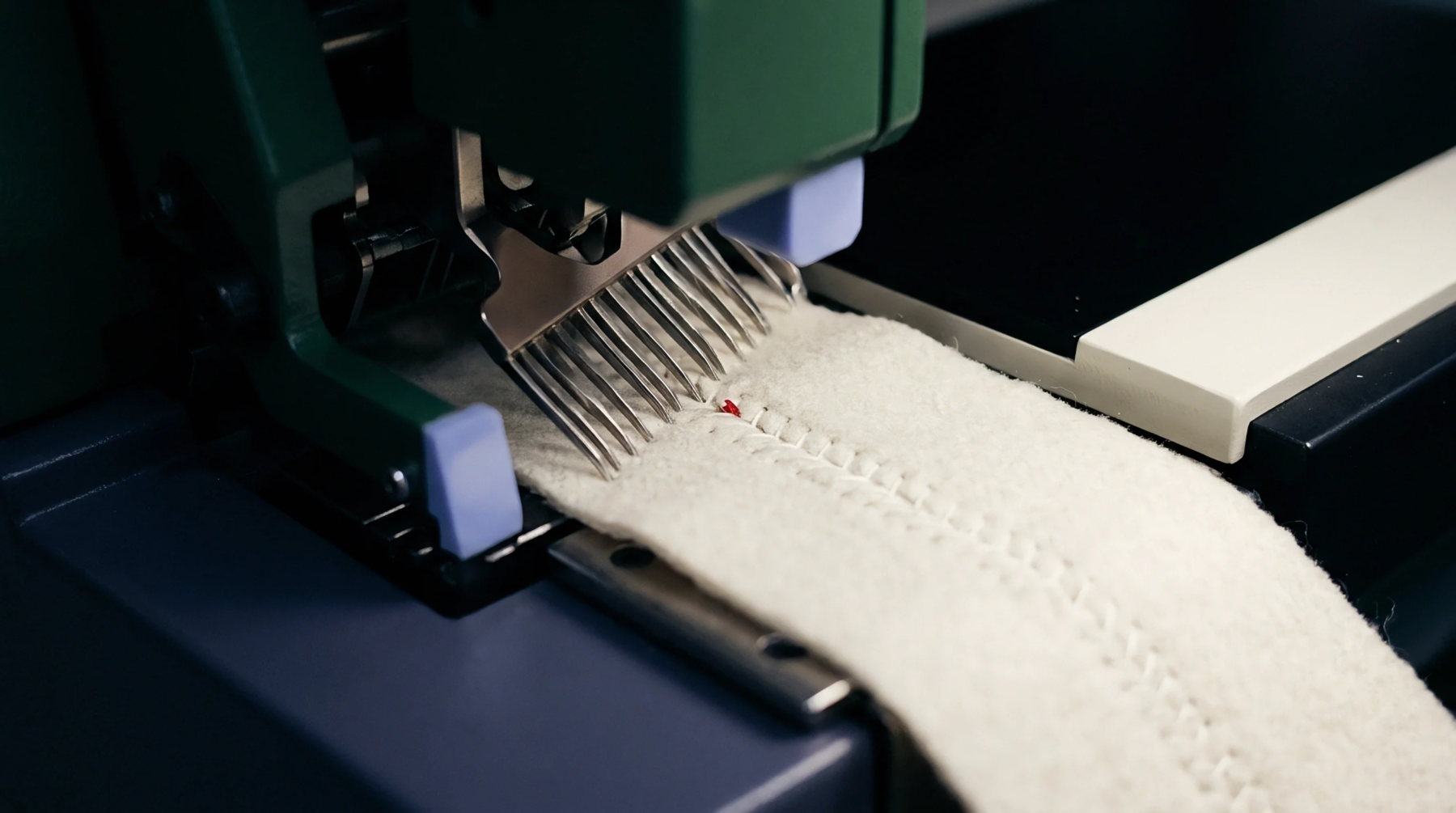
Material Provenance
Reclaimed synthetic or natural textile waste undergoes mechanical shredding and carding to produce raw fibre stock suitable for secondary spinning operations. Recovered staple yarns derive from this repurposed feed to create lower cost alternatives for knitting or weaving applications. Factories identify these materials by measuring the reduction in average fibre length compared to virgin batches, a metric that dictates how much twist the machine must apply to maintain structural integrity during fabric formation.
Processing facilities often verify quality through high speed imaging of the carded web to detect contaminants like residual plastic fasteners or non-matching polymer types. Operators adjust the hopper feeding equipment to account for the variable density found in textile waste. This preparation prevents clogging at the spinning frame and ensures the input remains consistent throughout the batch cycle.
Processing Mechanics
Spinning frames modify the tension parameters for these fibres because the lack of initial length uniformity increases the frequency of strand breakage. Workers monitor the twist per inch setting to compensate for the friction coefficients inherent in chemically treated or aged polymer surfaces. Standard spinning machines require lubrication additives when handling dry recycled stock to reduce the static charge buildup common in synthetic waste streams.
Each bobbin undergoes testing for tensile strength to ensure the product meets the minimum requirement for industrial weaving machines. Variability in the output remains a constant concern since the feedstock origins change with every incoming shipment from garment manufacturing sites. Quality control labs extract samples from both ends of the yarn package to check for denier consistency across the entire production lot.
Verification Protocol
Chemical composition testing confirms that the polymer purity matches the grade necessary for the intended final application. Technicians utilize infrared spectroscopy to detect non-polymer impurities like dyes or finishing agents that interfere with subsequent garment production steps. Mills compare the tenacity results of these batches against industry baselines for virgin yarns.
The testing equipment provides a data set that flags any excessive hairiness or uneven mass distribution which indicates poor carding efficiency. Inspectors reject batches if the percentage of short fibre content exceeds the established limit for machine compatibility. Constant recalibration of the testing sensor ensures accurate readings despite the inherent heterogeneity of the source material.
Commercial Utility
Apparel manufacturers purchase these materials for products where the appearance of a slightly irregular texture is acceptable rather than a defect. Retailers categorize garments containing these yarns as goods with recycled content which allows the items to enter specific markets focused on sustainable material utilization. Purchasing departments track the price delta between virgin polyester and these recycled variants to manage margins in mass market clothing production.
The cost benefit depends on the ability of the spinning mill to process the raw waste with minimal additional synthetic bonding agents. Producers often blend the material with virgin polymers to stabilize the performance of the fabric under repeated washing cycles. Higher concentrations of recycled fibre require precise calibration of the knitting machine to avoid needle damage caused by stiff or abrasive strand segments.
Recovered staple yarns offer a functional substitute for virgin materials provided the mechanical integrity aligns with the load requirements of the final consumer good.