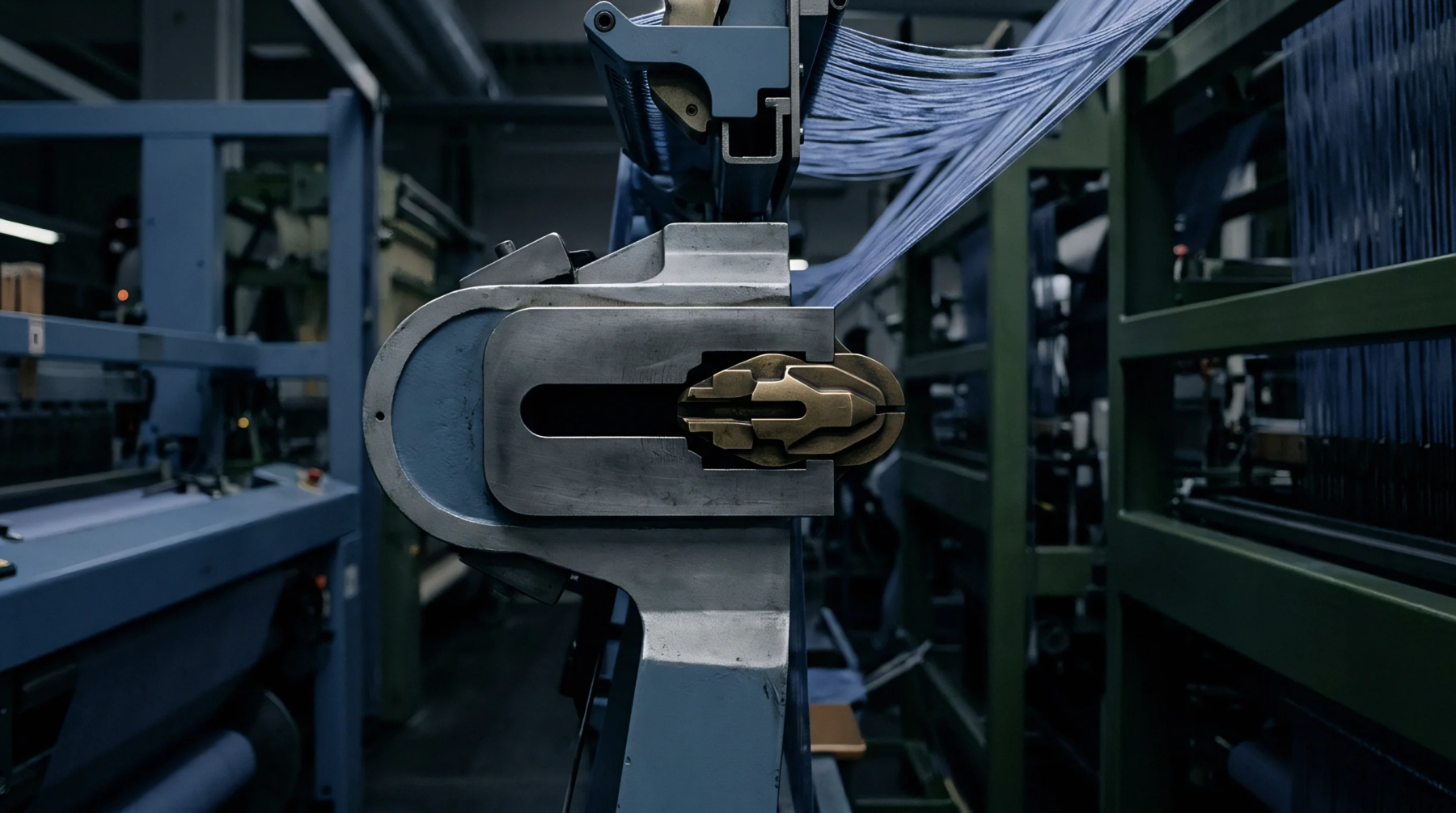
Nozzle Obstruction
Accumulation of size dust, fiber lint, micro-wax particles, and degraded oils within micro-scale discharge openings of auxiliary air nozzles disrupts the air jet profile on shuttleless looms. Occurrence of relay nozzle orifice clogging impairs the guidance of filling yarn across the warp shed during high-speed insertion cycles. Weaving mills monitor compressed air purity to prevent particulate contamination from entering the distribution manifold.
Clean air supply preserves consistent insertion velocity.
Trajectory Deviation
Asymmetrical air discharge caused by partial orifice obstruction alters the propulsion force vectors acting on the trailing end of the inserted weft yarn. Uncorrected relay nozzle orifice clogging leads to buckled wefts and short picks along the reed width. Automatic sensors trigger loom stops when weft arrival timing deviates from programmed parameters.
Maintenance Cycle
Ultrasonic bath cleaning combined with solvent degreasing restores original airflow dynamics to affected nozzle assemblies. Scheduled inspection for relay nozzle orifice clogging reduces unexpected loom downtime and lowers compressed air consumption in high-density weaving plants. Regular maintenance extends nozzle service life.
Pressure Differential
Blocked discharge ports increase line pressure upstream while reducing effective air velocity at the nozzle tip. Monitoring system pressure drop pinpoints degraded nozzle performance across individual loom sections before severe fabric defects appear.