Rubber Elasticity
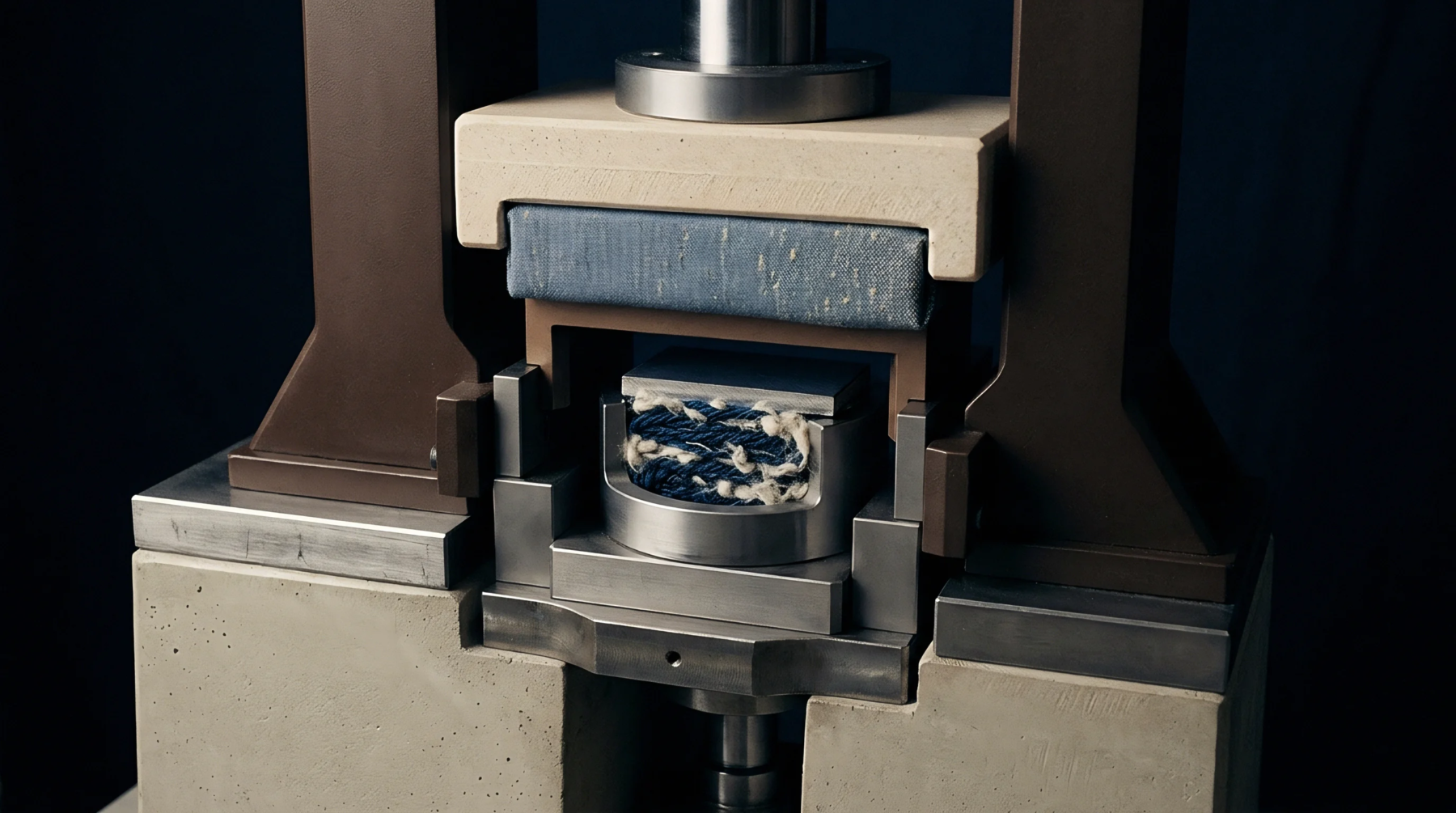
Material resistance of a roller covering to surface penetration determines the contact area and pressure profile in a squeeze padder during continuous processing. This property, known as roll hardness, directly affects the volume of liquid retained by the fabric after it passes through the squeeze rollers. Soft rolls create a wider nip that applies less pressure over a longer contact time, while harder rolls concentrate the force to maximize water removal.
Extraction Performance
Moisture expression before drying requires high-pressure intensity to minimize the energy consumed by the stenter. Increasing the roll hardness allows the padder to squeeze out more water, which increases line speed and reduces fuel usage in the dryers. However, extremely hard rolls can crush delicate woven structures.
Pressure Variation
Rubber rollers degrade and harden over time due to chemical exposure and the heat generated by constant rotation. This change in roll hardness leads to inconsistent squeezing action and patchy chemical application across the lot. Mills monitor this degradation to plan roller resurfacing.
Durometer Testing
Quality control teams measure this property using handheld indentation instruments that press a standardized pin into the rubber surface. The resulting roll hardness value is recorded in Shore units to track wear patterns across the width of the roller. Consistent readings ensure uniform fabric treatment from batch to batch.