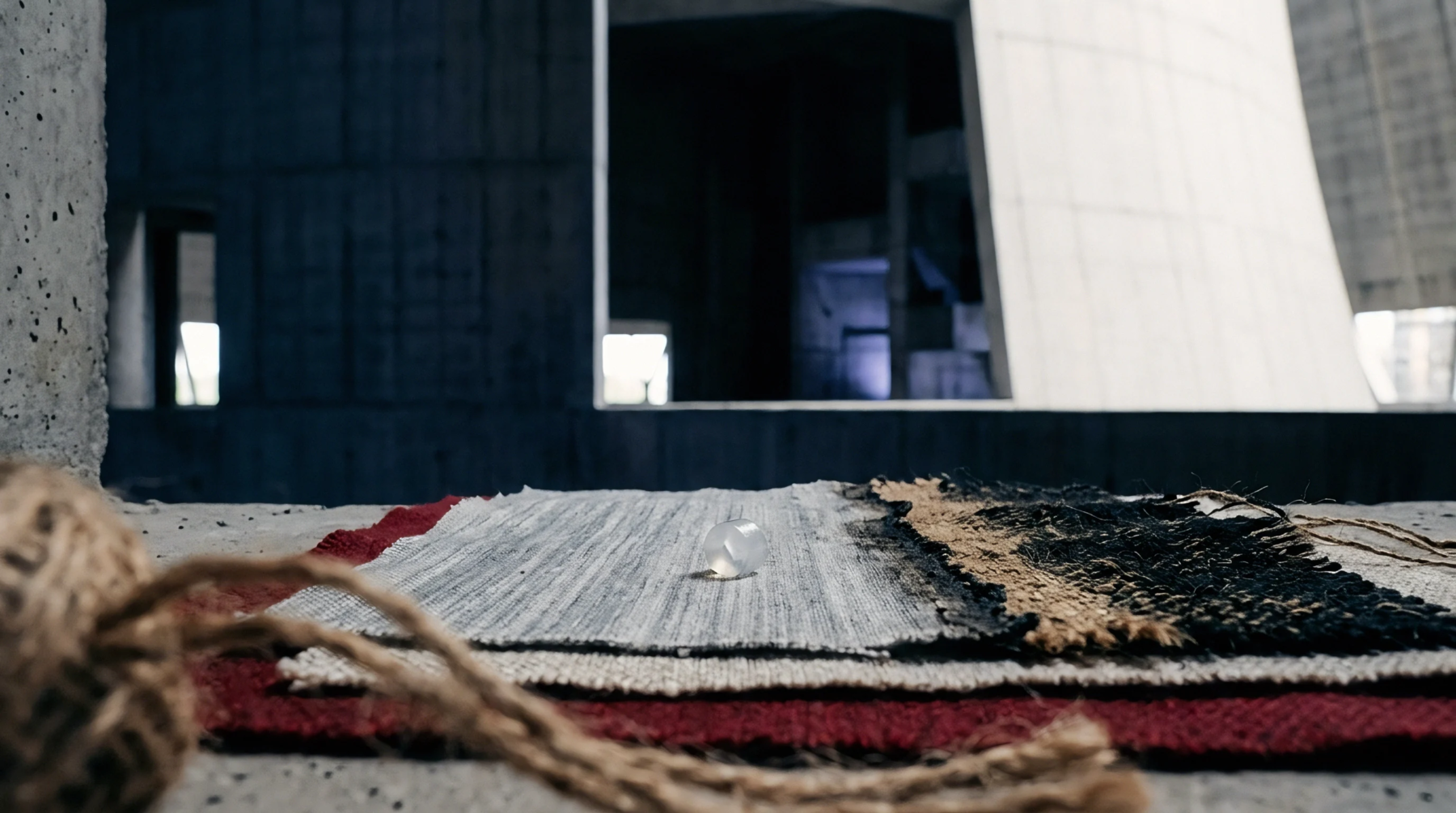
Boundary Specification
Standardized boundaries mandate that the extreme outer edges of a fabric roll must not be included in test specimens or finished garments. Implementing a selvedge exclusion ensures that the denser, stiffer yarns used to stabilize the borders do not skew laboratory results or ruin the drape of apparel. This protocol is followed by cutting rooms and testing laboratories worldwide to maintain quality standards.
Both the physical thickness and yarn tension differ significantly at the borders of the roll.
Cutting Practice
During garment assembly, the lay-planning software automatically blocks out the outer two to three centimeters of the fabric width. This measure prevents the tight, pierced border yarns from being sewn into visible panels, where they would cause puckering or distortion after washing. Industrial mills output a wider fabric than requested to guarantee the correct net width remains after this trim.
Testing Standard
Standard physical testing methods such as ASTM or ISO protocols require all specimen cuts to happen at least one hundred millimeters away from either edge. This rule avoids the uneven tension and density variations inherent to the weaving border.
Width Calculation
The net usable width is the metric recorded on the commercial invoice to reflect this inevitable boundary adjustment.