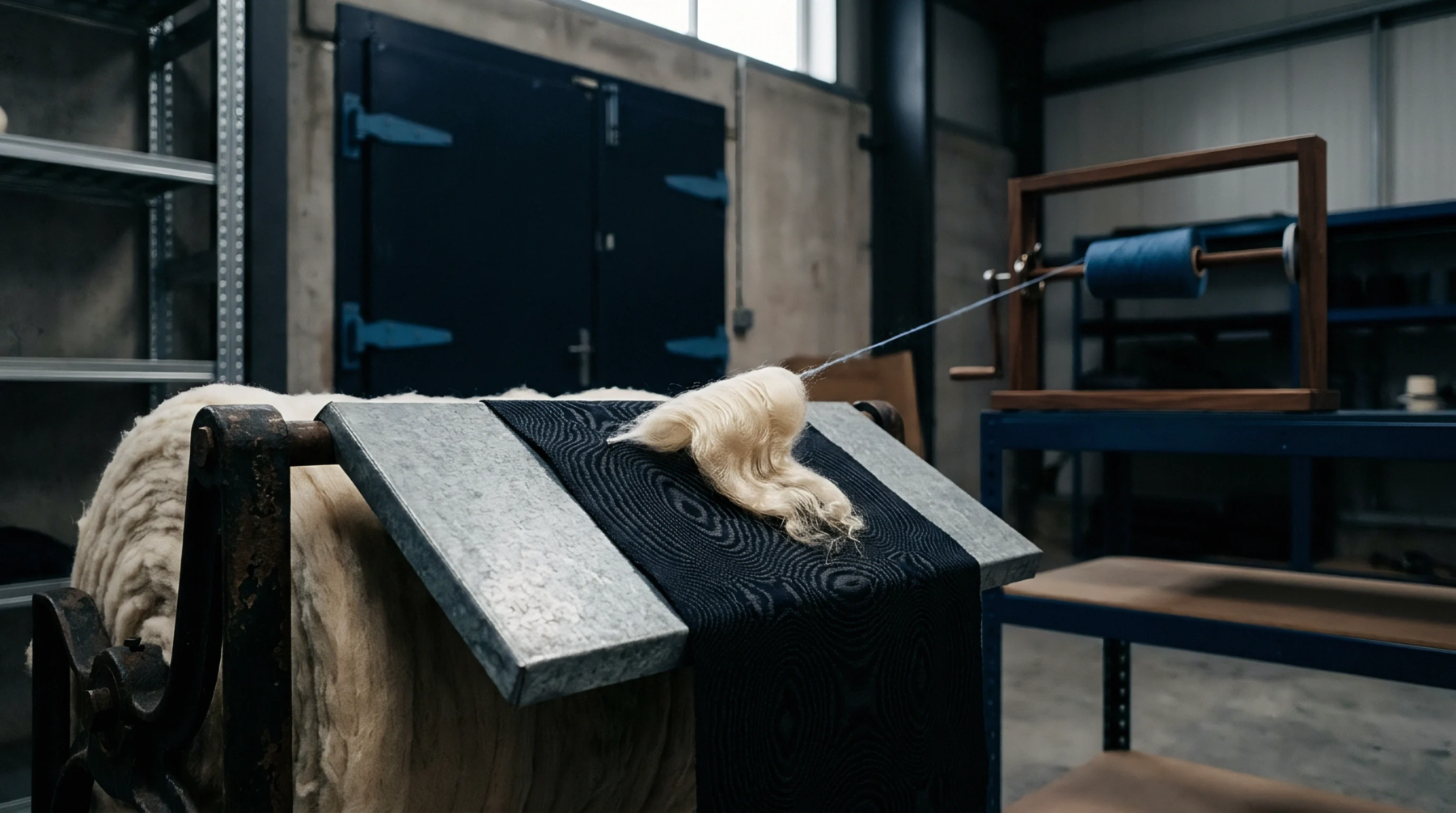
Specimen Processing
Laboratory testing methods for textile fibers require specific specimen dimensions to ensure that automated testing equipment can handle the material without jamming. The snippet length preparation process involves cutting raw fibers into short, uniform lengths, typically between one and two millimeters, for optical or airflow testing. This step is necessary to prepare wool or synthetic staple fibers for diameter measurement or fineness testing.
By reducing the fibers to a uniform, short length, laboratories ensure that the samples can be distributed evenly across the measurement chamber.
Measurement Consistency
Fineness testing instruments rely on these short fibers to prevent entanglement during the optical scan or airflow measurement. If the fibers are too long, they twist together to form clumps that block the air passages or create overlapping shadows on the optical sensor. Through snippet length preparation, technicians eliminate the influence of fiber crimp and curl, allowing each fiber piece to be measured independently.
This uniformity minimizes variation between test runs, leading to highly reproducible fineness results for bulk shipments.
Fiber Alignment
Cutting is performed using a specialized multi-blade guillotine or a motorized chopper to ensure all pieces have the same length. These tools are designed to hold the fiber bundle securely under tension while the blades make the cut, preventing the fibers from slipping and creating uneven lengths. Once cut, the snippets are dispersed in a liquid medium or suspended in an air stream for measurement, ensuring that they do not overlap during the evaluation.
Method Boundary
Shorter lengths cannot be handled or measured accurately by standard instruments. Therefore, snippet length preparation must be controlled precisely, as snippets that are too short may escape the air stream or be lost during dispersing, distorting the final test statistics.