Process Contamination
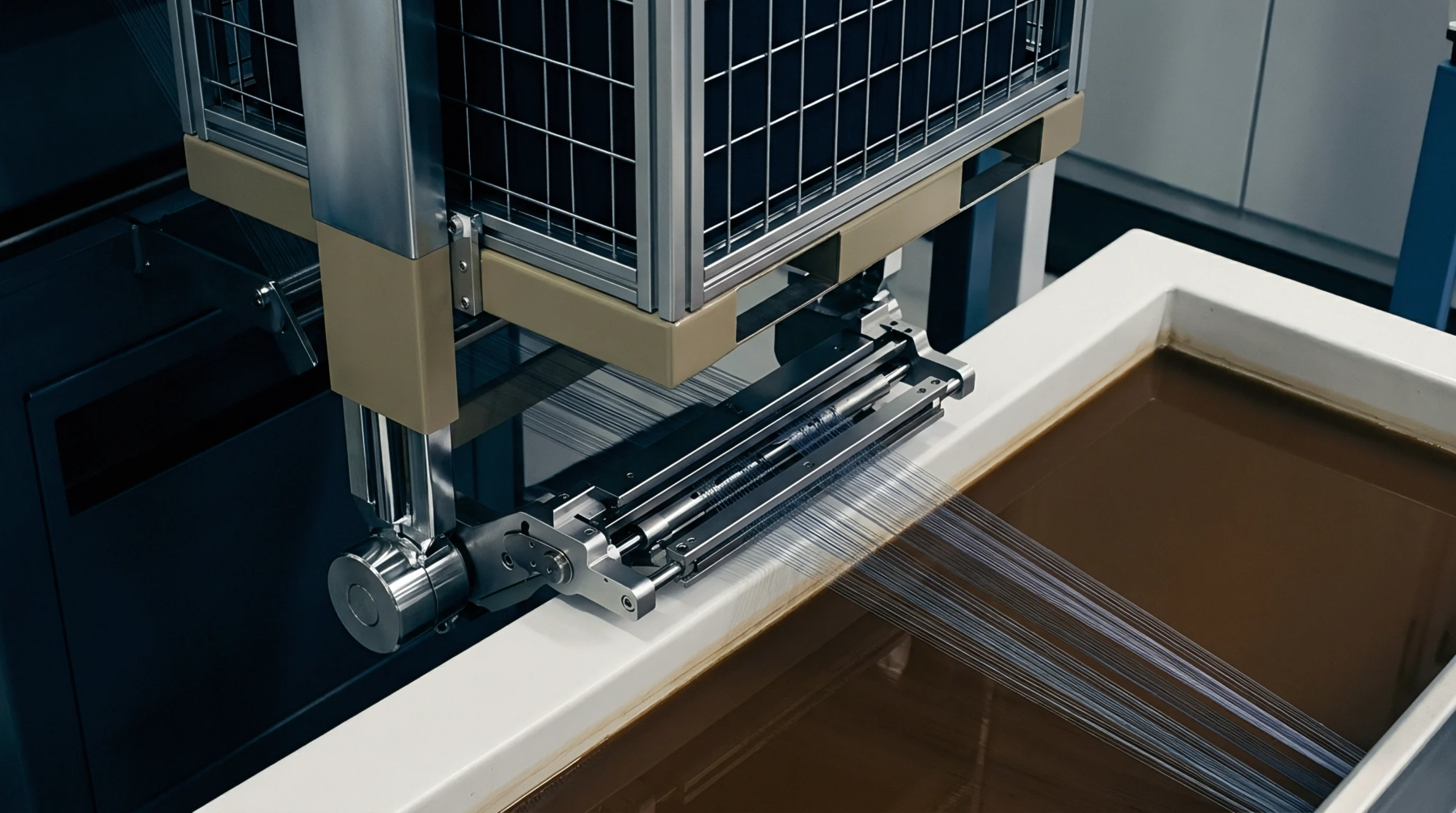
Chemical residues left on synthetic yarns after extrusion often disrupt subsequent wet processing and dyeing operations. This complication, called spin finish interference, arises when the lubricants and antistatic agents applied during fiber spinning are not thoroughly removed. The remaining oils act as a barrier to dyes and finishing chemicals, resulting in spotty coloration, uneven dye absorption, or poor coating adhesion on the fabric.
Interfacial Action
Hydrophobic lubricating oils and surfactants present on the unwashed fiber surface prevent the uniform wetting of the textile by aqueous dye liquors. When the fabric enters the dye bath, the spin finish emulsifies into the liquor, causing excessive foaming that disrupts the circulation of the dye. This emulsion can also break down under heat, causing the released oils to coagulate with the dyes and deposit back onto the yarn as dark, oily stains.
Operational Resolution
Pre-scouring the yarn or knitted fabric with non-ionic detergents and soda ash is the standard method to eliminate this chemical barrier before coloring begins. If the scour cycle is too short or the water temperature is too low, the spin finish remains on the core of the yarn bundle. This incomplete cleaning leads to a high defect rate in bulk production, necessitating expensive dye stripping and re-processing.
By measuring the residual oil content of the scoured yarn through solvent extraction tests, mills can verify that the fabric is clean enough to proceed to the dye house without the risk of spin finish interference.
Testing Criterion
Visual inspection of dye levelness and rub-fastness testing confirm the success of the scouring process. When the scoured fabric shows perfectly uniform dye penetration and zero oil spots, the finish has been successfully removed. However, if the finish contains silicone-based antistatic agents, specialized high-temperature scouring is required because silicone compounds resist standard laundry detergents.