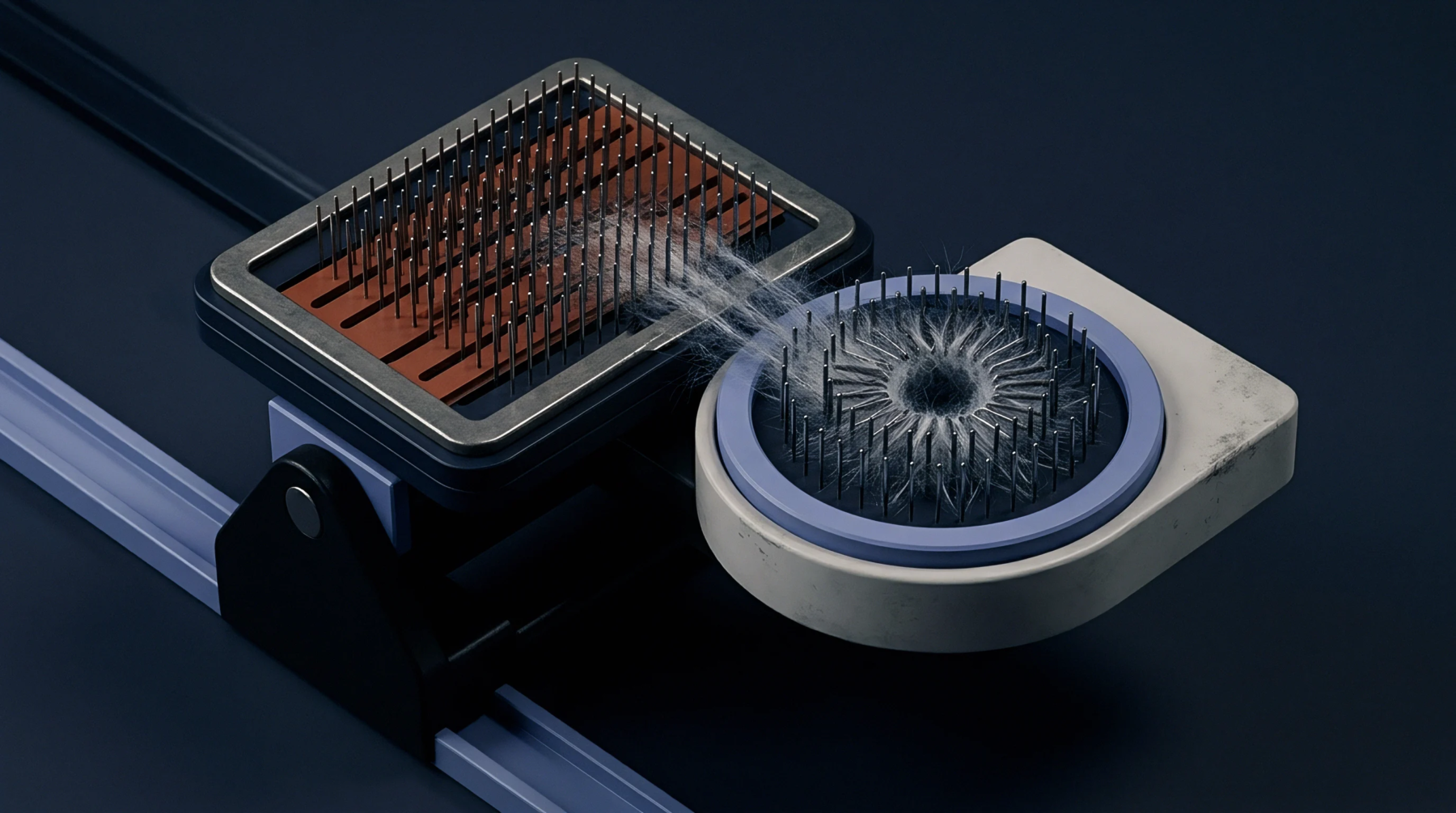
Filament Lubrication Formulation
A chemical formulation applied to manufactured synthetic and regenerated fibres during yarn extrusion processes to control friction, provide cohesion and dissipate static electricity constitutes spin finish oil. The formulation is applied as an aqueous emulsion or neat oil onto moving filament bundles immediately following spinneret emergence and quenching. The finish deposits a microscopic boundary layer across individual filament surfaces prior to drawing and package winding operations.
Surface Chemistry Balance
Formulations contain balanced mixtures of lubricants, antistatic agents, emulsifiers and cohesion promoters. Lubricants, including mineral oils, fatty acid esters or polyoxyalkylene glycols, modulate yarn-to-metal and yarn-to-yarn dynamic friction coefficients. Antistatic agents such as alkyl phosphates or quaternary ammonium salts introduce conductive paths to dissipate electrostatic charges generated by high-speed yarn friction.
Emulsifiers stabilize the oil-in-water emulsions, ensuring uniform chemical delivery through metered ceramic kiss rolls or precision gear-pump applicators.
Application Rate Parameter
The concentration of chemical solids deposited on yarn is specified and monitored as percentage oil on yarn or percentage finish on yarn through solvent extraction or time-domain nuclear magnetic resonance analysis. Insufficient finish application leads to excessive yarn abrasion, static charging, filament fraying and structural yarn breaks over guidance rollers. Excessive finish causes yarn slippage across draw godets, dripping inside false-twist texturing heaters and increased fuming in high-temperature processing zones.
Downstream Scouring Constraint
Finish residue remaining on woven or knitted goods interferes with wetting, dye penetration and levelness during piece dyeing operations. Scouring baths must remove the chemical components completely using compatible surfactants and alkali prior to high-temperature thermal fixation to avoid smoke generation and permanent thermal fabric yellowing.