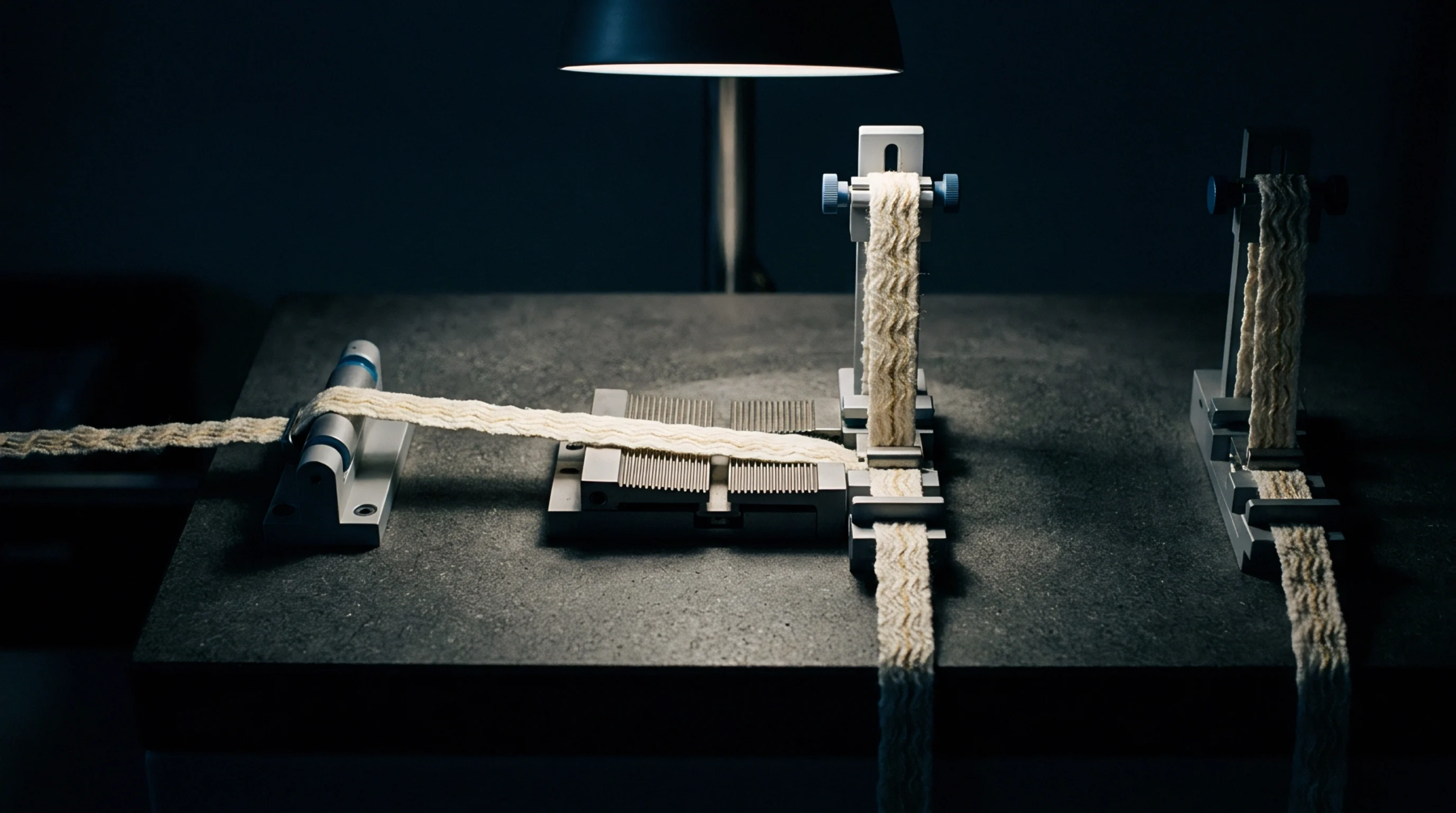
Heat Transfer Measurement
High temperature exposure during the finishing phase of textile production creates molecular changes in synthetic polymers when residence times inside the stenter exceed the intended operational limits for a specific fabric weight. Stenter thermal degradation occurs when the crystalline structure of the fibre undergoes chain scission as a result of prolonged heating or contact with overheated air circulation nozzles. The heat causes a reduction in the intrinsic viscosity of the material, leading to a measurable decline in tensile strength and an increased susceptibility to yellowing.
This phenomenon persists until the polymer chains break down entirely, rendering the material brittle or incapable of supporting standard mechanical loads. The intensity of the reaction depends on the chemical composition of the substrate, the air velocity inside the drying chambers, and the precise calibration of the exhaust systems meant to carry away stagnant hot air.
Crystalline Structure
Modifications in fibre integrity often follow the precise calibration of chain length distribution during high speed heat setting. Stenter thermal degradation initiates at the outer surface of the fabric, where direct contact with hot air happens first, before working through the cross section of the yarn. The resulting loss of molecular weight manifests as a sharp decrease in the elongation at break, which laboratory tensile testers quantify against unexposed control samples from the same lot.
Processing parameters must account for the specific glass transition point of the synthetic material to prevent these irreversible shifts in molecular architecture.
Operational Penalty
Mills identify the onset of the damage through a persistent shift in the spectral colour profile of the fabric, specifically at the selvedges where air turbulence often causes local temperature spikes. Stenter thermal degradation leads to batch rejection because the weakened yarns snap during subsequent downstream operations like high speed winding or automated cutting. Finished goods often fail durability tests where the fabric experiences abrasion or cyclic stress, as the affected fibres lose their capacity to deform without rupturing.
Maintenance schedules for thermal sensors and gas burner manifolds mitigate the risk of these local hotspots developing across the machine width. Reliable heat monitoring remains the primary method for preventing the breakdown of polymer chains during continuous finishing.
Quality Threshold
Procurement departments enforce strict dwell time limits to ensure that the material moves through the drying zone before the onset of permanent chemical alteration. Stenter thermal degradation restricts the operational window for heavy fabrics that require longer heating times to reach the desired setting temperature, forcing a compromise between production speed and material integrity. Engineers verify the efficacy of the heat control by checking the fluidity of the fibre before and after the pass, as this test detects the drop in degree of polymerization long before mechanical failure appears.
Consistency in the cooling zone after the stenter exit is required to lock in the material properties and prevent latent oxidation. Proper control of this temperature window remains the decisive factor in preserving the mechanical lifespan of synthetic technical fabrics.