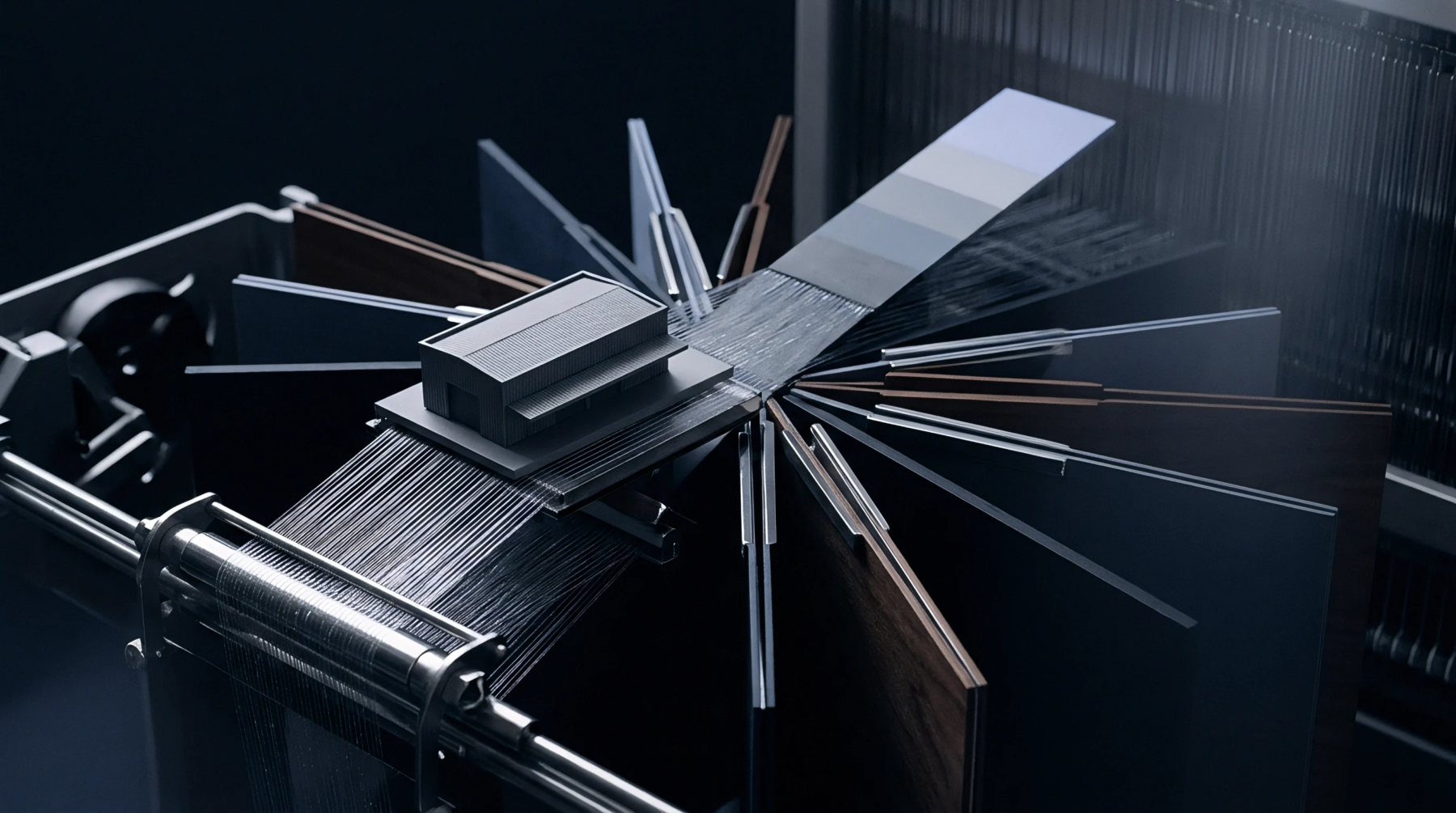
Friction Oscillation
Kinetic phenomenon characterized by the alternating jerky motion that occurs when two surfaces slide against each other. In textile manufacturing, stick-slip friction is often observed during the drafting of fibers where bundles of staples move at irregular speeds. This behavior happens when the static friction between the surfaces is significantly higher than the kinetic friction once movement begins.
Movement Variable
The system stores elastic energy during the stick phase and releases it rapidly when the sliding threshold is reached. Stick-slip friction in sewing machines can lead to uneven stitch lengths or needle breakage if the fabric does not feed smoothly under the presser foot.
Tactile Perception
Human perception of smoothness or roughness when touching a fabric is partly determined by the presence of these micro-vibrations. High-quality silk fabrics exhibit very low stick-slip friction, providing a smooth and continuous sensation against the skin. In contrast, certain coarse wools or chemically treated fabrics might produce a gritty feel because the fibers catch and release in a way that the nervous system interprets as a lack of softness.
Lubrication Effect
Applying silicone softeners or waxes to the yarn surface reduces the difference between static and kinetic coefficients to minimize this jerky motion.