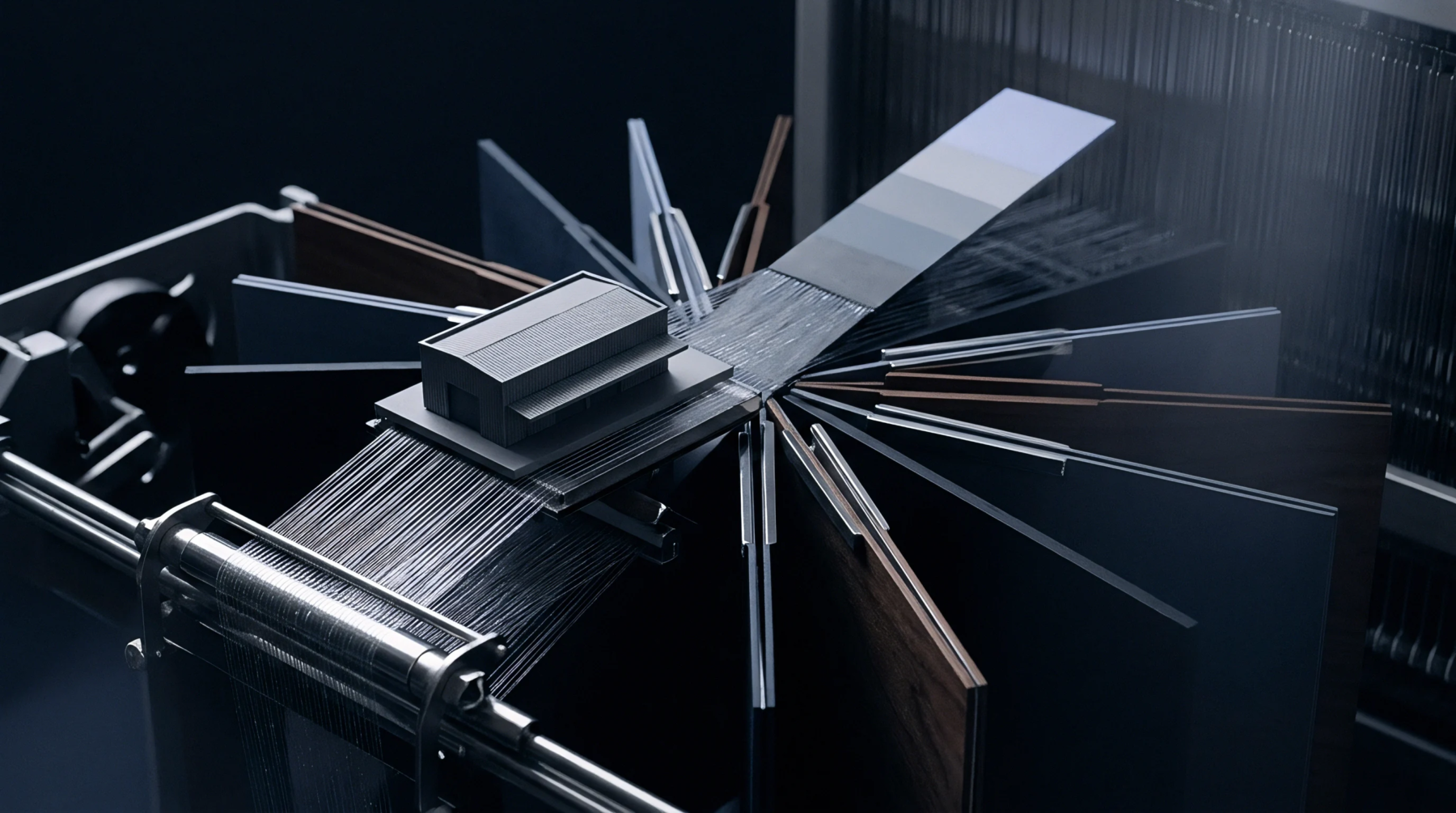
Width Operation
Finishing operation involving the transport of fabric through a long heated oven while it is held at a specific width by two parallel chains. During stenter processing, the fabric is subjected to controlled heat and airflow to dry the material or set its thermoplastic fibers into a stable configuration. This stage is where many chemical finishes, such as water repellents or softeners, are cured and permanently bonded to the yarns.
Drying Stage
The machine uses pins or clips to grip the selvages and pull the fabric to the desired finished width. Stenter processing corrects skewed or bowed weft yarns, ensuring that the grain of the fabric is straight before it reaches the cutting table.
Heat Setting
For synthetic fabrics like polyester or elastane, the temperature inside the chambers is raised above the glass transition point to relieve internal stresses. This part of stenter processing prevents the fabric from curling at the edges and ensures that it will not shrink or lose its shape when washed by the end user. Precise control of the dwell time is required because spending too long in the heat can yellow the fabric or make the fibers brittle.
Energy Demand
Large volumes of hot air are circulated through the chambers, making this one of the most energy-intensive steps in a modern dyeing and finishing facility.