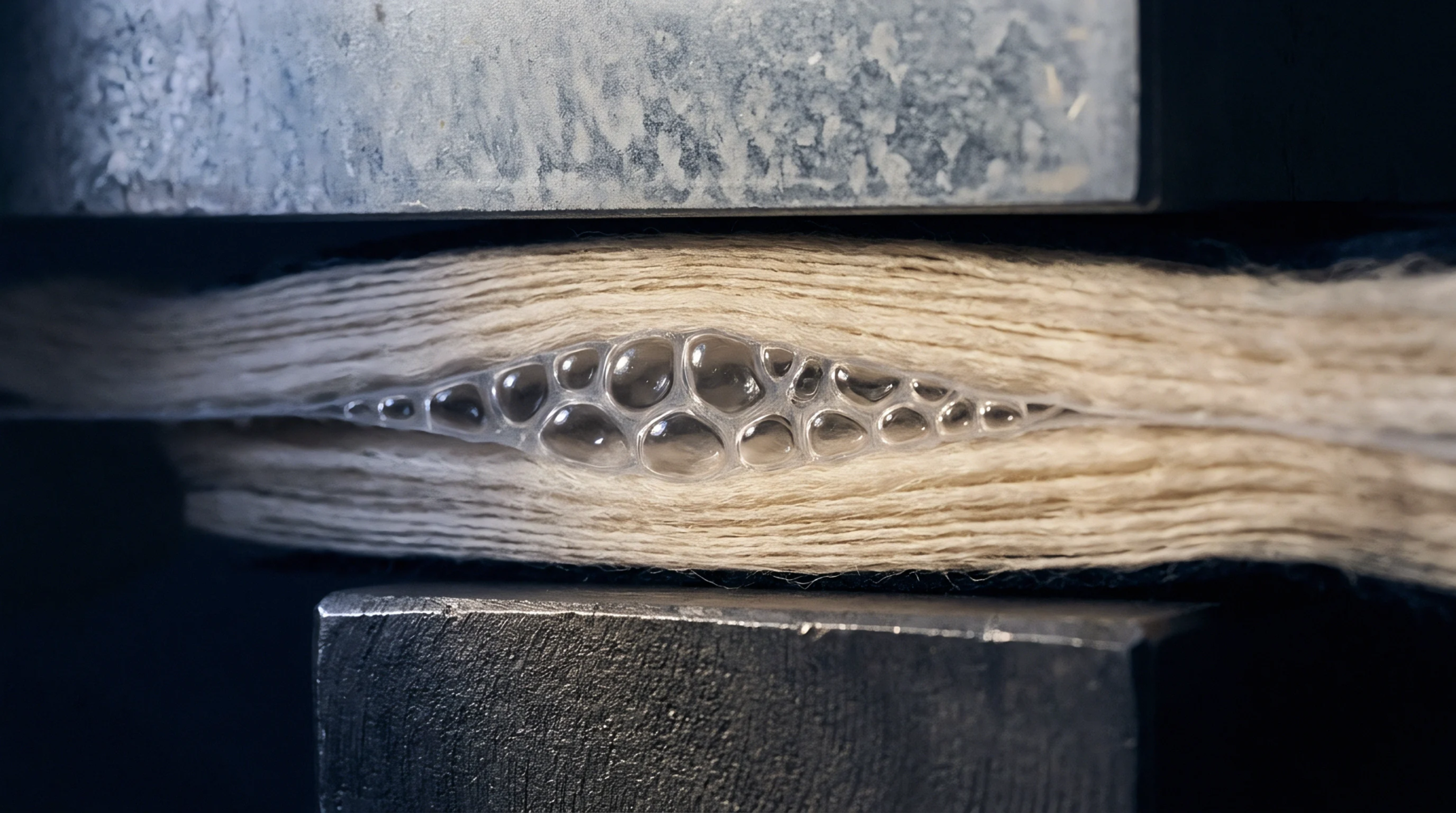
Viscoelastic Property
Time-dependent decay of internal stress within a stretched textile polymer under constant strain describes the viscoelastic nature of synthetic and natural fibres. The stress relaxation modulus is the ratio of the remaining stress to the applied constant strain after a specific time. This metric is a fundamental parameter for assessing the dimensional stability of synthetic yarns.
When a yarn is stretched during knitting, its internal stresses gradually decay, which prevents the final garment from distorting after it is removed from the machine.
Mechanical Behavior
Polymer chain rearrangement drives this relaxation behavior over time. Under constant strain, the stretched macromolecular chains slide past each other to assume a lower energy state. This molecular realignment reduces the tension that the yarn exerts on the knitting needle.
Performance Assessment
Dynamic mechanical analysis instruments measure this property by applying a sudden step strain to a single yarn. The instrument tracks the force decay over a defined period of hours. A low relaxation modulus indicates a material that relaxes quickly, which can lead to permanent bagginess in fitted sportswear.
Environmental Limit
Temperature shifts alter the relaxation rate. Elevated temperatures accelerate the chain movement, which drops the modulus. High humidity further accelerates this tension decay in natural fibres.