Gravitational Separation Metric
Steady-state descent speed attained by a textile particle or fiber tuft falling freely through quiet air defines the physical equilibrium where downward gravitational force equals upward aerodynamic drag. Characterized by balanced force vectors, terminal settling velocity dictates how particulate matter, trash elements and loose fiber tufts segregate within passive air separation chambers. Denser, compact bodies accelerate until drag resistance halts velocity gains, establishing constant downward motion.
Light, open fiber tufts present high surface area relative to weight, reaching low steady descent speeds within brief travel distances. The parameter ceases to apply within pressurized high-turbulence air streams where fluid shear forces overpower gravitational settling.
Trash Extraction Dynamics
Carding waste separators and blowroom de-dusting modules exploit differences in aerodynamic descent speeds to clean raw stock. Heavy impurities such as sand particles, leaf fragments and dense seed coats possess high terminal settling velocity values, falling rapidly out of moving air currents into collection hoppers. Buoyant cotton and synthetic staple fibers exhibit low descent velocities, remaining suspended within horizontal air channels that carry them forward to transport screens.
Drop chambers calibrated to specific velocity thresholds ensure that heavy trash settles downward while spinnable fiber floats across extraction barriers. Air velocity adjustments maintain sharp separation boundaries between waste fractions and usable stock.
Air Filtration Operations
Mill environmental safety depends upon settling behavior to isolate harmful inhalable particles from general ambient air. Textile dust holding fractions under ten micrometres has exceptionally low settling speeds, lingering suspended in room air currents for prolonged periods unless captured by engineered suction hoods. Coarser spinning fly drops rapidly onto machinery surfaces and room floors, allowing dry sweeping or localized vacuum clearance.
Exhaust filtration systems balance capture velocities against settling rates to prevent airborne dust redeposition over exposed fabric rolls. Ductwork collection hoppers require upward air currents set below particulate settling velocities to allow waste drop-out without continuous filter blinding.
Sedimentation Measurement Methods
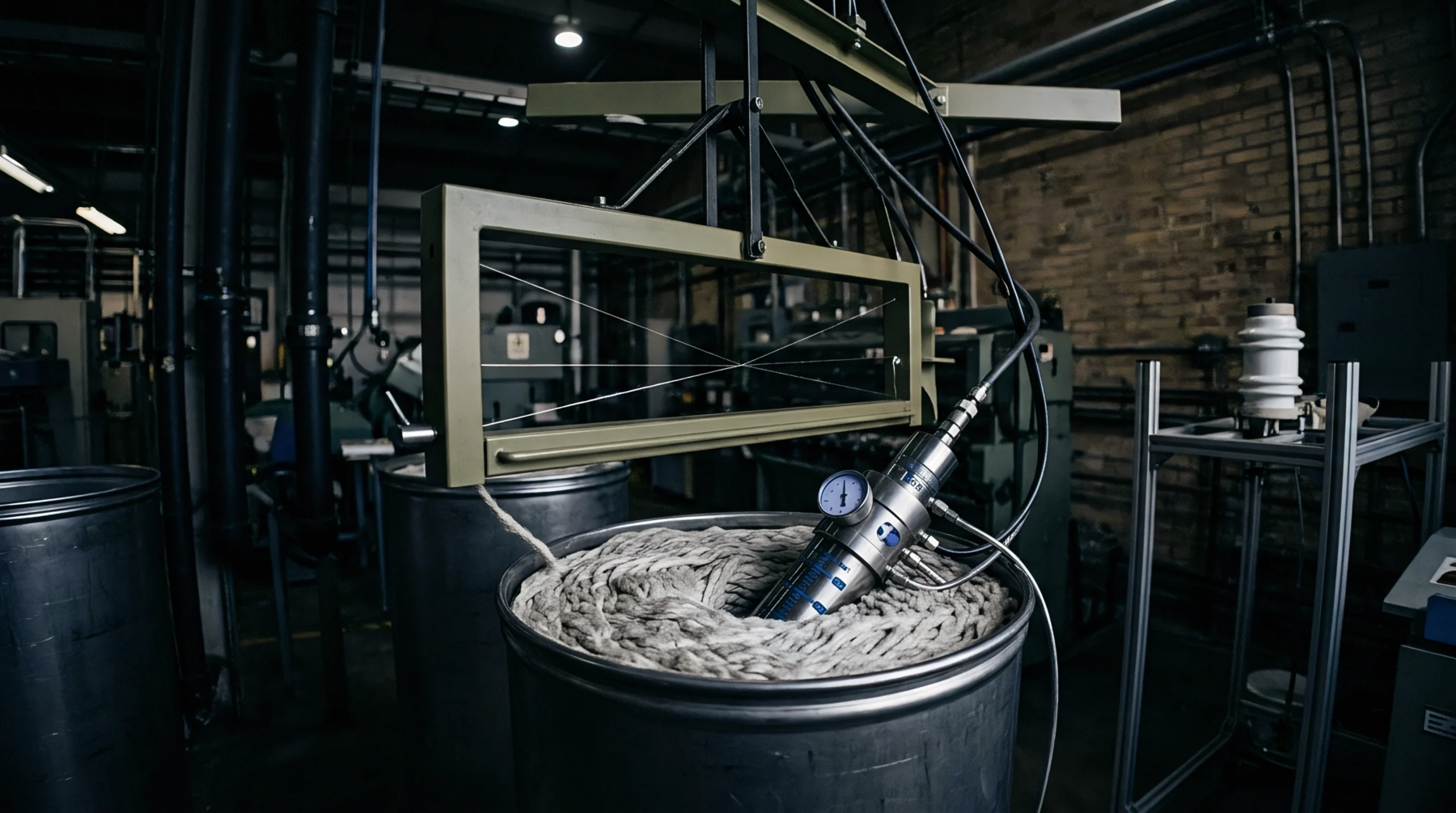
Laboratory determination relies on settling column tests or particle aerodynamic size analyzers. Calibrated vertical drop tubes measure free-fall transit times of isolated fiber tufts and trash fragments through still air using optical gate pairs. Calculations apply Stokes law corrections for non-spherical particles, factoring in ambient air temperature, relative humidity and barometric air density.
Technicians utilize terminal settling velocity values to calibrate waste collection dampers across blowroom cleaning lines. Proper aerodynamic balancing guarantees optimal cleaning efficiency without accidental extraction of high-grade staple stock.