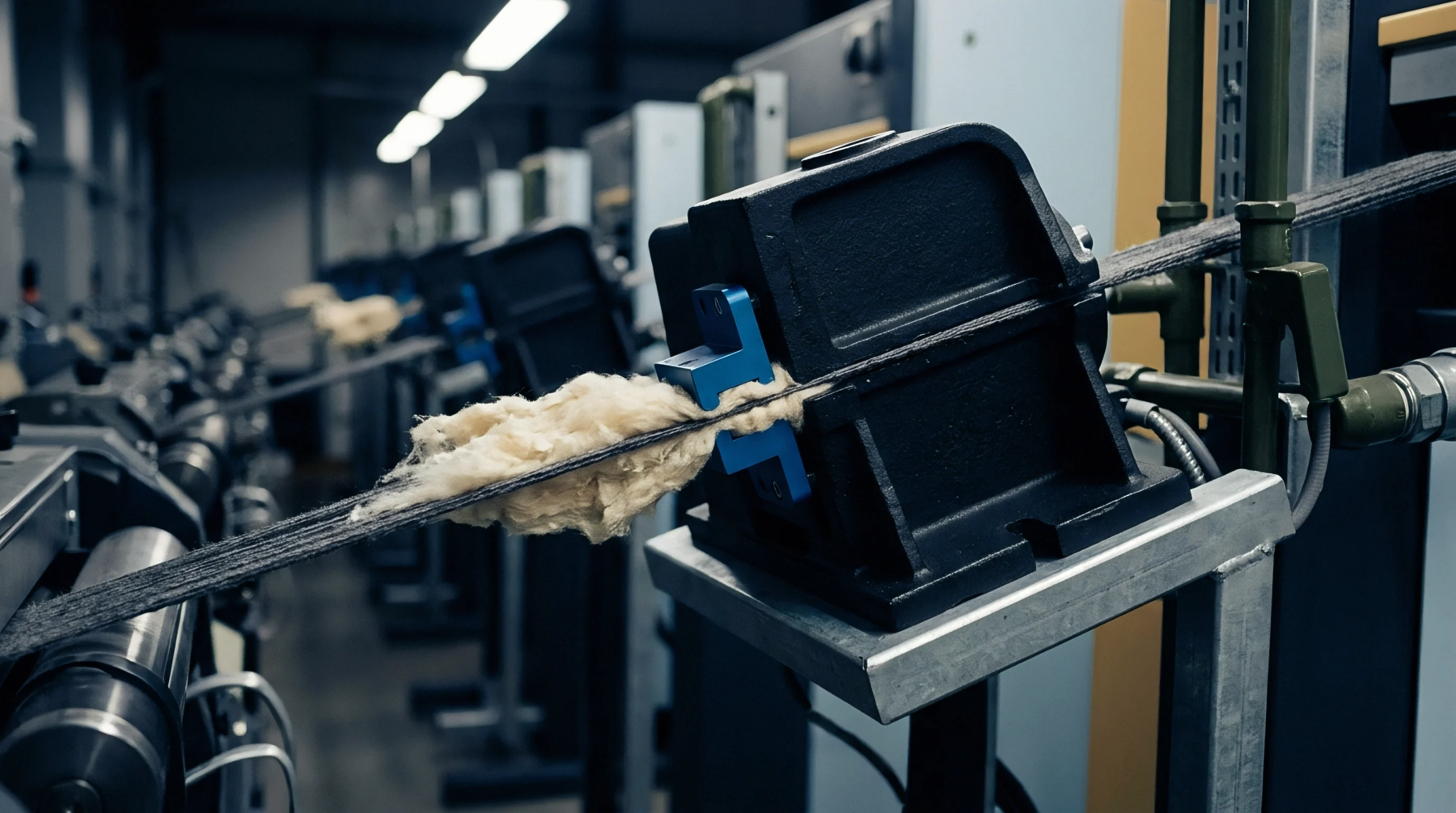
Aerodynamic Path
An internal configuration of the air channels in a spinning machine directs the path and velocity of fibers moving from the opening roller to the rotor. The transport duct geometry influences the degree of fiber straightening and the frequency of tuft formation during the drafting phase. It dictates the airflow patterns required to maintain a consistent material flow and ends where the fiber enters the fiber channel.
Velocity Regulation
Changes in the cross sectional area within the transport duct geometry accelerate the air to a speed that exceeds the velocity of the fiber.
Fiber Orientation
Maintaining a streamlined flow within the transport duct geometry is essential for ensuring that fibers arrive at the rotor in a parallel arrangement. Any turbulence or sharp angles in the duct can cause the fibers to tumble or fold, which creates thick spots and weakens the yarn structure. Smooth internal surfaces minimize the accumulation of wax and dust that could otherwise disrupt the air profile.
This controlled environment ensures that each fiber contributes its full length to the strength of the yarn core.
System Resistance
Design constraints in the transport duct geometry determine the static pressure required to move the material efficiently.