Production Mechanism
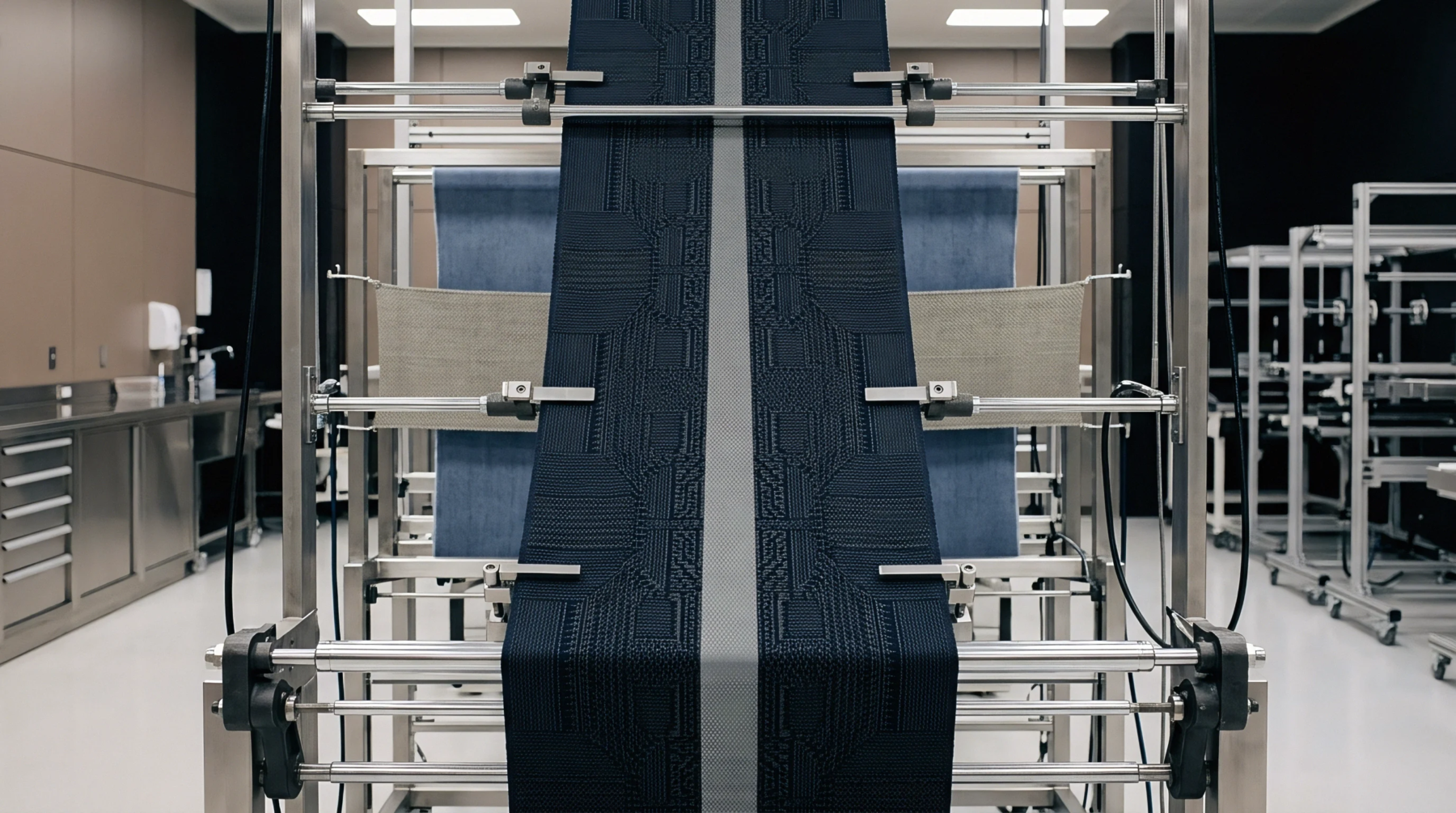
Warp knitting equipment creates stable textile structures by interlocking multiple sets of yarn simultaneously through a series of needle bars. The tricot knitting machine operates by feeding warp beams into a high-speed assembly where guide bars manipulate individual threads into columns of loops. High operational output results from this synchronized motion, which allows for the creation of lightweight and durable fabrics.
These components maintain tension across the width of the machine to ensure consistent density during large-scale manufacturing runs. Fine gauge settings allow producers to control the porosity and elasticity of the final product with high accuracy.
Operation Dynamics
Precise control of guide bar movement defines the surface pattern and physical stability of the material produced. Each needle bar movement dictates the interlocking geometry, forming a ladder-like construction that resists laddering even if a single filament breaks. Adjustments to the pattern chain or electronic control system allow for rapid changes in fabric architecture without requiring hardware replacement.
Consistent lubricant application remains necessary to prevent heat build-up at the high-frequency contact points between needles and guides.
Quality Verification
Laboratory inspection focuses on loop density and yarn uniformity to confirm that the finished goods meet grade requirements. Tension fluctuations during the knitting process frequently cause streaks or width variances in the finished bolt. Technicians evaluate the fabric against a light box to identify missing needles or skipped stitches that compromise the structural integrity of the base.
Verified results provide the baseline for subsequent finishing stages like heat setting or dyeing.
Commercial Application
Garment manufacturers select these machines for the production of lingerie, swimwear, and technical linings due to the dimensional stability provided by the warp-knitted structure. Synthetic filaments such as polyester or nylon perform reliably under the constant mechanical strain of the needles. Large-scale mills demand consistent speed and minimal downtime to remain competitive in high-volume markets.
Durable equipment configurations provide the industrial capacity needed for consistent fabric output over long production cycles.