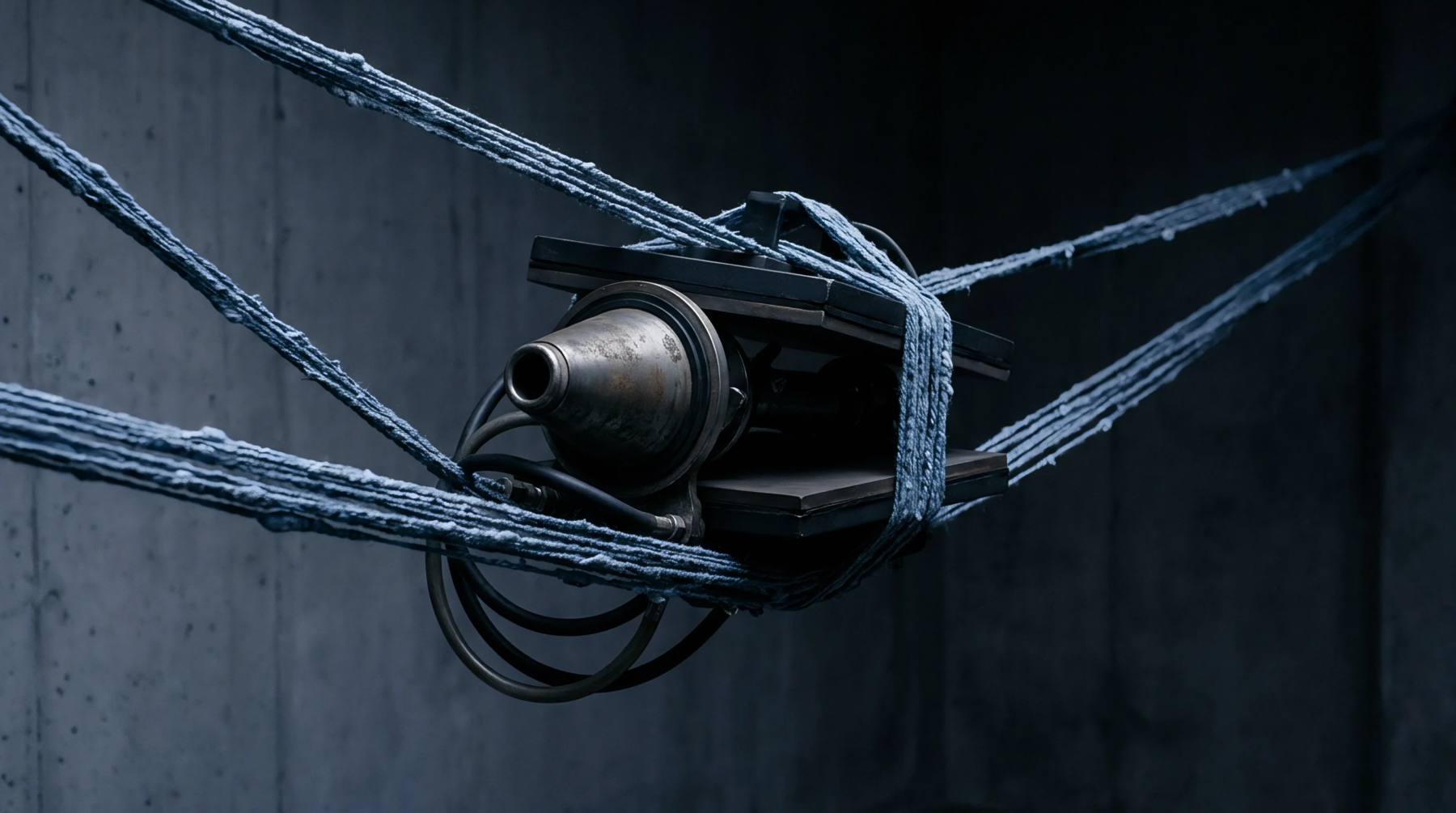
Airflow Calibration Metric
The physical separation between the exit throat and the receiving tube in a high speed fluid propulsion system dictates the efficiency of mass transfer during synthetic fibre extrusion processes. Within this mechanical assembly, the venturi nozzle gap controls the pressure drop across the internal vacuum channel. Operators verify this distance during initial machine setup to ensure consistent drag force application on polymer filaments.
Proper spacing prevents turbulence at the transition point where air velocity transitions from supersonic to subsonic flow. When the gap width falls outside established tolerances, the downstream haul off system experiences instability in filament diameter.
Operational Variance Tolerance
Deviations in the gap width change the sonic point of the jet stream which affects how air molecules interact with the extruded plastic. Precise control over this dimension allows for uniform cooling rates across the spinneret face. A wider clearance reduces the velocity profile intensity, causing the polymer to retain heat for longer periods.
Narrower passages increase local air density, resulting in rapid quenching that alters the crystallinity of the finished yarn. Maintenance teams check these clearances before every production cycle to mitigate defect formation such as erratic denier variation. Regular recalibration stops the formation of stagnant air pockets inside the collector housing.
Extrusion Performance Benchmark
Consistency in the venturi nozzle gap determines the operational limit of the air spinning apparatus during bulk manufacturing runs. High speed lines require a deviation of less than one micron to maintain tensile strength parity across large industrial lots. Testing labs verify these settings by measuring the pressure profile inside the suction head after the machine reaches thermal equilibrium.
If the measured pressure differs from the target, technicians adjust the threaded mount to reset the precise alignment. Factories monitor these adjustments against internal product standards to document process repeatability. Accurate settings ensure that each orifice contributes equally to the total throughput of the fibre line without clogging.
Fluid Dynamics Restriction
Turbulence arising from an incorrect venturi nozzle gap undermines the structural integrity of thin filaments. Excessive vibration often tracks back to an misalignment within the air duct assembly that creates uneven drag on the moving polymer stream. Engineers observe these patterns on high speed cameras during process trials to map the relationship between aperture width and fibre fraying.
Stabilizing the flow transition minimizes the risk of filament breakage during the winding stage. Tight control over the exit geometry provides a reliable basis for predicting product quality across varied machine speeds. Rigid adherence to these specific mechanical dimensions prevents the downstream accumulation of scrap material.
The precise distance defined by the venturi nozzle gap defines the upper bound of possible draw ratios for synthetic fibre extrusion.