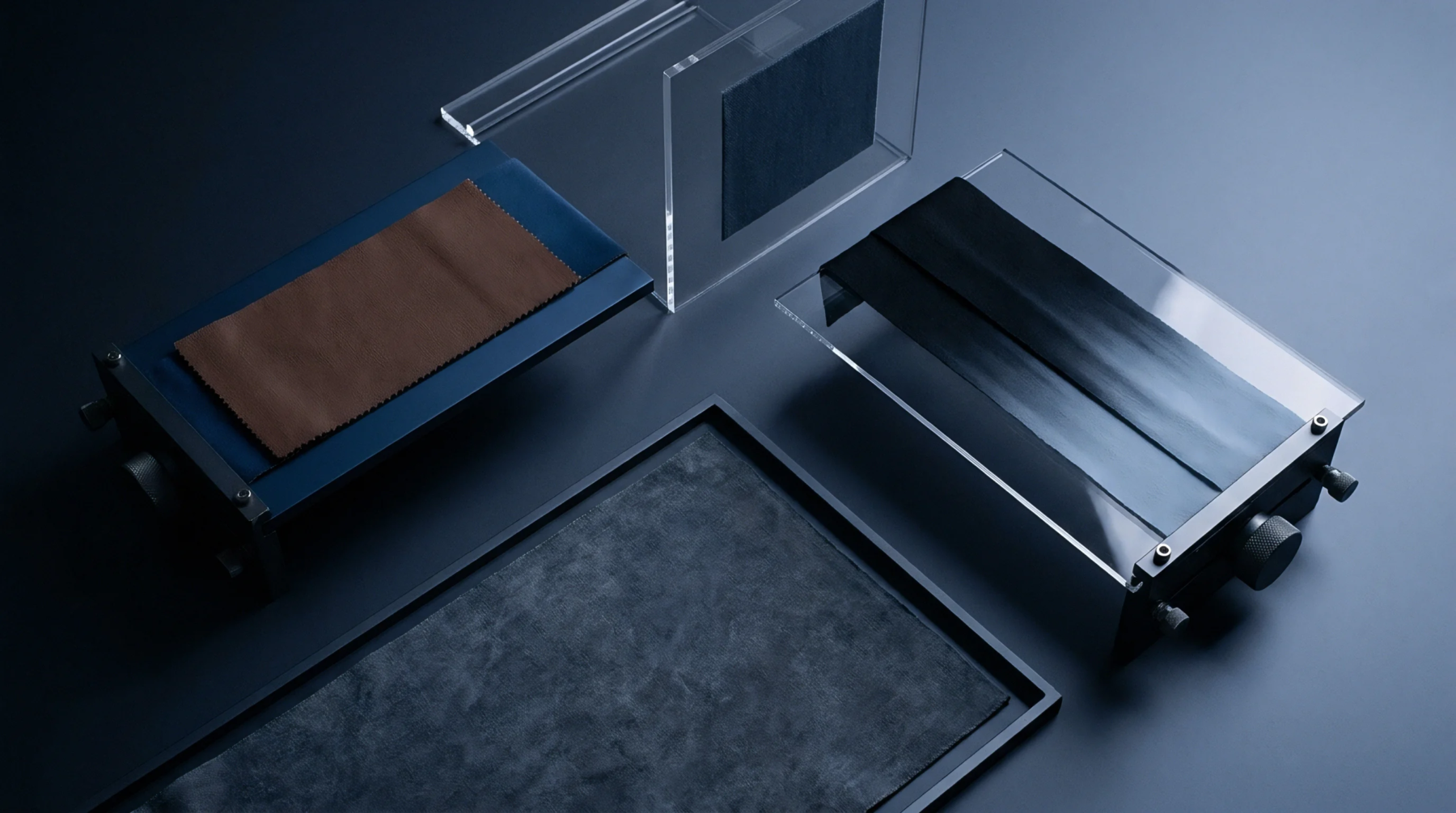
Elastomeric Covering
Thermally cured synthetic or natural elastomer coatings provide resilient contact surfaces on industrial rollers and testing machine clamps. Vulcanized rubber face describes the sulfur-crosslinked elastomeric layer bonded onto metal roller cores and pneumatic grip jaws used in textile padding mangles, calenders and tensile testing frames. The physical function of this surface covers high-friction, resilient mechanical contact interfaces, stopping where rigid metallic, ceramic or non-compliant composite surfaces operate without elastic deformation.
Grip Resilience
Raw elastomer compounds undergo vulcanization under heat and pressure, forming three-dimensional crosslinked polymer networks that resist permanent plastic deformation, thermal degradation and chemical attack. Applied onto pad mangle rollers, a vulcanized rubber face compresses elastically under mechanical loads to create a uniform nip contact zone across running fabric widths. The crosslinked elastomer absorbs minor fabric thickness variations, seams and slubs without fracturing or suffering permanent indentation.
Durometer gauges measure the hardness of the rubber coating in Shore A or International Rubber Hardness Degrees. In tensile testing grips, vulcanized elastomeric jaw faces provide high friction coefficients that secure slippery synthetic filament fabrics without cutting or crushing outer fibers. The chemical formulation of the rubber resists degradation from hot caustic solutions, acidic dyeing liquors and textile finishing oils.
Nip Compression
Continuous chemical padding requires uniform linear pressure across the full width of the textile web. The elasticity of the vulcanized rubber face compensates for minor roller deflection under hydraulic loading, distributing squeezing forces evenly from selvedge to selvedge. Regular grinding and dressing cycles maintain roll concentricity, surface smoothness and correct cylindrical profiles across long operating campaigns.
Wear Tolerance
Mechanical abrasion, chemical exposure and continuous thermal stress gradually harden, crack or groove the elastomer surface over time. Inspection protocols evaluate the vulcanized rubber face for grooving, localized pitting and hardness drift across the roller length. Damaged roller coverings that fail surface uniformity standards are stripped and recoated to prevent uneven chemical expression.